You've seen it in action, even if you didn't know its name. Rows of shelves where boxes or totes glide silently forward on rollers, the next one always waiting at the picking face. It's not magic; it's a well-designed material handling system. This is flow racking.
For operations tired of wasteful walking, searching, and the constant shuffle of "fronting" inventory, flow racking presents a compelling solution. It promises faster picking, inherent stock rotation, and a cleaner warehouse. But it's not a one-size-fits-all fix.
Before you commit to this dynamic storage investment, there are critical details to unpack. How does it actually work? Where does it fail? What hidden costs should you anticipate? Let's walk through the seven key points that separate a successful carton flow installation from an expensive mistake.
How Flow Racking Works: Gravity as Your Employee
The core principle is beautifully simple: first-in, first-out (FIFO) by design. A flow racking system uses a series of slightly inclined rails or wheels within a shelving bay. Cartons, totes, or trays are loaded from the rear, or "replenishment," side.
Once placed, gravity takes over. The load gently slides down the incline until it meets a stop at the front, or "picking," face. As a picker removes the front item, the next unit in line automatically moves forward to take its place. This is the essence of gravity flow racking.
The mechanism hinges on the track. For lighter loads like small cartons or plastic totes, wheel tracks are common. They offer low friction for smooth movement. For heavier cartons or cases, roller tracks are used. They provide more robust support and can handle greater weight.
This constant motion eliminates the need for pickers to reach into shelves or move other products. The next SKU is always in the prime position, reducing motion and time per pick. It turns storage into a dynamic, self-replenishing stream of inventory.
The Clear Benefits and The Ideal Applications
The advantages of a well-applied flow racking system are tangible and directly impact operational metrics.
The most significant gain is in picker productivity. By eliminating travel within an aisle and removing the "search and reach" time, pick rates can increase dramatically. Pickers stay at the face of the rack, moving from one ready item to the next.
It enforces perfect FIFO inventory rotation. This is non-negotiable for industries with expiry dates, like food, beverage, or pharmaceuticals. Older stock cannot be buried behind new stock.
The system also reduces product damage. There's no lifting or dragging of boxes over each other. The controlled, gentle slide minimizes handling impacts. Furthermore, it visibly improves warehouse organization and space utilization by creating dense, dedicated lanes for each SKU.
So, where does it shine? Carton flow is ideal for high-volume, medium-to-fast-moving SKUs with a relatively standardized footprint. Think distribution centers for retail goods, e-commerce fulfillment for small items, parts picking in manufacturing, or any operation with a high number of "each" picks from case stock.
Comparing Flow Racking to Other Storage Methods
It's crucial to see where flow racking fits in the broader storage ecosystem. It's not a replacement for everything; it's a specialist tool.
Compared to static shelving, the difference is night and day. Static shelving requires picking from a fixed location, often moving other items. Flow racking brings the item to the picker. The trade-off is cost and flexibility; static shelving is cheaper and easier to reconfigure.
Versus pallet racking for full cases, flow racking serves a different function. Pallet racking is for bulk storage. Flow racking is for breaking down those bulk pallets into accessible picking lanes for individual cases or items. They often work in tandem: pallet rack holds reserve bulk, and flow rack holds the active picking forward.
Compared to automated systems like vertical lift modules or carousels, gravity flow racking is simpler and has lower upfront and maintenance costs. It requires no power, motors, or software. However, it offers less density and no "goods-to-person" automation. It's a semi-automated, low-tech efficiency boost.
The key is integration. The most efficient warehouses often use a mix: flow racking for top-moving SKUs, static shelving for slow-movers, and pallet rack for bulk.
Key Considerations for Selection and Implementation
Jumping into flow racking without a plan leads to problems. Here are the factors that will make or break your project.
First, analyze your inventory. Flow racking thrives on consistency. What are the dimensions and weight of your typical carton or tote? Wide variation in size or weight can cause jams or inconsistent flow. You may need multiple track types within the same system.
Second, understand your velocity. Map your SKUs by pick frequency. Dedicate your carton flow lanes to your A and B items—the ones that move daily or weekly. Using expensive flow tracks for slow-moving D items is a poor return on investment.
Third, evaluate your space. The system requires two aisles: a narrow picking aisle in front and a replenishment aisle in back. This double-aisle footprint must be justified by the productivity gains. Also, the incline requires sufficient vertical clearance for the slope from load to unload height.
Fourth, consider the replenishment process. How will full cases get from receiving to the back of the rack? This often requires a separate material handling path, like a dedicated lift or conveyor. If replenishment is slow or difficult, the picking face will run empty, negating all benefits.
Cost Factors and Finding a Qualified Supplier
The price of a flow racking system is more than the sum of its racks and tracks. Breaking down the costs prevents surprises.
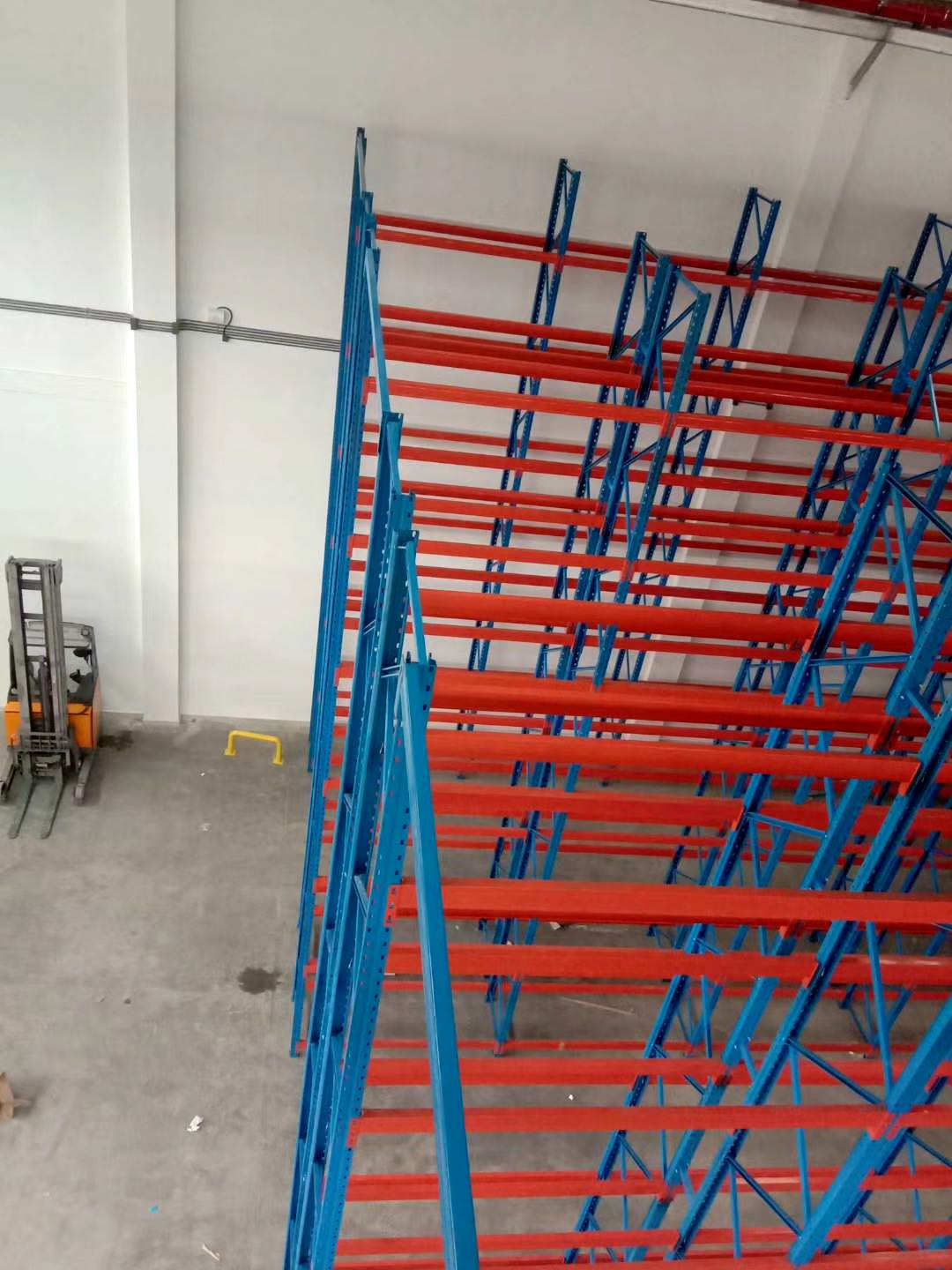
The major cost components are the steel structure (uprights and beams), the flow tracks themselves (wheels or rollers), and the lane dividers. Track cost varies by type, length, and load capacity. High-speed, high-capacity roller tracks cost more than light-duty wheel tracks.
Then come the ancillary costs. Professional installation is critical, as the incline must be precise for reliable operation. You may need conveyors for replenishment, specialized pick carts, or integrated labelling systems. Don't forget the cost of potential facility modifications.
When looking for a supplier, move beyond just equipment vendors. Look for partners with engineering capability. A good provider will not just sell you tracks; they will ask for your carton data, analyze your pick profiles, and propose a detailed layout.
They should offer simulations or detailed throughput calculations. Ask for case studies or site references. Can they provide full CAD drawings and integrate with other systems you have? The right supplier acts as a consultant, ensuring the flow racking system solves your specific problem.
Technical Deep Dive: The Mechanics of Movement
Understanding a bit of the engineering helps in specifying the right system. The heart of gravity flow racking is in the track and brake design.
The incline, or pitch, is calculated precisely. It must be steep enough to overcome the static friction of the heaviest, stickiest carton in the lane. But it cannot be so steep that the lightest carton accelerates and impacts the stop with damaging force. Typical pitches range from 1.5% to 5%, adjusted for load and track type.
Braking systems are essential for control. For heavier loads, passive brakes like polymer pads or spring-loaded rollers are built into the track to regulate speed. For high-speed or multi-level systems, active electronic brakes can be used to bring a carton to a gentle stop.
Lane dividers are critical for alignment. They keep cartons centered on the track, preventing them from catching on the frame and causing a jam. The width of each lane is custom-set slightly wider than the carton it's designed to hold.
This precise interplay of angle, friction, and guidance is what makes a box glide reliably for its entire journey. It’s simple in concept but precise in execution.
Common Problems and Maintenance Must-Dos
Like any system, flow racking needs care. Being proactive avoids major disruptions.
The most common issue is jamming. This is usually caused by a damaged carton, a product protruding beyond its case, or a foreign object dropped into the lane. Train staff on proper loading techniques and implement regular visual checks.
Uneven flow is another problem. If one lane consistently runs slower than others, check for track damage, debris buildup on wheels/rollers, or a carton size/weight that exceeds the lane's design. A can of compressed air is useful for cleaning tracks.
Overloading the replenishment side can cause back-pressure, stopping all flow. Establish clear replenishment protocols. Never push a carton into a lane that is visibly full back-to-front.
Schedule preventative maintenance. This includes checking that all tracks are securely fastened, inspecting for worn wheels or rollers, verifying lane dividers are straight, and ensuring the structural frame remains square and level. A wobbly frame will disrupt the critical pitch angle.
Frequently Asked Questions (FAQs)
Q1: What's the main difference between wheel and roller flow tracks?
A1: Wheel tracks use small, rotating wheels and are best for lighter, uniform loads like plastic totes or small, smooth-bottomed cartons (under 30-40 lbs). Roller tracks use larger, cylindrical rollers and are designed for heavier, irregular, or corrugated cardboard cases. Rollers provide more support and can handle significantly higher weights.
Q2: Can flow racking work for slow-moving items?
A2: It can, but it's often not cost-effective. The primary benefit of flow racking is speeding up high-frequency picks. For very slow-moving SKUs, the capital expense is hard to justify, and the product may sit so long that dust or minor track resistance becomes an issue. Static shelving is usually a better choice for slow movers.
Q3: How deep (long) can a flow rack lane be?
A3: Lane depth is limited by practical and physical constraints. Excessively long lanes (over 20-25 feet) can lead to increased friction, inconsistent speed, and greater potential for jams. They also make replenishment more cumbersome. Most practical applications use lanes between 10 and 20 feet deep. Multiple shorter lanes are often better than one very long lane.
Q4: Is it difficult to change or reconfigure SKUs in a flow rack?
A4: It requires more effort than static shelving. To change a SKU, you must clear the entire lane, often adjust the lane width by moving dividers, and potentially change the track pitch or brake settings if the new product has vastly different weight or friction properties. It's designed for dedicated, high-velocity SKUs, not constant churn.
Q5: What is the biggest mistake people make when implementing flow racking?
A5: The biggest mistake is not thoroughly analyzing inventory characteristics and pick patterns. Putting the wrong SKUs (too slow, too variable in size) into the system leads to poor ROI. The second biggest mistake is neglecting the replenishment process. If you can't keep the back of the rack filled efficiently, the front will be empty, and picker productivity gains will vanish.