If your warehouse feels cramped and you're looking for smarter ways to store more, you've likely heard the term narrow aisle racking. It's a common phrase in logistics, but what does it really mean for your operation? More importantly, is it the right fit?
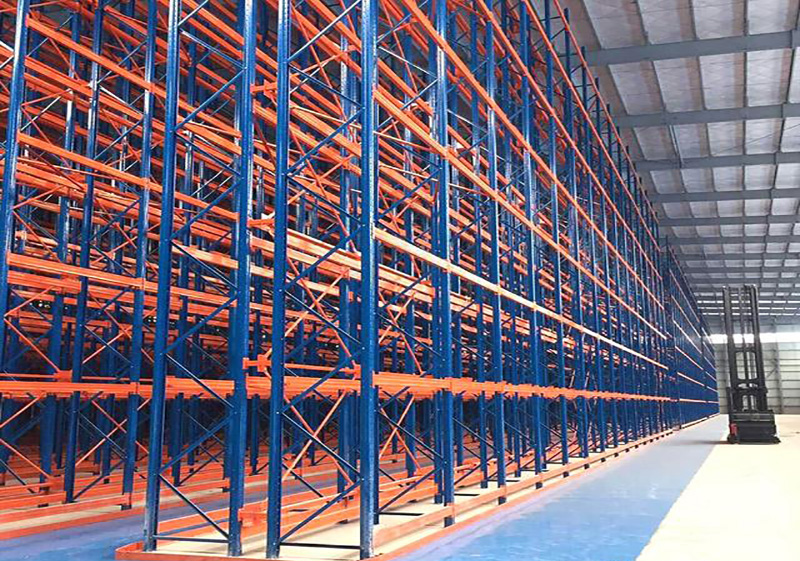
Simply put, narrow aisle racking is a storage system designed to work in tighter spaces. It’s a strategic approach to warehouse layout that prioritizes vertical space over wide, sprawling aisles. The goal is straightforward: store more pallets in the same building footprint.
This isn't just about buying different shelves. It’s a complete system involving specific rack design, specialized forklifts, and careful planning. Getting it right can dramatically increase your storage density. Getting it wrong can lead to bottlenecks and damage.
Let's break down what narrow aisle racking really involves, where it shines, and the key factors you must consider before making the switch.
What Exactly is Narrow Aisle Racking?
Think of a traditional warehouse with wide aisles for standard counterbalance forklifts to turn. Narrow aisle racking systems reduce those aisle widths, sometimes by half.
A typical wide aisle might be 12 to 13 feet wide. A narrow aisle configuration cuts this down to between 8 and 10 feet. More advanced systems, often called Very Narrow Aisle (VNA) racking, can operate in aisles as tight as 5 to 6 feet.
The racking itself is often a standard selective pallet rack. The magic isn't always in the rack structure, but in the equipment and layout that allows it to function in a tighter space.
The Main Types of Narrow Aisle Systems
Not all narrow aisle solutions are the same. The choice depends on your budget, volume, and height.
Reach Truck Systems
This is the most common entry point into narrow aisle racking. Reach trucks have forks that extend and can lift pallets directly in front of the truck. Because they don't need to turn within the aisle to deposit a load, they can work in aisles about 8-10 feet wide.
They are versatile and a logical step up from traditional forklifts.
Turret Truck or Swing-Mast Systems
These trucks are used for very narrow aisle racking. The mast itself rotates 90 degrees left or right, allowing the forks to store and retrieve pallets without the truck turning. This enables aisles as narrow as 5-6 feet.
The operator usually stays in a stationary cab at floor level, with the mast rotating above them.
Order Picker Systems
For facilities that pick less-than-pallet quantities, narrow aisle order pickers are key. The operator and a platform lift with the load to the picking level. This allows for high-density storage of slow-moving SKUs where frequent manual picking is required.
The Clear Advantages of Going Narrow
The benefits of implementing a narrow aisle racking system are powerful and directly impact your bottom line.
Massive Space Savings
This is the primary reason for the switch. By reducing aisle width, you can add more storage rows. It's not uncommon to increase storage capacity by 20-40% within the same four walls. This delays or eliminates the need for a costly facility expansion.
Improved Storage Density
More rows mean a higher number of total pallet positions. You get better utilization of your existing cubic space, translating to a lower cost per pallet stored.
Enhanced Operational Efficiency
Shorter travel distances for forklifts within the tighter aisles can lead to faster put-away and retrieval cycles. Operators spend less time traveling long distances down wide aisles.
Potential for Higher Clearance Use
Often paired with narrow aisle racking is the ability to build higher. The specialized equipment is designed for stability at greater heights, allowing you to safely utilize clear ceiling heights of 40 feet or more.
The Challenges and Considerations
It's not a perfect solution for every warehouse. Be aware of the trade-offs and requirements.
Higher Initial Investment
The specialized forklifts (reach trucks, turret trucks) required for narrow aisle racking are significantly more expensive than standard forklifts. The racking itself may also need to be specified for higher heights and precise alignment.
Critical Floor Flatness
Narrow aisles and tall, laden forklifts demand extremely flat floors. Even a slight slope or bump can cause instability, leading to product damage or a tip-over. A floor survey is essential.
Reduced Aisle Access
Tighter aisles become one-way traffic lanes. Congestion can happen if material flow isn't well planned. This system requires disciplined operation and good warehouse management practices.
Precision is Non-Negotiable
The racks must be installed with laser-like precision. Even slight misalignment can make it impossible for the forklift to operate smoothly in the tight space. Professional installation is absolutely critical.
Key Factors for a Successful Installation
If you're moving forward, here’s what you need to nail down.
Warehouse Physical Audit
Measure everything: clear ceiling height, column positions, door locations, and especially floor flatness. Every inch matters in a narrow aisle design.
Forklift Specification
Your choice of truck dictates your aisle width. Work with a qualified dealer to determine the right model based on your load weights, lift heights, and rack dimensions. Don't forget to factor in battery charging infrastructure.
Racking Design and Safety
Your racking must be engineered for the increased height and the specific point loads from the equipment. Key safety features become mandatory:
- Guide Rails: Low-profile rails on the floor to guide the forklift wheels.
- Column Protectors: Heavy-duty guards on the first upright in each aisle.
- Wire Mesh Decking: Essential for preventing fallen items in high-bay systems.
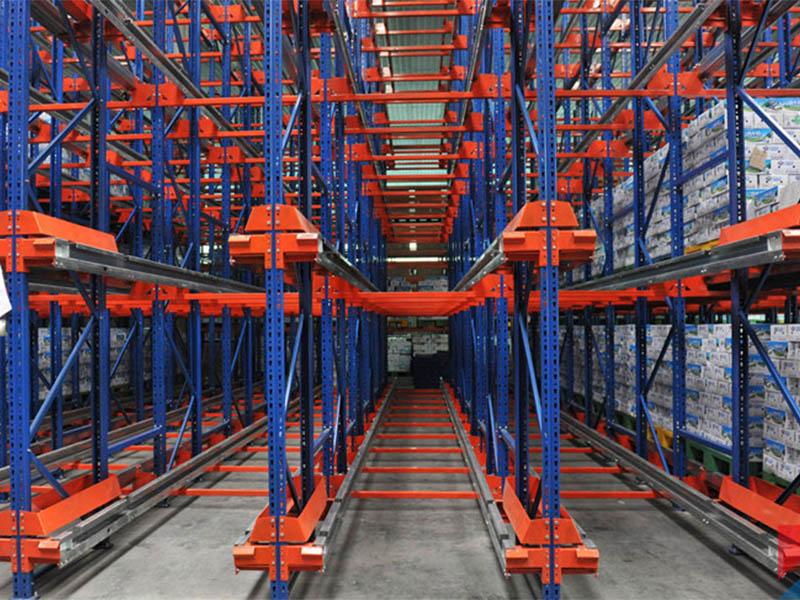
Is Narrow Aisle Racking Right For You?
This system excels in specific scenarios. Consider it strongly if:
- Your storage capacity is maxed out, but expansion is too expensive.
- You have a high volume of pallet-in, pallet-out activity.
- Your building has high ceilings (over 25 feet) you aren't fully using.
- Your product mix is relatively stable, and you can commit to a detailed layout.
You might want to reconsider if:
- Your inventory turns over very slowly (tying up capital in high-tech equipment).
- Your floor is uneven and repairing it is cost-prohibitive.
- Your operation handles a vast number of different SKUs with constantly changing pallet sizes.
Making the Final Decision
Investing in a narrow aisle racking system is a major logistical and financial decision. The space savings are undeniable, but they come with upfront costs and operational changes.
The most important step is to consult with experienced racking designers and forklift dealers. Bring them your warehouse data and business goals. A professional can perform a feasibility study and layout to show you the real potential ROI.
Don't just focus on the rack price. Look at the total system cost: racks, installation, new forklifts, and any site preparation. When done correctly, the long-term savings in space and efficiency make a compelling case for going narrow.
Frequently Asked Questions (FAQs)
Q1: How narrow can a "narrow aisle" actually be?
A1: It depends on the equipment. With a standard reach truck, aisles are typically 8-10 feet wide. For Very Narrow Aisle (VNA) systems using turret trucks, aisles can be as tight as 5-6 feet wide. The exact width is determined by your pallet size, forklift model, and required clearance.
Q2: Do I absolutely need a special forklift for narrow aisle racking?
A2: Yes, this is a fundamental requirement. Standard counterbalance forklifts cannot operate in these tight spaces. You will need either a reach truck, a turret truck, or a specialized order picker designed for the specific aisle width of your system.
Q3: How flat does my warehouse floor need to be?
A3: Extremely flat. For high-level narrow aisle racking with tall masts, the floor tolerance is often within 1/4 inch over 10 feet. An uneven floor is a major safety hazard, causing forklift instability and potential rack damage. A professional floor survey is a mandatory first step.
Q4: Can I convert my existing wide aisle racks to a narrow aisle system?
A4: Sometimes, but it's not just a matter of moving them closer. The existing racks must be assessed for height and load capacity. More importantly, the floor must be suitable, and you must purchase the correct narrow aisle forklifts. It often involves a complete re-layout and professional re-installation.
Q5: Is narrow aisle racking good for fast-moving inventory?
A5: It can be excellent for fast-moving pallets, especially with reach trucks. The reduced travel distance in the aisles speeds up cycles. However, traffic management is crucial to prevent congestion, as aisles are often one-way. Good warehouse management software (WMS) is highly beneficial in these environments.