Choosing the right storage system is a critical decision for any warehouse manager. One popular option that often comes up is narrow aisle racking. But is it the right fit for your operation?
This system is designed to maximize storage density by significantly reducing the width of forklift aisles. While it sounds promising, it's not a one-size-fits-all solution. Understanding the full picture of narrow aisle racking advantages and disadvantages is essential before making an investment.
Let's break down what this system entails, where it shines, and where it might create new challenges.
What Exactly is Narrow Aisle Racking?
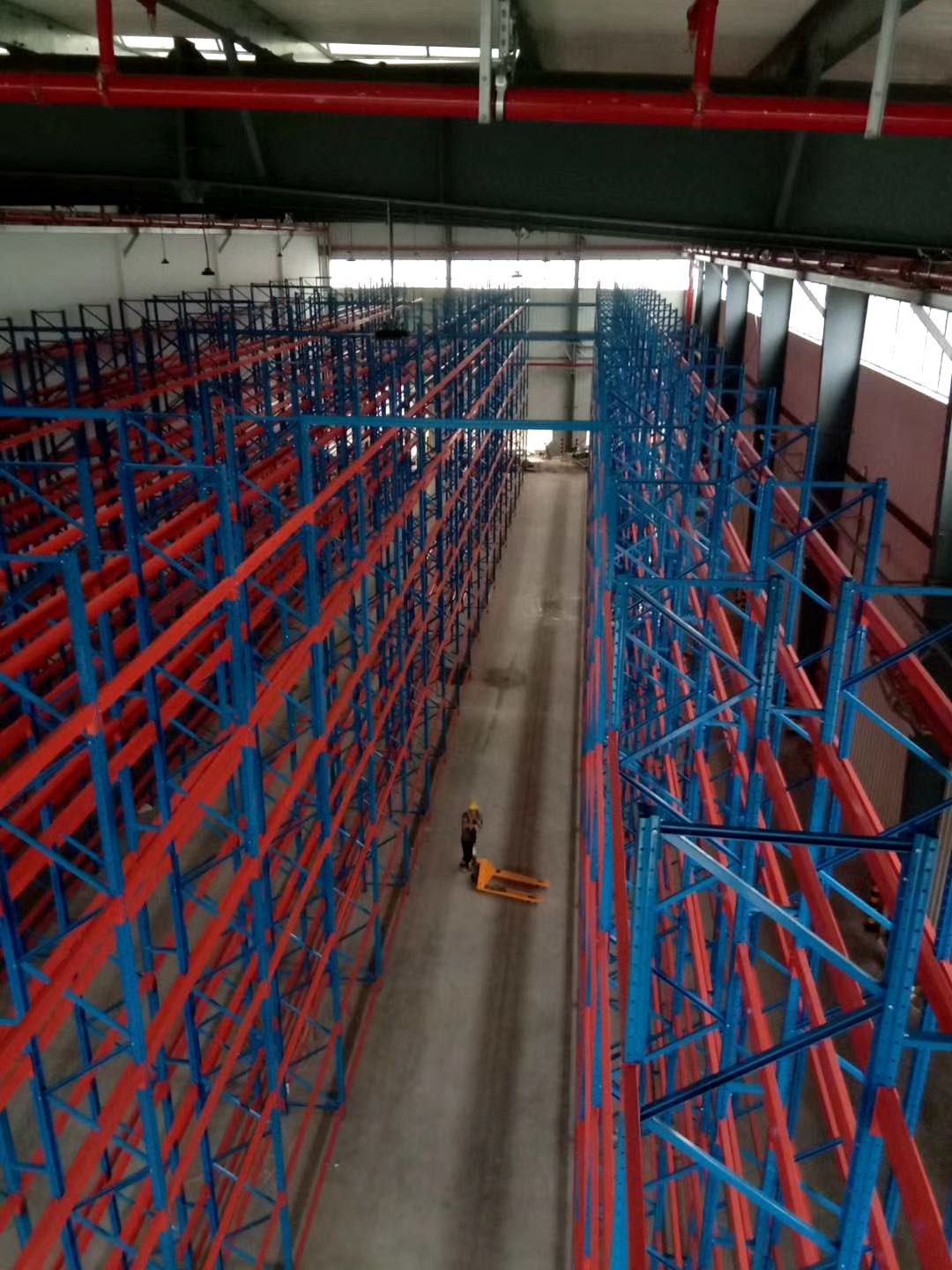
First, let's define the system. Narrow aisle racking is a high-density storage solution. It typically works with selective pallet racking but operates in aisles much narrower than conventional setups.
Standard warehouse aisles for counterbalance forklifts are often 11 to 13 feet wide. Narrow aisle racking systems reduce this to between 6 and 8 feet. Some very narrow aisle (VNA) systems can work in aisles as tight as 5 to 6 feet.
This dramatic reduction is possible because of specialized equipment. Operators use dedicated narrow aisle forklifts, also called turret trucks or reach trucks. These lifts can work in tight spaces because their forks can rotate or extend to place and retrieve loads.
The core idea is simple: trade aisle space for more storage lanes. But the implications of that trade-off are complex.
The 5 Major Advantages of Narrow Aisle Racking
For the right facility, the benefits of this system can be transformative. Here are the key advantages of narrow aisle racking.
1. Dramatically Increased Storage Capacity
This is the biggest draw. By shrinking aisles, you reclaim floor space for actual storage. You can add multiple additional rows of racking in the same building footprint.
For warehouses where real estate is expensive or fixed, this density boost is invaluable. It can delay or eliminate the need for a costly expansion or relocation. You simply store more within your existing four walls.
2. Improved Space Utilization and Cube Efficiency
It's not just about floor space; it's about using the entire cubic volume of your warehouse more effectively. Narrow aisle systems often allow for taller racking because the specialized equipment can safely work at greater heights.
You utilize the vertical airspace that might be wasted in a standard setup. Better cube efficiency directly translates to a lower cost per stored pallet.
3. Potential for Enhanced Inventory Organization
With more lanes and clearer vertical storage, inventory can be organized with greater precision. SKUs can be segregated more logically, which can reduce picking errors.
The increased capacity can also reduce the need for double-deep or drive-in racking, improving selectivity. Every pallet remains accessible, which is crucial for FIFO (First-In, First-Out) inventory management.
4. Long-Term Operational Cost Savings
While the initial investment is higher, the long-term savings can be significant. You save on costs associated with a larger building footprint, such as rent, utilities, property taxes, and heating/cooling.
Higher density can also reduce travel distances for order pickers over time, potentially boosting productivity. The energy costs of running a smaller, more packed building are often lower.
5. A Foundation for Modernization
Implementing a narrow aisle racking system often goes hand-in-hand with warehouse modernization. It frequently involves upgrading to a Warehouse Management System (WMS) and newer, more efficient MHE (Material Handling Equipment).
This creates a more streamlined, technology-enabled operation that is better positioned for future growth and automation integration.
The 3 Significant Disadvantages and Challenges
The disadvantages of narrow aisle racking are equally important to weigh. They often revolve around cost, complexity, and inflexibility.
1. High Initial Capital Investment
The setup cost is substantially higher than for conventional racking. You're not just buying racking; you're investing in specialized forklifts (turret trucks or reach trucks), which are more expensive than standard counterbalance models.
The installation itself may be more complex and costly. Furthermore, your warehouse floor needs to be exceptionally flat and level to ensure safe operation in tight spaces, which might require costly floor grinding or repair.
2. Reduced Flexibility and Potential for Congestion
The system creates a more rigid warehouse layout. Changing your storage configuration or aisle widths later is a major undertaking. Your operation becomes tightly coupled to the specific equipment and layout.
Furthermore, while aisles are narrow, they can become bottlenecks. If multiple lifts need to access the same aisle, traffic jams can occur. Meticulous planning and scheduling, often managed by a WMS, are required to avoid this.
3. Operational Complexity and Training Demands
Operating a narrow aisle forklift requires more skill than a standard forklift. Drivers need specialized training and certification. The hiring pool for qualified operators is smaller, and turnover can be more disruptive.
Maintenance for the specialized equipment is also more complex and expensive. Downtime for a key narrow aisle truck can severely impact operations, as standard forklifts cannot replace them in the tight aisles.
Key Considerations Before Implementing a Narrow Aisle System
Knowing the advantages and disadvantages is the first step. Next, you must audit your own operation against these points.
Evaluate Your Product Profile: Is your inventory relatively uniform in size and weight? Do you have a high number of SKUs requiring good selectivity? Narrow aisle racking works best with consistent pallet sizes and a need for direct access.
Analyze Your Throughput: Is your operation high-volume with fast-moving goods? The system excels here. For very slow-moving, deep-storage goods, other high-density options might be more cost-effective.
Assess Your Building: Do you have clear height to exploit? Is your floor condition suitable? Are column spacings compatible with an efficient narrow aisle layout? A professional site survey is crucial.
Calculate the True ROI: Don't just look at the racking cost. Model the total cost of ownership—racking, equipment, training, maintenance, and potential building modifications—against the value of your gained storage space and efficiency gains.
FAQ: Common Questions on Narrow Aisle Racking
Q1: What is the minimum aisle width for narrow aisle racking?
A1: The minimum workable aisle width depends on the pallet size and the specific equipment. Typically, aisles range from 6 to 8 feet for standard narrow aisle systems. Very Narrow Aisle (VNA) systems, which often use guided vehicles, can function in aisles as tight as 5 to 6 feet.
Q2: Can I use my existing forklifts with narrow aisle racking?
A2: Almost certainly not. Standard counterbalance forklifts require aisles 11 feet wide or more. Implementing a narrow aisle racking system necessitates purchasing or leasing specialized equipment like reach trucks or turret trucks designed for tight spaces.
Q3: Is narrow aisle racking suitable for cold storage facilities?
A3: It can be excellent for cold storage, where space is extremely valuable due to high refrigeration costs. The increased density saves energy. However, the specialized MHE must be rated for cold environment operation, which adds to the cost, and operator comfort becomes a bigger consideration.
Q4: How much more storage capacity can I gain compared to wide aisles?
A4: The increase varies by layout, but a common estimate is a 40-50% gain in storage capacity within the same building footprint by converting from wide aisles to a narrow aisle system. A professional layout design will provide a precise figure for your specific space.
Q5: What's the biggest mistake companies make when switching to narrow aisle?
A5: Underestimating the need for precision. From ultra-flat floors and perfectly aligned racking to highly trained operators and a robust WMS, everything must be precise. Cutting corners on floor quality, training, or software support will lead to accidents, damage, and inefficiency, negating the advantages of narrow aisle racking.