You know the feeling. The warehouse is getting full, but the number of pallets you need to store keeps growing. Adding more buildings isn't an option. You've looked at standard pallet rack, but the aisles take up so much precious floor space.
There's a common solution for this exact problem. It trades a bit of access flexibility for a huge gain in storage density. It’s called drive in rack.
This system is built on a simple idea: remove the aisles between the racks. Instead of navigating a network of pathways, a forklift drives directly into the rack structure itself. It’s one of the most space-efficient forms of pallet storage available.
Let's walk through how it works, where it shines, and the important considerations before you install it.
What Exactly is a Drive-In Rack System?
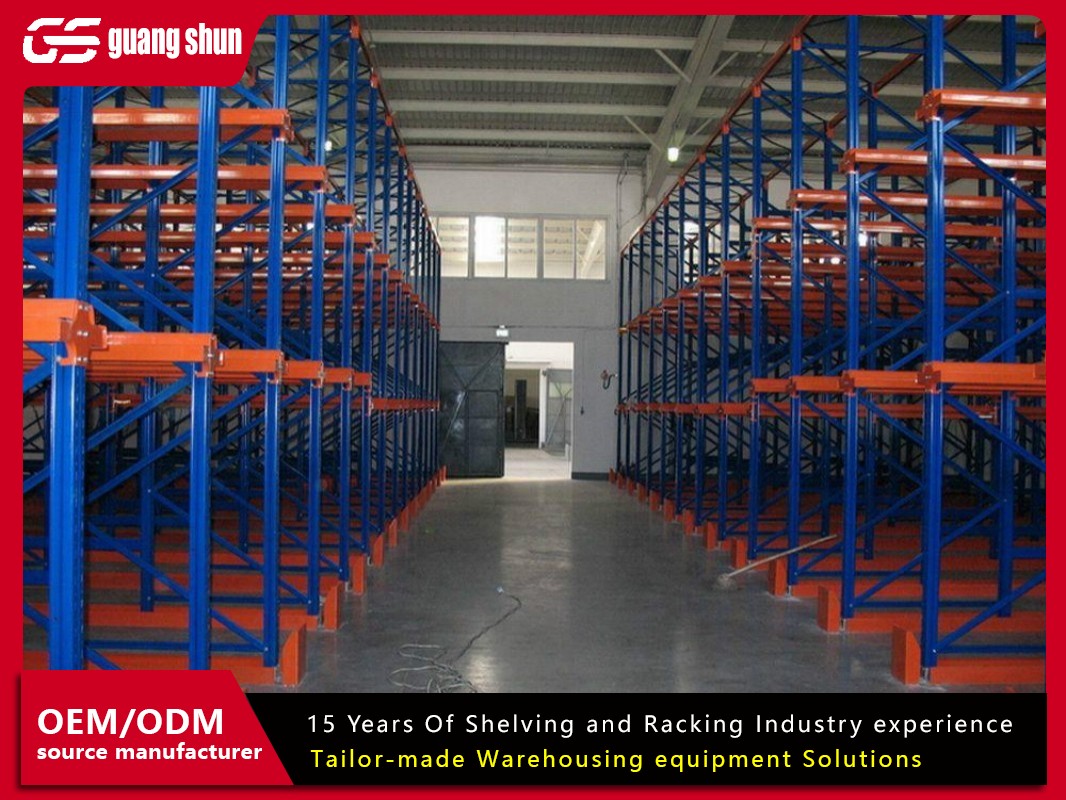
A drive in rack is a high-density storage system where pallets are stored on rails, multiple units deep, within a single lane. The structure itself acts as a multi-level "tunnel" or "garage bay" for pallets.
Unlike selective pallet racking, where every pallet faces an aisle, a drive in rack has no internal aisles. The vertical upright frames support horizontal load rails that run the entire depth of the lane.
A forklift operator drives directly into this lane to place a pallet onto the rails. They will drive in, deposit the load, back out, and repeat for the next level. To retrieve a pallet, they drive in again, pick it up, and back out.
This design allows you to store pallets up to 10 deep or more, dramatically increasing the number of pallets per square foot of floor space. It is a classic form of high-density storage.
How Drive-In Racking Works: The Mechanics
Understanding the daily workflow is key. A typical drive-in racking system consists of two main structural elements: upright frames and load rails or beams.
The rails run along the entire length of the storage lane on each storage level. Pallets sit on these rails, not on beams that span the width of the bay. This continuous rail is what allows the forklift to travel into the depth of the rack.
Storage follows a Last-In, First-Out (LIFO) inventory method. The last pallet loaded into a lane is the first one that can be retrieved. The forklift must remove the front pallet to access the one behind it.
A common variant is the drive-through rack. This design allows access from both ends of the lane. With entry and exit points on opposite sides, it enables First-In, First-Out (FIFO) inventory management, which is crucial for perishable goods.
The operator's skill is paramount. They must navigate carefully within the confined space of the lane to avoid damaging the rack structure. Guidance rails on the floor are often used to help keep the forklift centered.
Ideal Applications: Who Should Use Drive-In Rack?
This system isn't for every warehouse. Its strengths are best leveraged in specific scenarios.
It is perfect for bulk storage of products with low SKU variety. Think seasonal items, beverage canning, paper products, or packaged food goods where you have large quantities of identical items. Storing 50 pallets of the same soda in a single lane makes perfect sense.
Cold storage facilities are a prime candidate. Refrigerated and frozen space is extremely expensive to build and operate. Maximizing every cubic foot is critical. The high-density nature of drive in racking directly reduces the building's required footprint and energy costs.
It works well for raw material storage in manufacturing. If you need to keep a large buffer stock of a specific component or material, a dedicated drive-in lane provides organized, high-volume storage.
Businesses with slow-moving inventory also benefit. Products that turn over infrequently don't require instant, selective access. The space savings far outweigh the minor access delay.
Key Advantages of Choosing Drive-In Racking
The primary benefit is undeniable: massive space savings. By eliminating numerous aisles, you can often increase storage capacity by 60-75% compared to a selective racking layout in the same floor area. This is its main selling point.
This increased density directly translates to a lower cost per stored pallet. You are utilizing your existing building volume more effectively, potentially delaying or avoiding a costly expansion.
The system itself, while robust, has a relatively straightforward design. There are no moving parts like carts or wheels (as in push-back rack). This can mean lower maintenance costs over the long term.
It provides good protection for the stored product. Pallets are housed within the rack structure, somewhat shielded from accidental impacts that might occur in open aisles.
Important Limitations and Safety Considerations
The trade-offs are significant and must be planned for. The most notable limitation is restricted accessibility. You cannot access any specific pallet at any time. If you need the pallet at the very back of a full lane, you must first remove all the pallets in front of it.
This makes it unsuitable for warehouses with a high variety of SKUs or where order picking requires fast access to many different products. It is primarily a bulk storage solution.
The LIFO (or sometimes FIFO) access method is a constraint. You must manage inventory carefully to match this flow. It is not a random access system.
Operator training and skill are critical safety factors. Driving into a confined, multi-level structure requires precision. Damage to the upright frames from forklift impact can compromise the entire lane's integrity.
Speed of loading and unloading is generally slower than with selective rack. Each put-away or retrieval is a more involved maneuver. It is designed for volume storage, not for rapid throughput of many different SKUs.
Comparing Drive-In to Other High-Density Systems
It's useful to see where drive in rack fits among other dense storage options.
Compared to push-back rack, drive-in is often less expensive per pallet position and can achieve greater storage depths. However, push-back rack allows for multiple SKUs per bay and easier access within a lane, as pallets roll forward.
Compared to pallet flow rack, drive-in is a static system. Pallet flow uses gravity and rollers for automatic FIFO, offering much faster throughput but at a significantly higher cost and complexity. Drive-in is a more economical choice for slower-moving bulk goods.
The choice between drive-in and drive-through rack comes down to inventory rotation needs. Drive-in (LIFO) is simpler and requires only one access aisle. Drive-through (FIFO) requires aisles on both ends but is necessary for perishable goods management.
Design and Installation: Getting It Right
Proper planning is non-negotiable for safety and efficiency. You must start with accurate pallet dimensions and weights. The lane depth, rail spacing, and upright frame strength all depend on this data.
The number of pallets deep per lane is a crucial decision. Common depths range from 3 to 10 pallets. Deeper lanes increase density but also increase retrieval time for the rear-most pallets.
Aisle width in front of the lanes is determined by your forklift type. You need enough space for the truck to approach squarely and maneuver into the lane. This is typically less space than needed for selective rack aisles.
Professional installation is absolutely essential. The structure must be perfectly plumb and aligned. All connections must be torqued to specification. An improperly installed drive-in racking system is a major safety hazard. Regular inspections for impact damage are also a must.
Is Drive-In Racking the Right Fit for You?
The decision matrix is relatively clear. If your primary pain point is a severe lack of space, and you store large quantities of a limited number of products, a drive in rack system is likely an excellent solution.
It is a powerful tool for transforming wasted air space into high-density storage. The capital investment can often be justified by the dramatic increase in storage capacity within your existing four walls.
However, if you have a wide product variety, need fast random access, or have high turnover on many SKUs, the limitations will likely outweigh the benefits. In those cases, a selective racking system or a hybrid approach might be better.
For the right application—cold storage, seasonal goods, or bulk materials—it remains one of the most effective and reliable forms of high-density pallet storage available.
Frequently Asked Questions (FAQ)
Q1: What is the maximum height for a drive in rack system?
A1: The practical height is limited by your building's clear ceiling height and the capability of your forklifts. With standard turret or reach trucks, drive-in racking systems can be built up to 40-50 feet tall. However, most installations range between 20 and 35 feet. Each design must be professionally engineered for the specific height and load requirements.
Q2: Is a special forklift required for drive-in racks?
A2: Not necessarily a special forklift, but the right type. You need a forklift with a tight turning radius and excellent visibility. Standard counterbalance forklifts can be used, but they require wider approach aisles. Reach trucks or turret trucks are often preferred as they can operate in narrower aisles and handle greater heights more efficiently within the confined lane.
Q3: How do you manage inventory in a LIFO system?
A3: Careful planning and slotting are key. Each lane should be dedicated to a single SKU or product lot. Your Warehouse Management System (WMS) must be configured to understand the LIFO logic of the lane. It will direct put-away to the next available open position at the front and will know that the only available pallet for picking is the front-most one. Physical lane labels are also crucial.
Q4: What are the biggest safety risks with this racking?
A4: The two primary risks are forklift collision with the rack structure and load drops. Impacts can bend uprights or dislodge rails, risking a collapse. Operators must be highly trained. Secondly, because the forklift operates inside the rack, a dropped load or a pallet improperly placed on the rails can create a major hazard. Routine inspections for damage are critical.
Q5: Can drive-in rack be used for non-palletized loads?
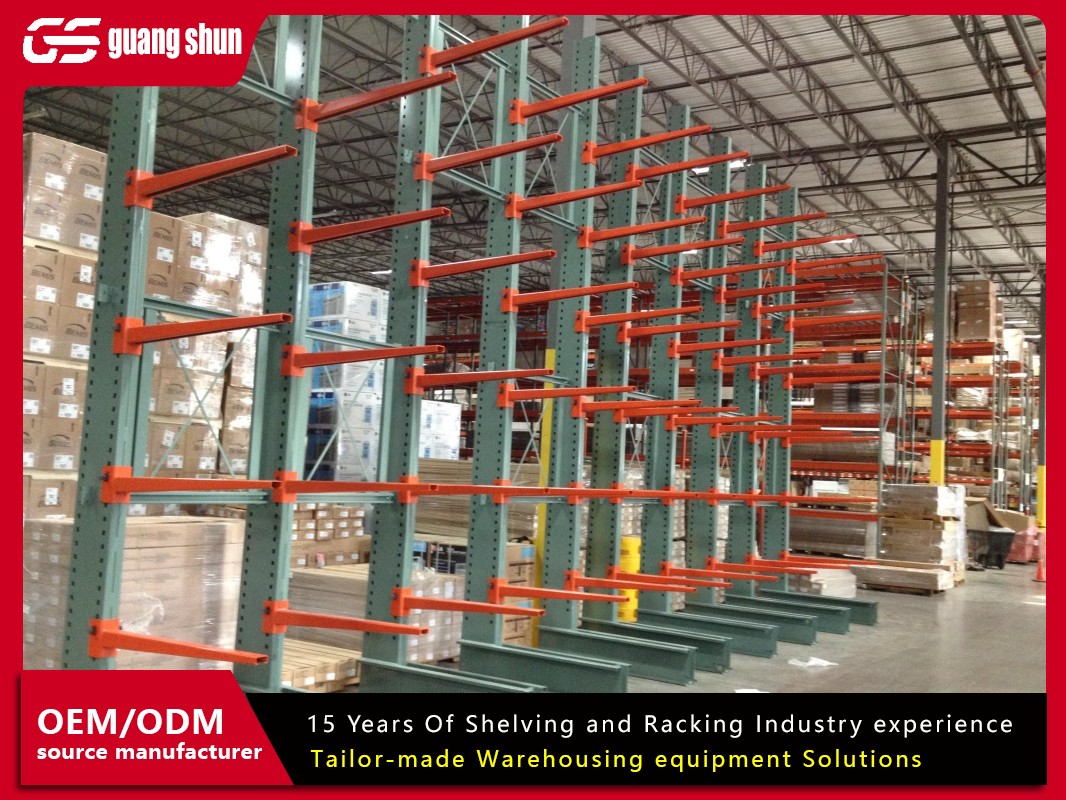
A5: Generally, no. The system is designed specifically for uniform, palletized loads. The rails are spaced to support standard pallet bases (stringer or block). Non-palletized, uneven, or overhanging loads will not sit securely on the rails and pose a significant safety risk. For non-palletized items, systems like cantilever racking are more appropriate.