Walk into any busy warehouse, distribution center, or even a well-organized backroom, and you’ll see them holding everything together. They are the silent framework of commerce. We’re talking about rack systems for storage.
Choosing the right one isn’t just about buying shelves. It’s a strategic decision that impacts your daily workflow, your staffing costs, and how much inventory you can hold. Get it wrong, and you face constant frustration, wasted space, and safety risks.
The good news is there’s a solution for almost every need. The challenge is matching your specific inventory and operations to the right type of rack. This article breaks down the common warehouse racking systems, their uses, and how to start your selection process.
What Are Storage Rack Systems, Really?
At their simplest, storage rack systems are engineered steel structures designed to store materials, typically on pallets or in cases, in an organized and accessible way. They move storage off the floor and into the vertical cube of your building.
This is the key: they turn empty air into profitable space.
Unlike simple shelving, industrial pallet rack systems are built to bear immense weight. They are modular, customizable, and form the literal backbone of modern logistics. Their design directly dictates what you can store, how quickly you can access it, and how efficiently your people can work.
The Main Types of Pallet Rack Systems
Not all racks are the same. The major categories are defined by one central trade-off: accessibility versus density. Here are the most common types of industrial racking you’ll encounter.
Selective Pallet Rack: The Universal Workhorse
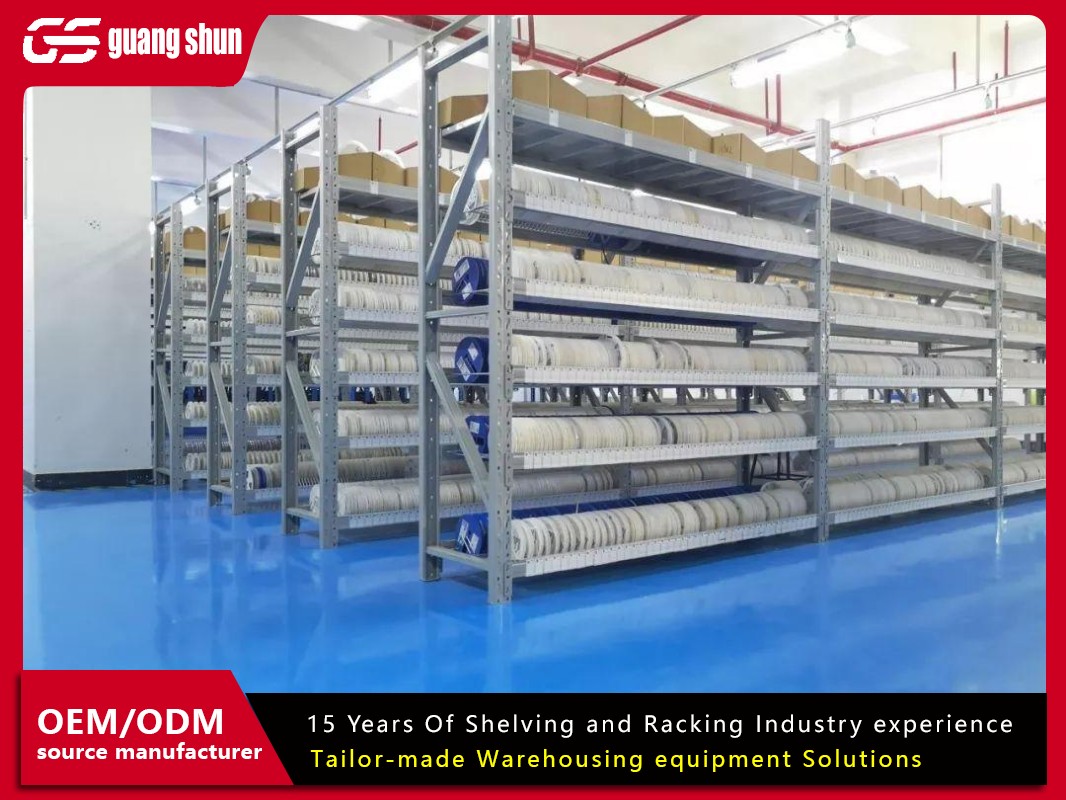
This is the most common system. It looks like a series of steel frames with horizontal beams creating shelves. Each pallet faces an aisle, and every pallet is directly accessible.
Think of it like a library for pallets. You can pull any “book” without moving another. It offers 100% SKU accessibility. This makes it perfect for warehouses with a wide variety of products.
The downside is that it requires wider aisles for forklifts to turn, which uses more floor space. For its flexibility, selective rack storage remains the default choice for countless businesses.
Drive-In/Drive-Through Rack: For High-Density Storage
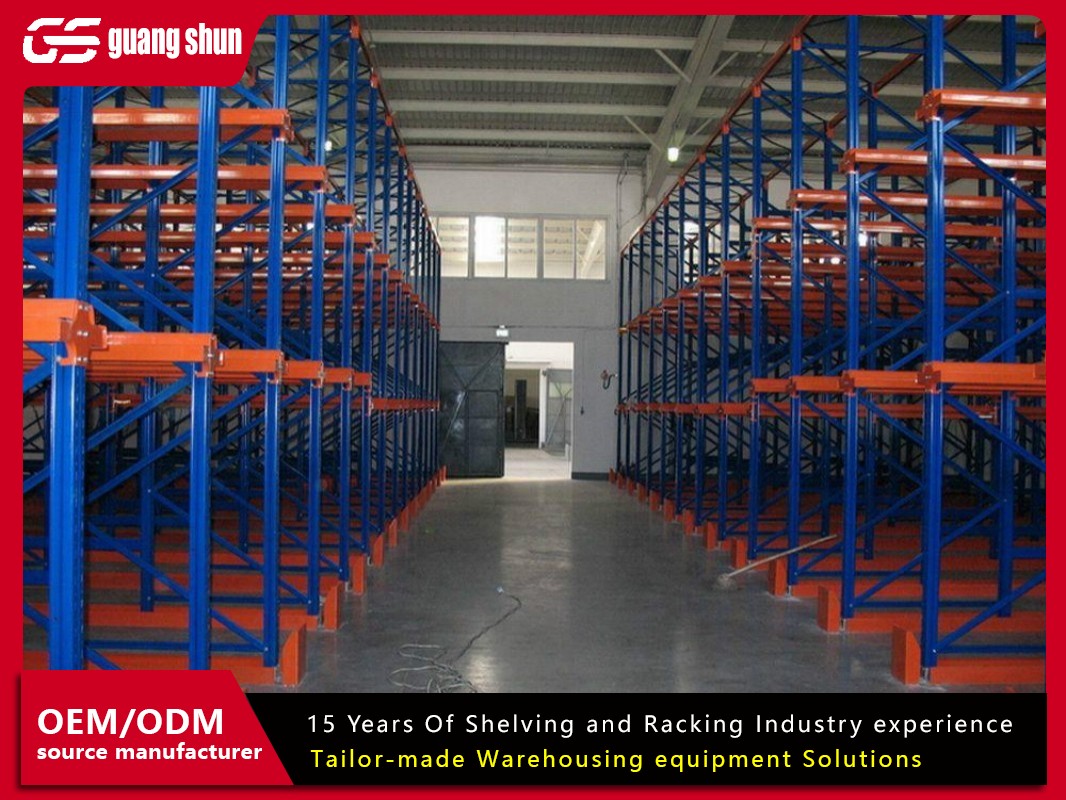
Imagine a multi-level garage for pallets, but with no internal aisles. That’s drive-in rack. The structure consists of continuous rails down a lane. A forklift drives directly into the lane to place or retrieve a pallet.
It stores pallets multiple deep, with the same SKU in each lane. This creates very high storage density. It’s ideal for cold storage or for storing large quantities of a few slow-moving products.
The trade-off is that you lose direct access to every pallet. You typically must follow a Last-In, First-Out (LIFO) sequence. A drive-through variant has entry from both ends, allowing FIFO access.
Push-Back Rack: A Step Up in Density & Selectivity
Push back rack systems offer a clever compromise. Each slightly inclined lane holds multiple pallets deep (usually 2-5). Pallets rest on wheeled carts that ride on rails.
When a forklift places a new pallet, it pushes the existing pallets further back in the lane. Retrieval works in reverse; taking the front pallet allows the next one to roll gently forward.
This system provides better density than selective rack while still allowing access to multiple SKUs per bay (though only one per lane). It’s excellent for operations needing to store more pallets in a smaller footprint but with more product variety than drive-in rack allows.
Pallet Flow Rack: The FIFO Powerhouse
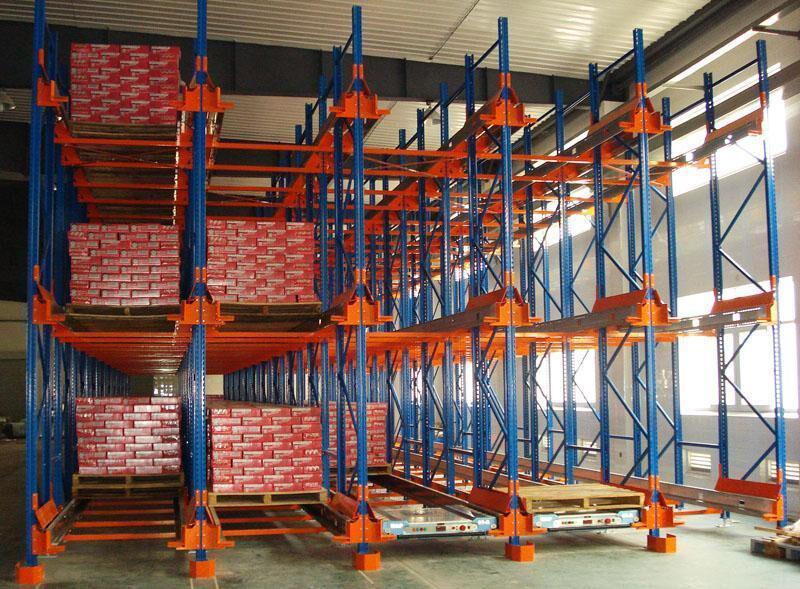
This is a dynamic system. Pallets are loaded from the rear on a slightly declined lane fitted with rollers or wheels. Gravity gently moves the pallet to the front pick face.
It’s the ultimate First-In, First-Out solution. The oldest pallet is always at the front. This is critical for perishable goods, products with expiration dates, or raw materials in manufacturing.
While offering high throughput and perfect inventory rotation, pallet flow systems are more complex and costly to install. They shine in high-volume picking environments with good product uniformity.
Cantilever Rack: For Long, Bulky Items
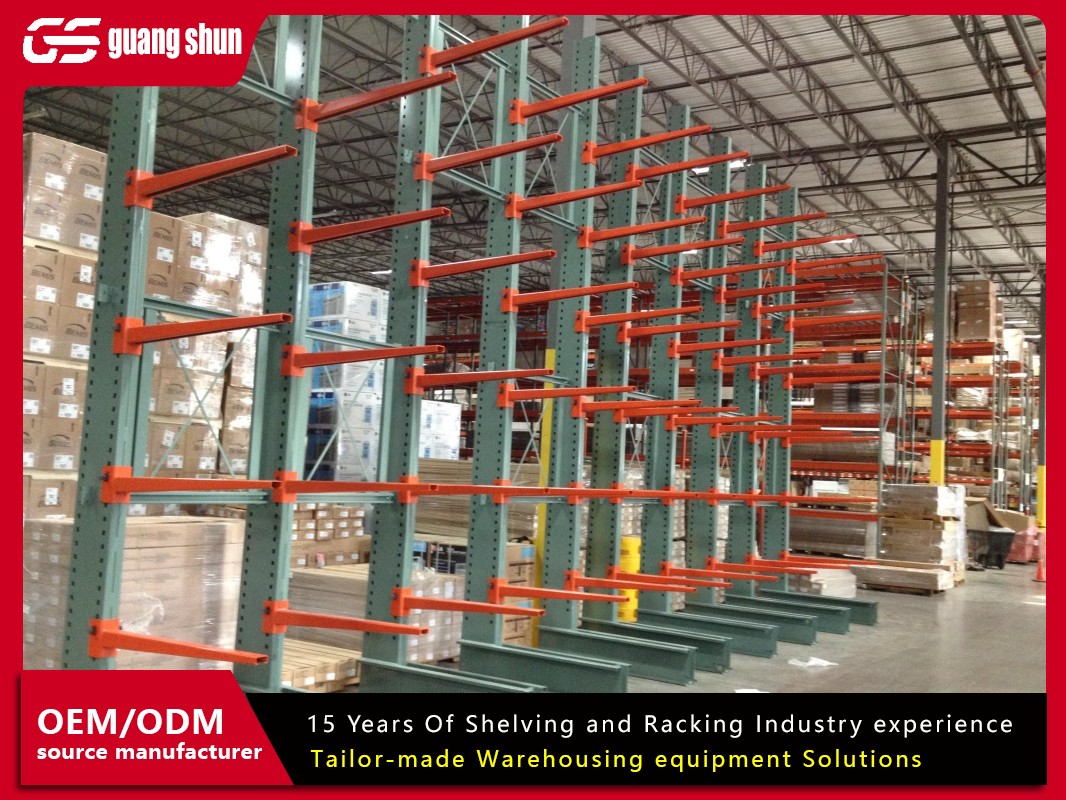
Not everything comes on a pallet. For storing lumber, pipes, furniture, or rolled materials, cantilever racking is the answer. It features sturdy vertical columns with horizontal arms that extend outwards.
This creates unobstructed access along the entire length of the item. The arms are adjustable, making the system incredibly versatile for oddly shaped inventory that standard pallet racks can’t handle.
Key Factors in Choosing Your Rack System
Picking a winner from these industrial storage racks requires a deep look at your own operations. Ask these questions.
First, analyze your inventory profile. How many different SKUs do you have? How many pallets do you keep of each? What are their dimensions and weights? Fast-moving, diverse items point to selective rack. Large quantities of identical items suggest drive-in or push-back.
Second, consider your access needs. Do you need to reach every single pallet at any moment (selective)? Is perfect inventory rotation non-negotiable (flow rack)? Can you manage with LIFO access for some bulk stock (drive-in)?
Third, look at your physical space. What are your ceiling heights? A high ceiling makes high-tier selective rack or a mezzanine rack system attractive. A small, expensive footprint pushes you toward dense storage solutions.
Finally, be honest about your budget. Selective rack is often the lowest initial cost. More complex systems like push-back or flow have a higher price tag but can justify it through massive gains in space utilization and productivity.
The Critical Role of Design and Installation
Buying warehouse storage racks isn’t like buying a bookcase. Professional design is essential. An engineer or qualified designer will calculate the required beam capacities, upright frame strength, and overall configuration based on your loads.
They ensure the system is safe, compliant with building codes, and optimized for your specific forklifts. They’ll plan aisle widths, row lengths, and clearances for sprinklers and lighting.
Professional installation is non-negotiable. Improperly assembled racks are a major safety hazard. Certified installers ensure every beam connector is fully engaged, every bolt is torqued to specification, and the entire structure is plumb and secure.
Safety and Maintenance: An Ongoing Priority
Your storage rack system is a piece of heavy equipment. It requires respect and routine care. The biggest risks are overloading and forklift impact.
Never, ever exceed the load capacity posted on the load application and capacity signs. Distribute weight evenly on the pallets and the beams.
Forklift collisions with upright frames are a leading cause of rack failure. Install column protectors and guard rails. Train your operators relentlessly.
Implement a formal inspection program. Have a designated person check for damage weekly or monthly. Look for bent beams, dislodged connectors, or dents in the uprights, especially at the base. Any significant damage requires immediate unloading of the affected area and repair by a professional.
Integrating with Other Systems
Pallet rack systems rarely work in isolation. They are often part of a larger ecosystem. You might have selective rack for picking and a section of push-back rack for reserve storage above it.
Many warehouses combine racks with a mezzanine rack system to create a second-level picking platform, effectively doubling their usable floor space. Conveyors, picking carts, and warehouse management software (WMS) all interact with the physical rack layout.
Your choice of racking will influence, and be influenced by, these other technologies. A good layout smooths the path for people and products from receiving, to storage, to picking, to shipping.
Getting Started: Your Next Steps
Feeling overwhelmed? Start with data. Gather information on your inventory—SKU counts, pallet volumes, turnover rates, and growth projections. Map out your warehouse space with accurate measurements and ceiling heights.
Then, talk to a few reputable suppliers or consultants. A good partner won’t just sell you rack; they will ask detailed questions about your business and propose a solution tailored to your challenges.
Consider a phased approach. You might start with a core area of selective rack storage and expand into denser systems as your needs become clearer.
The right rack systems for storage won’t just hold your stuff. They will organize your workflow, protect your inventory, and empower your team to work smarter and faster. It’s an investment that pays daily dividends in efficiency.
Frequently Asked Questions (FAQ)
Q1: What is the cheapest type of pallet rack system?
A1: In terms of upfront cost per pallet position, selective pallet rack is generally the most economical. Its simple design and standard components keep material and installation costs lower than more complex dense storage systems like push-back or pallet flow. However, “cheapest” must consider space efficiency; a dense system might have a higher initial cost but store more in the same area, offering a better long-term value.
Q2: How high can storage racks safely go?
A2: The safe height is determined by your building’s ceiling clearance, your forklift capabilities, and local regulations. With the right high-reach forklift, warehouse racking systems can safely reach 40 feet or more. However, most standard installations range from 20 to 30 feet. Each installation must be professionally engineered for its specific height and load conditions.
Q3: Can I mix different rack types in one warehouse?
A3: Absolutely. In fact, most efficient warehouses do this. It’s called a hybrid layout. You might use high-density push back rack systems for your top-selling products in bulk, selective rack for slower-moving SKUs, and cantilever rack in a corner for long materials. This approach tailors storage methods to the specific access and density needs of different product groups.
Q4: How often should I perform a safety inspection on my racks?
A4: Formal, documented inspections should be conducted at least annually by a competent person. However, visual checks should be part of the daily routine. Forklift operators and floor supervisors should be trained to spot and immediately report any visible damage, such as new dents, bent components, or leaning frames, right when it happens.
Q5: We have very uneven pallet sizes. Is there a rack system that can handle that?
A5: Selective pallet rack is the most adaptable to uneven pallet sizes because its beam levels are easily adjustable. You can create a custom shelf height for each level to minimize wasted vertical space. For non-palletized, long items of varying sizes, cantilever racking is the most flexible solution due to its adjustable arms. The key is to group similar-sized items together as much as possible during the planning phase.