If you’re running a warehouse, workshop, retail storeroom, or any commercial space, you’ve likely searched for storage solutions. The terms shelving & racking pop up everywhere. They’re often used together, but they aren’t the same thing.
Using the wrong one for your needs costs money, wastes space, and creates safety hazards. A heavy pallet on light-duty shelving is a disaster waiting to happen. Small parts stored on massive racking is a huge waste of efficiency.
This article will clearly explain the difference between shelving and racking, where each excels, and how to make the right choice for your inventory and workflow.
The Fundamental Divide: What Are You Storing?
The core difference between shelving & racking lies in the storage unit and the handling method.
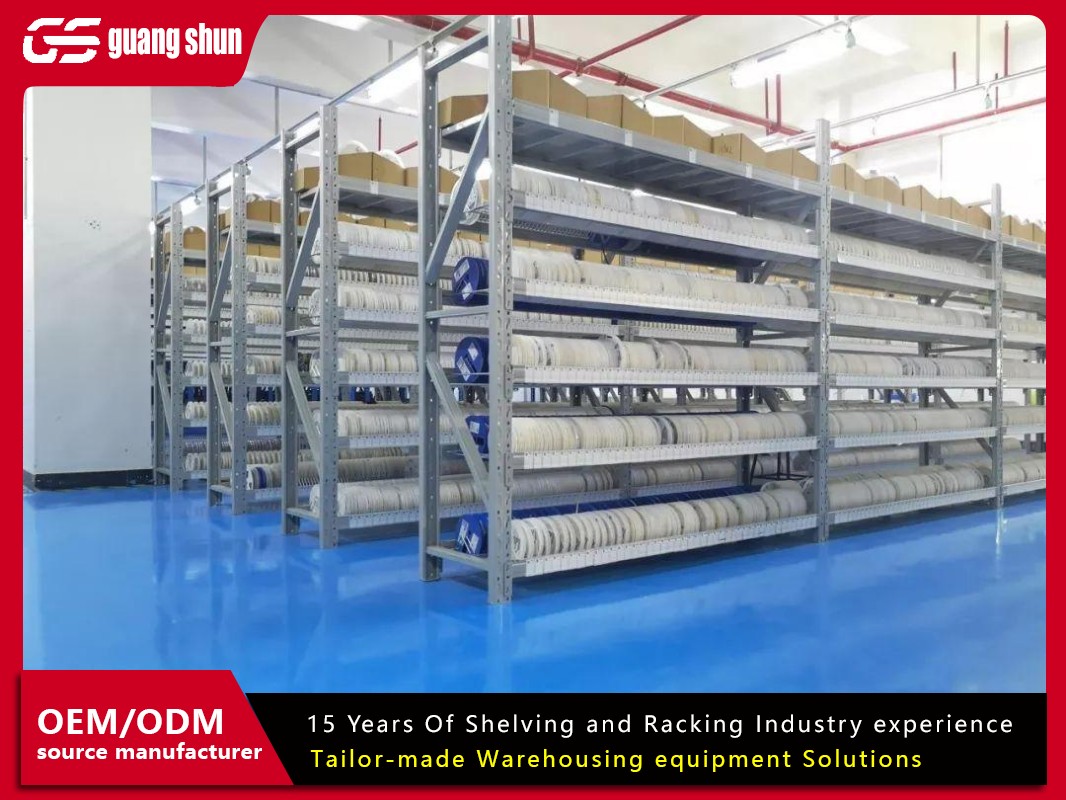
Shelving is designed for storing smaller, individual items, boxes, or bins that are accessed by hand. Think of it as heavy-duty, industrial-strength bookshelves. Workers walk up to them and pick items directly off the shelf.
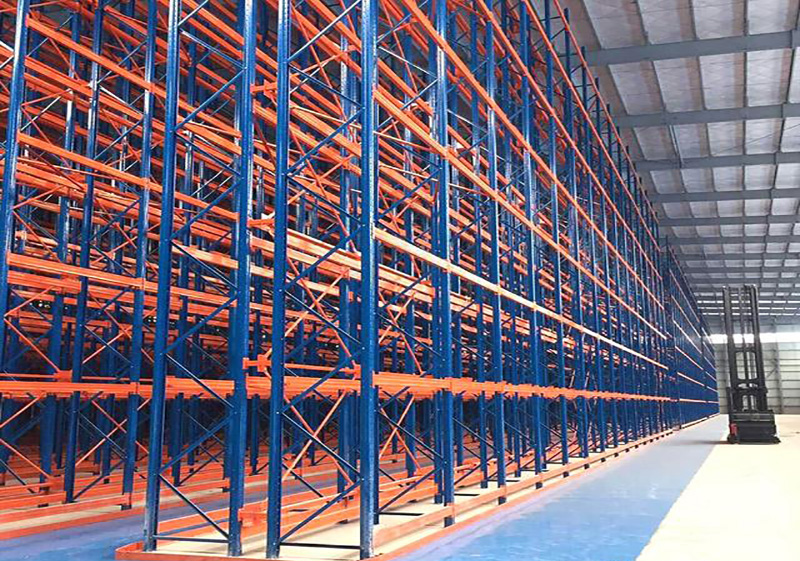
Racking is engineered for storing unit loads, almost exclusively on pallets, that are handled by machinery like forklifts or pallet jacks. It’s a structural framework that supports massive weight and is built for equipment access.
Confusing these two is the most common and costly mistake in storage planning.
A Closer Look at Shelving: Organization for Smaller Items
Warehouse shelving is all about accessibility and organization for a large number of SKUs. It creates a home for everything, from tools and spare parts to boxes of retail products.
Common types of industrial shelving include:
- Boltless Shelving (Clip Shelving): The most popular type. Beams clip securely into upright posts without tools. Decks can be solid metal, particle board, or wire mesh. Its ease of assembly and reconfiguration makes it a versatile workhorse.
- Bolted Shelving: Offers maximum strength and stability. Assembled with nuts and bolts, it handles heavier, non-palletized loads better than boltless styles and is less likely to wobble at greater heights.
- Wire Shelving: Provides excellent visibility and airflow. Ideal for environments where cleanliness is critical, like food processing or pharmaceutical storage, as dust and spills don’t accumulate.
- Mobile Aisle Shelving: Units are placed on carriages that move along rails, eliminating permanent aisles. This creates extremely high-density storage for archives, files, or parts where access frequency is lower.
When to Choose Shelving:
Your primary need is to organize many small-to-medium items for manual picking. Your inventory consists of boxes, bins, or loose items. Your operators will access goods on foot, potentially using a rolling ladder.
A Closer Look at Racking: Heavy-Duty Storage for Pallets
Warehouse racking is built to maximize the cubic space of your building, safely stacking pallets high into the air. It transforms floor space into vertical storage.
Common types of pallet racking include:
- Selective Pallet Rack: The standard. Each pallet is directly accessible. It requires wider aisles for forklifts but offers total flexibility for mixed SKU storage.
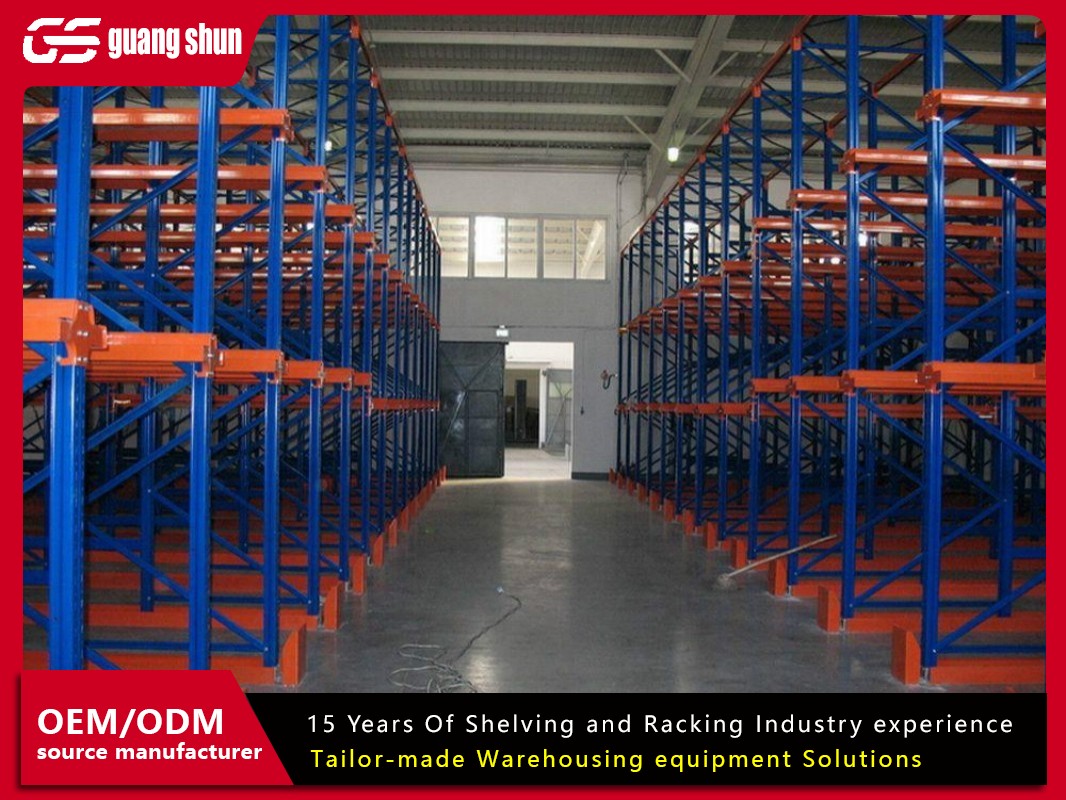
- Drive-In/Drive-Through Rack: A high-density system. The forklift drives into the rack structure itself to store and retrieve pallets. Perfect for storing large quantities of the same product (like beverages or seasonal items) with limited SKUs.
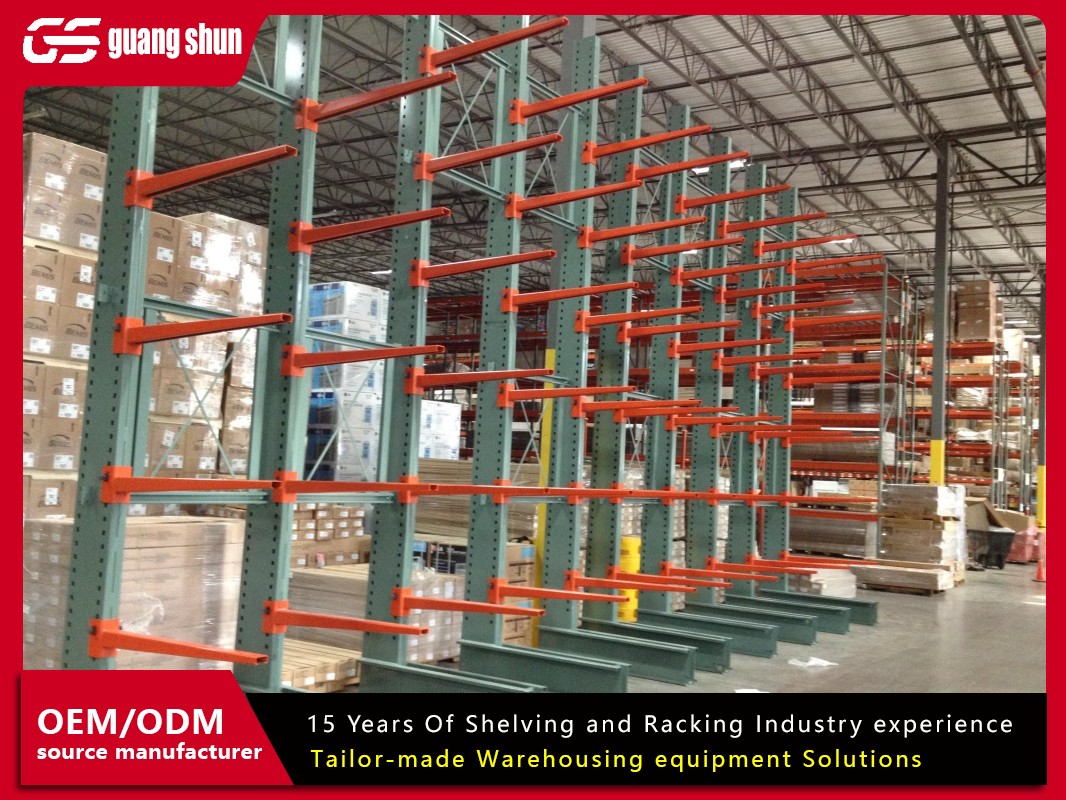
- Cantilever Rack: Designed for long, bulky items like lumber, piping, or furniture. Arms extend from a central column, providing clear, unobstructed access from the side.
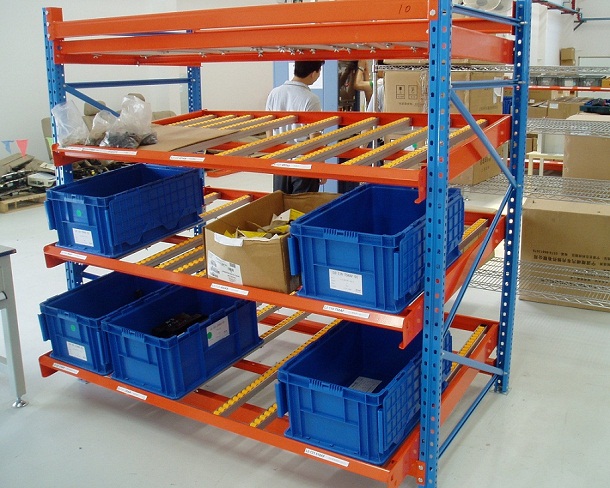
- Push Back Rack: A dynamic system where pallets are stored on nested carts on a slight incline. When a pallet is removed, the next one rolls forward. It offers more selectivity than drive-in with better density than selective rack.
When to Choose Racking:
Your inventory moves on pallets. You use forklifts, reach trucks, or pallet jacks for handling. Your goal is to store bulk quantities and make efficient use of your building’s height.
Side-by-Side Comparison: Shelving vs. Racking
Let’s break down the key decision factors between shelving & racking.
1. Load Capacity & Weight:
- Shelving: Capacity is measured per shelf level, typically from a few hundred to several thousand pounds, distributed across the shelf deck.
- Racking: Capacity is measured per pallet position, often in tons. The weight is concentrated at the load beams where the pallet sits.
2. Accessibility & Picking Method:
- Shelving: Optimized for manual, broken-case, or item-level picking. The “golden zone” between waist and shoulder height is key for fast-moving items.
- Racking: Optimized for full-pallet or full-case picking by machine. The focus is on forklift maneuverability and safe load placement/retrieval.
3. Space Utilization & Density:
- Shelving: Creates high-density storage for many different small items within a compact footprint. Aisles can be narrow.
- Racking: Creates high-density storage for uniform pallet loads. Aisle width is determined by the equipment, with selective rack using more floor space for aisles than high-density systems like drive-in.
4. Flexibility & Reconfiguration:
- Shelving: Highly flexible. Adjusting shelf heights or adding units is generally quick and easy, especially with boltless designs.
- Racking: Beam heights are adjustable, but the overall structure is more fixed. Major reconfiguration is a larger project. Systems like selective rack offer good SKU flexibility.
5. Cost Considerations:
- Shelving: Often has a lower upfront cost per storage location and can frequently be assembled in-house.
- Racking: Involves a higher initial investment per bay and often requires professional installation to ensure safety and load integrity.
How to Choose: Key Questions to Ask
Selecting between shelving & racking starts with your inventory and processes.
- What is your smallest and largest storage unit? (e.g., a small bolt vs. a pallet of flooring)
- How do items arrive and leave your facility? (e.g., on pallets, then broken down for picking)
- What equipment is used for movement? (e.g., only human hands, or forklifts?)
- How many different SKUs do you manage?
- What is your picking profile? (Full pallet out? 5 items from 5 different locations?)
Your answers will point you in the right direction.
The Power of Integration: Using Shelving and Racking Together
The most efficient facilities rarely use just one system. They integrate both shelving & racking to create a holistic storage strategy.
A typical workflow looks like this:
- Bulk pallets of incoming goods are stored in the racking area (high-bay reserve storage).
- A selection of items is “replenished” from racking to forward pick faces on shelving in the packing/shipping area.
- Order pickers quickly walk the aisles of shelving to assemble customer orders from the easily accessible bins and boxes.
- Remaining bulk stock stays safely and densely stored on the racking.
This hybrid approach combines the high-density bulk storage of racking with the high-speed accessibility of shelving.
Safety and Maintenance Are Non-Negotiable
Both systems demand respect. Incorrect use leads to collapse, injury, and damaged inventory.
For racking, conduct weekly visual checks for forklift damage on uprights. Never exceed the load capacity marked on the load beam. Ensure pallets are properly sized and in good condition. Use pallet supports and column guards.
For shelving, ensure units are leveled and anchored if tall or heavily loaded. Place the heaviest items on the lowest shelves. Never use the top shelf as a ladder. Distribute weight evenly across the shelf deck.
Frequently Asked Questions (FAQ)
Q1: Can I store pallets on heavy-duty shelving if it’s rated for the weight?
A1: It is strongly discouraged and often violates safety standards. Even if the shelf can hold the static weight, shelving is not designed for the dynamic impact of a forklift placing or removing a pallet. The concentrated load points can fail. Always use proper pallet racking for palletized goods.
Q2: Which system is better for a small warehouse with both pallets and small parts?
A2: Most small warehouses benefit from both. Use a single run of selective pallet racking along one wall for your palletized goods. Then, use boltless shelving units to create organized storage for your small parts and picking area. This keeps workflows separate and efficient.
Q3: Is cantilever considered shelving or racking?
A3: Cantilever is a type of racking. It is a heavy-duty, structural system designed for long, bulky items that would be impractical for standard shelving. It is typically accessed by forklifts with special attachments or by sideloaders.
Q4: How do I know if my floor can support racking?
A4: This is a critical question. Industrial racking, especially when fully loaded, imposes significant point loads on the floor. You must consult a structural engineer or a qualified racking supplier to assess your slab’s capacity. Never assume it’s sufficient.
Q5: Can I mix and match shelving and racking brands/components?
A5: No. You should never mix components from different manufacturers of racking systems. They are engineered as complete systems, and interchangeability is not guaranteed, creating a major safety risk. For shelving, mixing brands is also not advised for stability, though boltless systems from the same manufacturer are often compatible within their product line.