If you're setting up a new warehouse or reconfiguring an existing one, few decisions are as critical as your aisle width. Getting it wrong can mean daily inefficiencies, higher costs, and even safety hazards. The term warehouse standard rack aisle width is often searched, but the reality is there's no single "standard." It's a calculation, a trade-off.
This article cuts through the confusion. We'll look at how your choice in racking aisle width directly impacts your operation's cost and productivity. You'll learn the key factors that determine the right width for your specific situation.
What Exactly is Warehouse Rack Aisle Width?
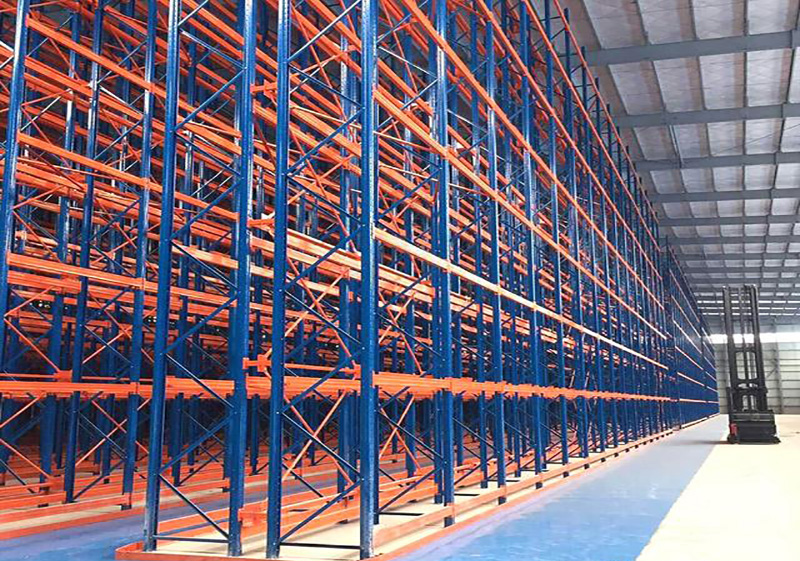
Let's define it simply. The warehouse standard rack aisle width refers to the measured distance between two parallel rows of storage racking. This space allows your material handling equipment—like forklifts or pallet jacks—to maneuver, pick up, and put away loads.
It's measured from the face of one rack upright to the face of the opposite rack upright. This clear space is what your operator uses every single time they access inventory. A few inches can make a huge difference.
Why does this measurement matter so much? It sits at the heart of a fundamental warehouse equation: Storage Density versus Accessibility. Narrower aisles mean you can fit more racks and more inventory in your building. Wider aisles mean faster, safer, and easier access for your equipment and workers.
Finding your optimal pallet racking aisle width is about balancing these two competing needs.
Common Aisle Width Standards for Different Forklift Types
The closest thing to a "standard" is defined by the equipment you use. Your forklift's turning radius is the primary dictator of your minimum aisle width. Here’s a breakdown of the most common setups.
1. Very Narrow Aisle (VNA) Warehouses: 5 to 6 feet (approx. 1.5 - 1.8m)
These require specialized equipment. Turret trucks or sideloaders operate here. The forklift doesn't turn sideways in the aisle. Instead, its forks rotate to either side.
This setup maximizes storage density by drastically reducing racking aisle width. It’s a major investment in both the guided aisle system (often wire or rail) and the trucks themselves. Ideal for high-volume, high-SKU operations in expensive real estate markets.
2. Narrow Aisle (NA) Warehouses: 7 to 9 feet (approx. 2.1 - 2.7m)
This is a popular balance for many businesses. It uses narrow aisle reach trucks. These forklifts can work in tighter spaces because their forks extend ("reach") forward to place a load.
The operator lifts the load, then retracts the forks to bring it over the truck, allowing a tighter turn. A warehouse standard rack aisle width of about 8 feet is extremely common with this equipment. It offers a good compromise between density and using fairly versatile equipment.
3. Standard/Wide Aisle Warehouses: 10 to 13+ feet (approx. 3 - 4m+)
This is the realm of the counterbalance forklift—the most common and versatile type. It requires enough room for the entire truck and load to turn 90 degrees within the aisle.
A typical pallet racking aisle width for a counterbalance truck might be 12 feet or more. While it uses the most floor space for aisles, it allows for faster travel speeds, simpler operation, and greater flexibility in equipment choice. Often used in warehouses with lower storage density needs or very high throughput.
Key Factors That Determine Your Ideal Aisle Width
Your choice isn't just about the forklift spec sheet. Consider these crucial elements before finalizing your aisle width dimensions.
Your Inventory and Pallet Profile: How large and uniform are your pallets? Oversized, irregular, or overhanging loads need extra space. Consistently sized, well-stacked pallets allow for tighter aisles. Always measure your largest, most awkward load.
Forklift Operator Skill and Comfort: Even with the right equipment, a cramped aisle can stress operators and slow them down. An extra 6 inches of racking aisle width can significantly boost confidence and speed, reducing product and rack damage.
Building Infrastructure and Obstructions: Look up and down. Sprinkler heads, lighting, HVAC ducts, and floor columns can intrude into your clear space. Your warehouse aisle width calculation must account for these fixed objects.
Throughput and Traffic Volume: High-traffic aisles serving fast-moving SKUs may need extra width to allow two pieces of equipment to pass safely or for one to wait while another picks. Congestion is a major hidden cost.
Safety and Damage Prevention: Aisle width is a direct safety factor. Tight aisles increase the risk of collisions with racks (racking damage) and other equipment (forklift damage). Wider aisles provide a crucial margin for error, protecting your people and assets.
The Real Cost of Getting the Aisle Width Wrong
Mistakes here are expensive. A width that's too narrow leads to constant near-misses, slower operation, and increased rack damage. Every dent in an upright weakens the entire system's integrity.
Conversely, aisles that are too wide waste prime storage space. You're literally paying for heated, cooled, and lit square footage that isn't storing product. This reduces your overall storage capacity and increases your cost per pallet position.
The goal is to find the sweet spot: the narrowest possible warehouse standard rack aisle width that allows your specific equipment and operators to work safely and efficiently. This requires careful planning, not just guesswork.
How to Accurately Plan and Measure Your Aisles
Don't rely on rules of thumb alone. Follow this process.
- Choose Your Equipment First: Select your forklift type (VNA, reach truck, counterbalance) based on your overall strategy. Get the manufacturer's spec sheet for minimum operational aisle width.
- Create a Full-Scale Mock-Up: This is the most valuable step. Use cardboard boxes or rented racks to physically mark out an aisle in your empty space. Have an experienced operator run the actual forklift with a standard load through it.
- Test All Maneuvers: Don't just test a straight run. Test putting a pallet away on the left and right at various heights. Test turning into and out of the aisle. Check for clearance when the mast is tilted back with a load.
- Add a Safety Buffer: Once you find the mechanical minimum, add a buffer—often 6 to 12 inches. This accounts for operator variance, minor rack misalignment, and that unavoidable pallet that's slightly out of square.
- Document and Standardize: Once determined, this pallet racking aisle width becomes a key standard for your facility. Ensure it's documented and that any future changes (new equipment, new pallet type) are re-evaluated against it.
Future-Proofing Your Warehouse Aisle Design
Think ahead. Will your product mix change? Might you need different equipment in 3-5 years? Designing for a slightly more versatile forklift (like a reach truck over a counterbalance) today, even if you don't need it yet, can save a massive re-rack later.
Consider the potential for automation. Some automated guided vehicle (AGV) systems have very specific aisle width requirements. If automation is on your roadmap, it must be part of the initial aisle planning.
There is no universal warehouse standard rack aisle width. The right width is a strategic decision unique to your building, your inventory, your equipment, and your people.
It's the balance point between storing more and moving faster. Investing time in precise planning, full-scale testing, and factoring in safety will pay continuous dividends in daily productivity and lower operational costs.
Start with your equipment, respect your operators, and always measure twice. Your bottom line will thank you.
Frequently Asked Questions (FAQ)
Q1: What is the most common standard aisle width for pallet racking?
A1: The most commonly seen "standard" is between 8 to 9 feet (2.4m - 2.7m). This width typically accommodates narrow aisle reach trucks, which offer a good balance of storage density and operational flexibility for many general warehouses.
Q2: How much aisle width does a standard counterbalance forklift need?
A2: A standard counterbalance forklift usually requires a warehouse rack aisle width of 11 to 13 feet (3.3m - 4m) to safely turn and position loads. The exact need depends on the truck's turning radius and the size of the load being carried.
Q3: Can I make my aisles narrower after the racks are installed?
A3: It is extremely difficult and risky. Narrowing aisles usually requires replacing your forklifts with equipment designed for tighter spaces (e.g., swapping counterbalance for reach trucks). Physically moving installed racks is a major project and risks misalignment. It's best to determine the optimal racking aisle width during initial planning.
Q4: How does aisle width impact warehouse storage capacity?
A4: Aisle width has an inverse relationship with storage capacity. Reducing aisle width dimensions by just one foot across a warehouse can free up significant square footage for additional rows of racking, dramatically increasing total pallet positions. This is the core trade-off in warehouse design.
Q5: Are there official regulations or codes governing minimum aisle widths?
A5: While there is no single national code specifying an exact measurement, OSHA (Occupational Safety and Health Administration) and local fire codes require aisles to be "clearly marked and kept free from obstructions" to ensure safe egress and equipment operation. The minimum safe aisle width is ultimately determined by the equipment used and must allow for safe clearance. Always consult local authorities and safety professionals.