Walk into any warehouse, stockroom, or garage, and you'll see metal frames holding items off the floor. Most people use the terms shelving and racking interchangeably. But in the world of storage and logistics, they refer to different systems with distinct purposes. Choosing the wrong one can cost you space, efficiency, and safety.
This article cuts through the confusion. We’ll explain the core differences, where each system shines, and what you need to know before you buy. Getting your industrial storage right is a foundational step for an organized operation.
Shelving vs. Racking: Understanding the Core Distinctions
The biggest difference lies in how you access your items and what you’re storing.
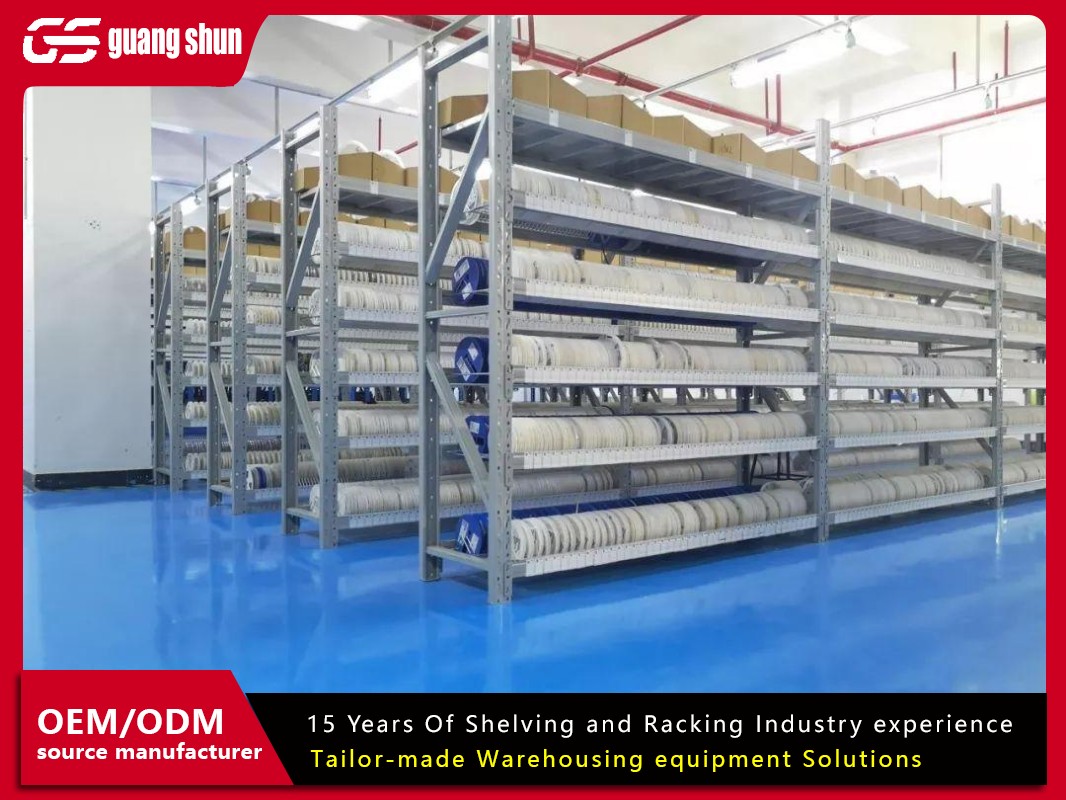
Shelving is designed for direct access. It typically consists of upright frames with multiple levels of solid shelves (often made of particle board, steel mesh, or solid steel). You walk right up to it and pick items directly off the shelf. It’s ideal for smaller, lighter items that are handled by people, not machines.
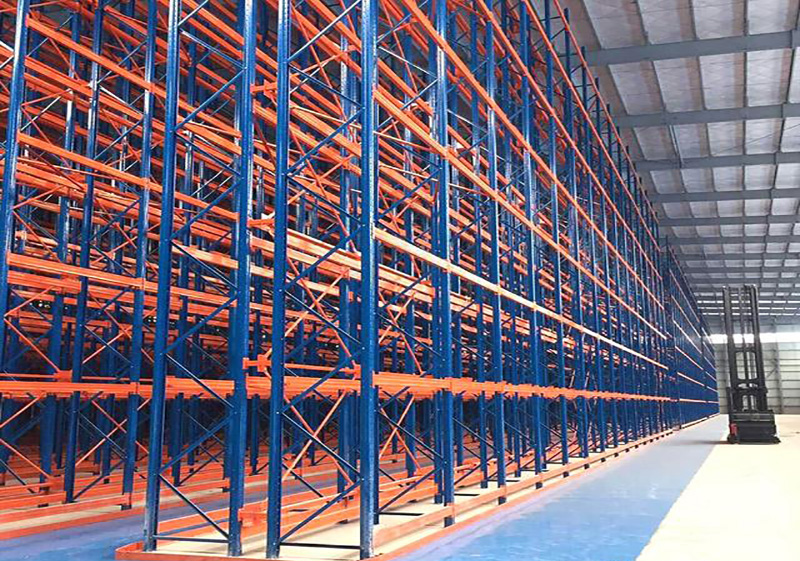
Racking is designed for storage density and palletized goods. The core structure is a series of upright frames with horizontal beams, but there are no solid shelves. Pallets slide onto the beams, and items are stored in bulk on these pallets. Access usually requires a forklift or specialized warehouse equipment.
Think of it this way: shelving is like a giant bookshelf for boxes, while racking is a parking garage for pallets.
Primary Applications: Where to Use Shelving Systems
Industrial shelving is the workhorse of small parts storage. Its best uses are in environments where organization and direct picking are key.
A bolt shelving system, with its adjustable solid shelves, is perfect for a workshop or garage. It holds tools, paint cans, and hardware bins. In a retail stockroom, warehouse shelving units organize boxed products before they hit the sales floor.
Libraries, filing archives, and pharmacies rely heavily on heavy-duty shelving for easy, manual access to every item. Any setting where employees need to see, reach, and grab items quickly without machinery is a candidate for shelving.
The focus is on accessibility and visibility, not on maximizing cubic air space.
Primary Applications: Where to Use Racking Systems
Pallet racking is the backbone of modern distribution centers and large-scale storage. Its job is to use vertical space efficiently for heavy, unitized loads.
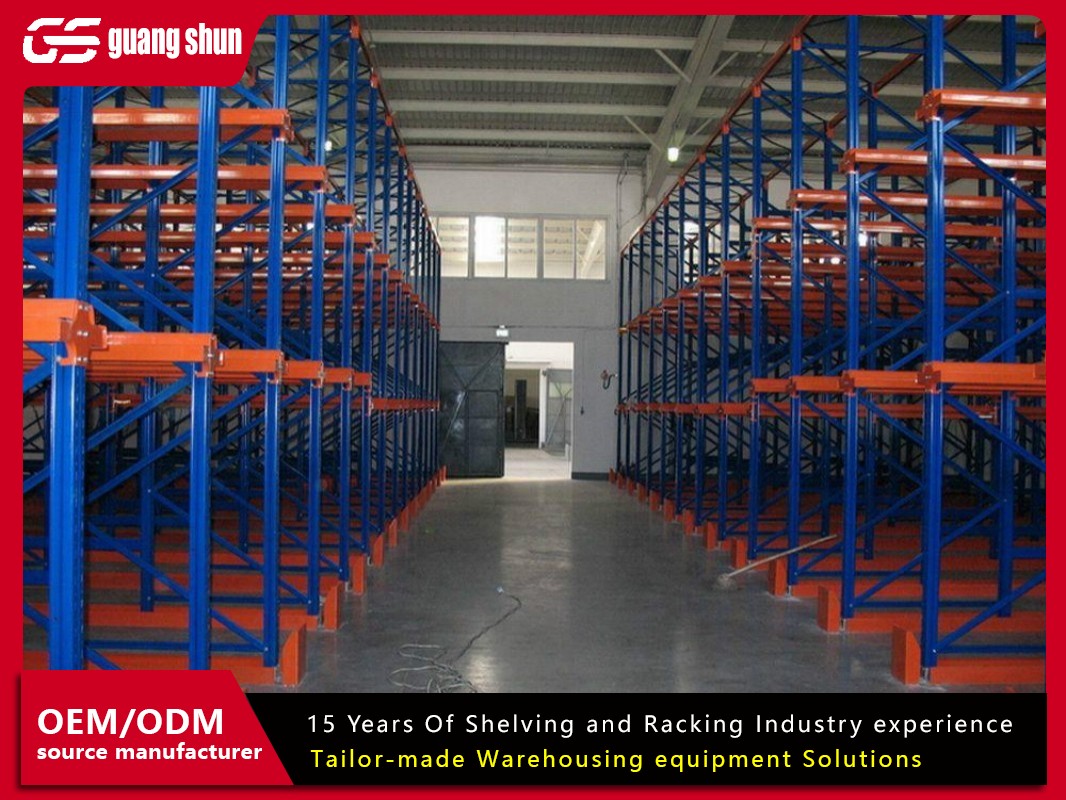
The most common type is selective pallet racking. It allows direct access to every pallet, making it versatile for a wide variety of SKUs. For deeper storage, drive-in racking lets a forklift drive into the structure itself, creating high-density storage for fewer product types.
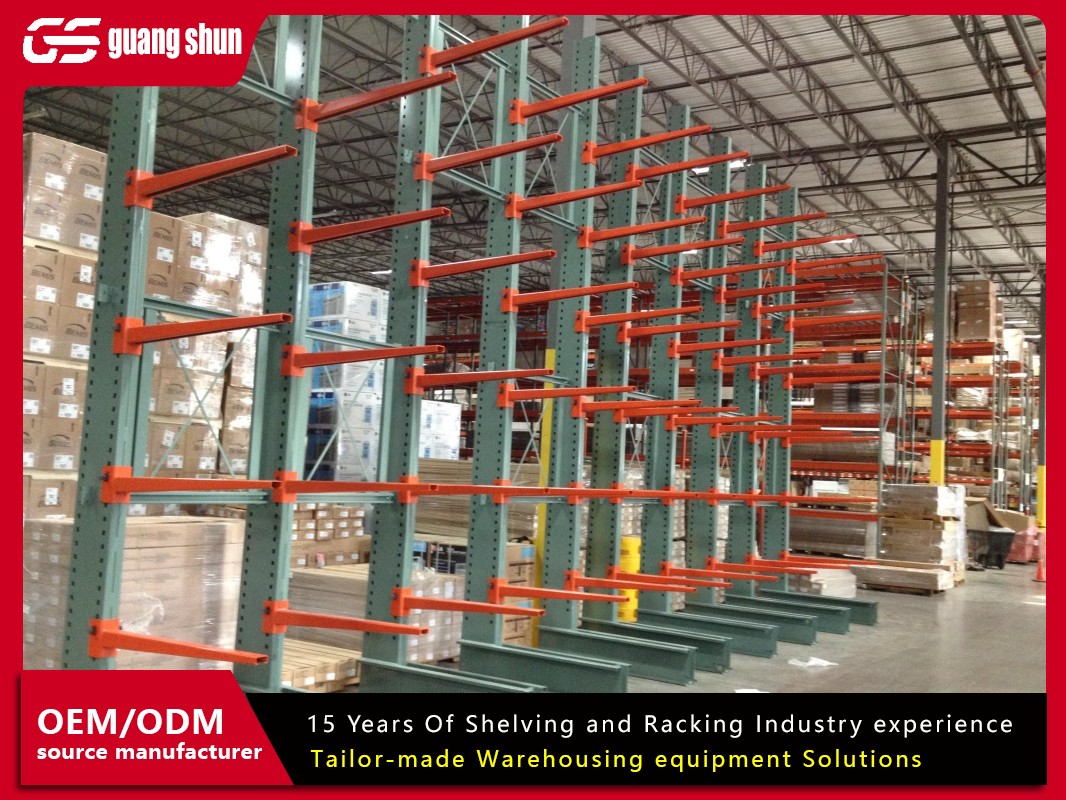
When space is at an absolute premium, cantilever racking is used for long, bulky items like piping, timber, or furniture. It has arms that extend from a single column, eliminating front-column obstructions.
If your business receives, stores, and ships goods by the pallet, you are in the market for a racking system, not shelving.
How to Choose: A Practical Selection Guide
Selecting between shelving and racking comes down to answering a few specific questions.
What are you storing?
- Individual items, small boxes, or bins: Choose shelving.
- Full pallets, large bulk items, or industrial materials: Choose racking.
How is it handled?
- By hand or with a cart: Shelving is your solution.
- With a forklift, pallet jack, or other machinery: You need racking.
What’s your priority?
- Easy access and organization: Lean towards shelving.
- Maximizing storage volume and weight capacity: Look at racking.
What’s your space like?
Consider ceiling height. Racking systems can often go much higher than shelving, which is typically limited by a person's reach. Floor condition also matters; racking requires a flat, strong concrete floor to handle concentrated loads.
Cost Analysis: Budgeting for Your Storage Solution
The price for shelving and racking varies dramatically based on type, size, and capacity.
Shelving costs are generally lower per unit. A simple freestanding bolt shelving unit might cost a few hundred dollars. Heavy-duty industrial shelving with reinforced shelves will cost more. Costs scale with gauge of steel, shelf type, and accessories like drawers or doors.
Racking costs are higher due to the structural requirements. Selective pallet racking is priced by the bay (a vertical section) and beam level. The price depends on upright height, beam length, and weight capacity. High-density systems like drive-in racking are more expensive per bay but can store more pallets in a given footprint.
Remember to factor in installation. Shelving is often a DIY project. Racking installation is almost always a professional job requiring precise engineering and anchoring. This is a significant added cost but is critical for safety.
Finding a Supplier and What to Ask
Sourcing industrial storage solutions requires finding a reputable partner. Look for suppliers who specialize in warehouse storage systems, not general office furniture companies.
A good supplier will start by asking you detailed questions about your inventory, workflow, and space. They should offer a site visit or a detailed planning service. Be wary of anyone who just sells you a catalog item without this consultation.
Ask key questions:
- "Can you provide load calculations and engineering drawings for my specific installation?"
- "Do your systems meet relevant safety standards?"
- "What is the lead time, and do you handle installation?"
- "What warranties do you offer on frames, beams, and shelves?"
A supplier's willingness to act as a consultant is a strong indicator of quality.
Installation and Safety: Non-Negotiable Priorities
Safety is the most critical aspect of any shelving and racking installation.
For shelving, ensure it is leveled and securely assembled. Always follow the manufacturer's weight ratings per shelf. Distribute weight evenly, placing heavier items on lower shelves. Secure tall units to the wall to prevent tipping.
For racking, professional installation is paramount. The system must be anchored to the concrete floor with the correct bolts. Beams must be securely locked into the uprights with safety clips. The most common cause of racking failure is forklift impact; column protectors are a wise investment.
Regular inspections are mandatory. For racking, look for bent beams, damaged uprights, or loose anchors. For shelving, check for sagging shelves or loose bolts. A proactive maintenance plan prevents catastrophic collapses.
The Future of Your Storage: Planning for Growth
Your shelving and racking needs will evolve. The best systems are modular and scalable.
When planning, think about future expansion. Can you add more units or levels easily? With racking, can you reconfigure beam heights as your pallet sizes change? Choosing a system from a supplier with a long-term product line ensures you can find matching components years from now.
Consider adaptability. Mobile shelving systems on tracks can dramatically increase storage density in a fixed space. The upfront cost is higher, but the space savings can be transformative.
Investing time in the right shelving and racking strategy from the start saves immense cost, hassle, and risk down the line. It turns your storage area from a cluttered liability into an efficient, safe asset.
Frequently Asked Questions (FAQ)
Q1: Can I use pallet racking for smaller items if I add decking?
A1: Yes, but it's often inefficient. Adding wire mesh or particle board decking to racking beams creates a shelf. This is sometimes done for mixed storage. However, for primarily small items, dedicated industrial shelving is usually more cost-effective and provides better organization with features like dividers and bin systems.
Q2: How high can shelving and racking typically go?
A2: Shelving is generally limited to about 12-15 feet for stability and manual access. Pallet racking can go much higher—up to 40 feet or more in high-bay warehouses. The practical height for racking is determined by your ceiling clearance, forklift capability, and local building codes.
Q3: Do I need a permit to install warehouse racking?
A3: Often, yes. Because racking is a structural system, many local building departments require a permit. Your supplier or installer should provide engineered drawings stamped by a professional engineer, which are needed for the permit application. Always check with your local authority.
Q4: What's the difference between boltless and bolted shelving?
A4: Boltless shelving (or clip-in shelving) uses specially designed clips that snap into uprights for fast, tool-free assembly and adjustment. Bolted shelving uses nuts and bolts for a more rigid, traditionally strong connection. Boltless is popular for its flexibility and ease of reconfiguration, while bolted is often chosen for extremely heavy, static loads.
Q5: How do I calculate the weight capacity I need?
A5: For shelving, determine the heaviest load you'll place on a single shelf and choose a system whose per-shelf capacity exceeds that. For racking, you need both a per-beam pair capacity and a frame capacity. Calculate the weight of your heaviest pallet, then add the weight of the pallet itself. Your system's ratings must exceed this total. Always include a safety margin.