Walk through any modern distribution center, and you might see something surprising: aisles of towering racks, but no people. Instead, silent machines shuttle vertically and horizontally, retrieving totes or pallets with precise efficiency. This is the world of Automated Storage and Retrieval Systems, or ASRS.
For operations struggling with labor shortages, space constraints, and accuracy demands, a warehouse ASRS presents a compelling solution. But it's a significant capital investment and operational shift. It's not a one-size-fits-all tool.
This article breaks down what ASRS really is, where it makes financial sense, and what you need to know before starting a conversation with vendors.
What Exactly is an Automated Storage and Retrieval System (ASRS)?
At its core, an ASRS is a combination of hardware and software designed to automatically place and retrieve items from defined storage locations. It removes the human worker from the physical act of storing and fetching, replacing them with computer-controlled systems.
A typical warehouse ASRS consists of a few key components. First, the storage structure itself, which is often a high-bay racking system. Then, the automated machines, known as cranes or shuttles, that move within the aisles. They are directed by a sophisticated software control system that integrates with your Warehouse Management System (WMS).
The primary goal is to maximize the use of three-dimensional space while drastically increasing throughput and accuracy. It turns storage from a manual, floor-based activity into a high-density, high-speed digital process.
Common Types of ASRS Technologies
Not all automated storage is the same. The right technology depends entirely on your unit load—what you're actually storing.
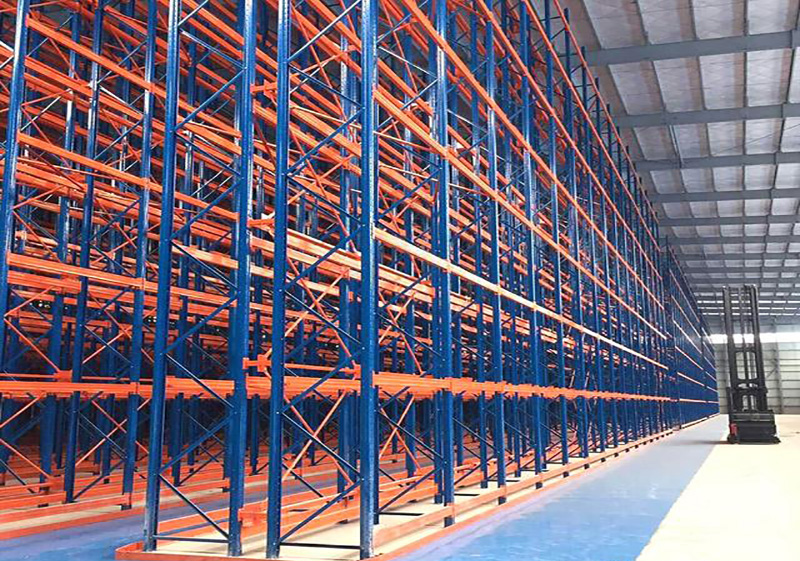
Unit-Load ASRS is built for pallets. These are large, heavy-duty systems with aisle-running cranes that handle full pallet in, full pallet out operations. They excel in manufacturing raw material buffers, cold storage, and distribution centers with very high-volume SKUs. This is the classic, large-scale image of a warehouse ASRS.
Mini-Load ASRS is designed for smaller loads, typically plastic totes or cartons. The cranes handle individual bins or trays, making them ideal for parts handling, e-commerce fulfillment, and any operation with a high number of SKUs in small-item form. They are the workhorses of automated order picking.
Vertical Lift Modules (VLMs) are enclosed, freestanding units with an inserter/extractor that moves vertically between two columns of trays. They bring the tray to an ergonomic “pick window” for the operator. VLMs are perfect for high-value, high-mix items in manufacturing or service parts.
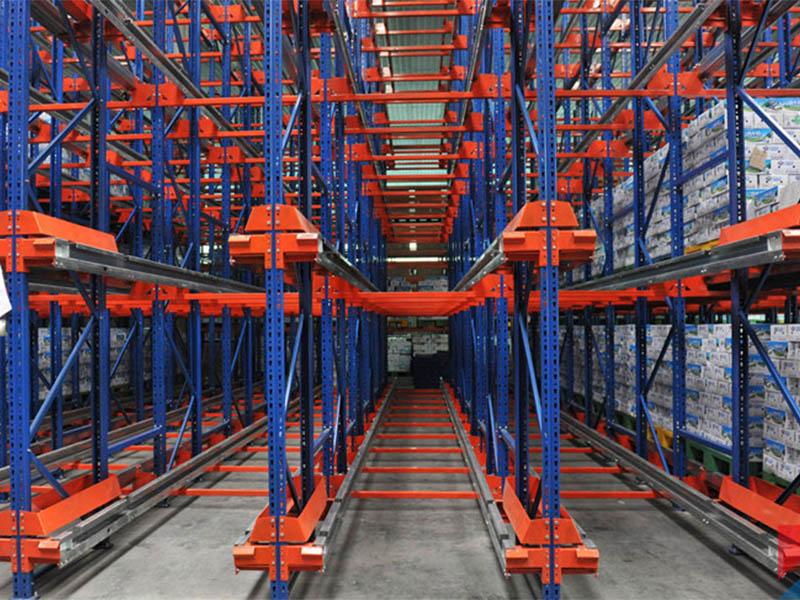
Automated Carton Storage systems are a newer variant optimized for e-commerce. They often use shuttles that run on rails at each level of a rack to store and retrieve individual cartons at very high speeds, perfect for random-access storage.
Evaluating If Your Operation is an ASRS Candidate
The jump to automation is strategic. Here are the business pressures where a warehouse ASRS often becomes the answer.
Chronic Labor Challenges top the list. If you face persistent shortages, high turnover, or rising wage pressures in your market, automation provides a stable, predictable “workforce” that operates 24/7 if needed.
Severe Space Limitations are another key driver. When you cannot expand your building’s footprint, the only way is up. ASRS allows you to build racking up to 100 feet or more, using the full cubic volume of your facility.
Demands for Speed and Accuracy that outpace human capability push companies toward automation. An ASRS doesn't get tired, doesn't misread labels, and can achieve pick accuracies of 99.99% or higher.
Handling High-Value or Sensitive Inventory is a strong motivator. Automated systems provide superior inventory control and can be enclosed for security and climate control. They also reduce product damage from manual handling.
If several of these points resonate, a deeper financial and operational analysis is warranted.
The Cost Equation: Understanding ASRS Investment
It's crucial to approach costs realistically. An ASRS is a multi-year asset, not a simple piece of equipment.
Upfront Capital Expenditure (CapEx) is substantial. This includes the physical equipment (racks, cranes, conveyors), the software control systems, professional site engineering, and installation. Compared to traditional static racking, the cost per storage position is significantly higher.
Ongoing Operational Costs (OpEx) shift in nature. You will have costs for scheduled maintenance, technical support, software licensing, and power consumption. However, you should see dramatic reductions in labor costs, picking errors, and inventory shrinkage.
The financial justification, therefore, hinges on the Return on Investment (ROI). A credible analysis doesn't just look at labor savings. It must model the value of increased throughput, reduced real estate needs (or avoided expansion), lower insurance costs, and improved customer satisfaction from perfect orders.
Payback periods can range from 3 to 7 years, heavily dependent on the scale and complexity of the system and the labor costs it replaces.
Implementation and Integration: The Real Work Begins
Purchasing the hardware is only part of the journey. Successful integration is what separates a triumph from a costly failure.
Software is the Brain. The Warehouse Control System (WCS) that directs the ASRS must have a robust, real-time interface with your WMS and potentially your Enterprise Resource Planning (ERP) system. Data flow is critical.
Process Redesign is Mandatory. Your entire receiving, put-away, picking, and shipping workflows will change. You can't automate a chaotic process; you'll just get faster chaos. Processes must be standardized and digitized upfront.
Partner Selection is Critical. You need a vendor that acts as a solutions provider, not just an equipment seller. Look for deep industry experience, a strong software team, and a proven project management methodology. Ask for detailed references and visit live installations.
Change Management Cannot Be Ignored. Your workforce will have concerns. Clear communication about how roles will evolve—from physical picking to system supervision, maintenance, and data analysis—is essential for a smooth transition.
Frequently Asked Questions (FAQ)
Q1: What is the main difference between ASRS and traditional racking?
A1: Traditional racking is a static storage structure that requires human workers (or forklift operators) for every put-away and retrieval. An ASRS is an integrated, automated system where computer-controlled machines perform these tasks automatically based on software commands, maximizing density, speed, and accuracy.
Q2: Is a warehouse ASRS only for giant corporations?
A2: No. While large unit-load systems are major projects, technologies like Vertical Lift Modules (VLMs) and smaller mini-load systems are accessible and financially viable for mid-sized businesses, especially in high-labor-cost regions or industries with valuable inventory.
Q3: How flexible is an ASRS once installed? Can I change it?
A3: This is a key consideration. Physical reconfiguration of the rack structure and crane rails is difficult and expensive. The flexibility of a warehouse ASRS comes from its software. It can easily manage a constantly changing mix of SKUs within its designed physical parameters, but major layout changes are complex.
Q4: What happens if the ASRS software or machine breaks down?
A4: System reliability is a common concern. Reputable systems are designed with redundancy and fail-safes. Maintenance contracts are standard. While a complete shutdown can halt automated operations, most systems are designed to allow for manual access in a contingency mode, albeit at a much slower rate.
Q5: We have a tight budget. Are there stepping stones to full ASRS?
A5: Yes. A phased approach is common. Some start with automating a specific high-volume or problematic section (like a returns area or fast-moving SKUs). Others implement supporting automation first, like goods-to-person stations fed by automated conveyors, which can later be integrated with a full warehouse ASRS. The key is to design a master plan that allows for future expansion.