If you're searching for "french racking," you're likely facing a specific storage challenge: space is tight, your product is uniform, and you need to store more without expanding your building.
The term can be a bit confusing. In many regions, "french racking" isn't a single, standardized product. It often colloquially refers to high-density storage systems that use a common operating principle.
Typically, it points to drive-in racking and its variants. These systems are all about maximizing cube space by eliminating numerous aisles.
This article will clarify the main types, their pros and cons, and help you decide if this high-density approach is right for your operation.
What is French Racking? Understanding the Concept
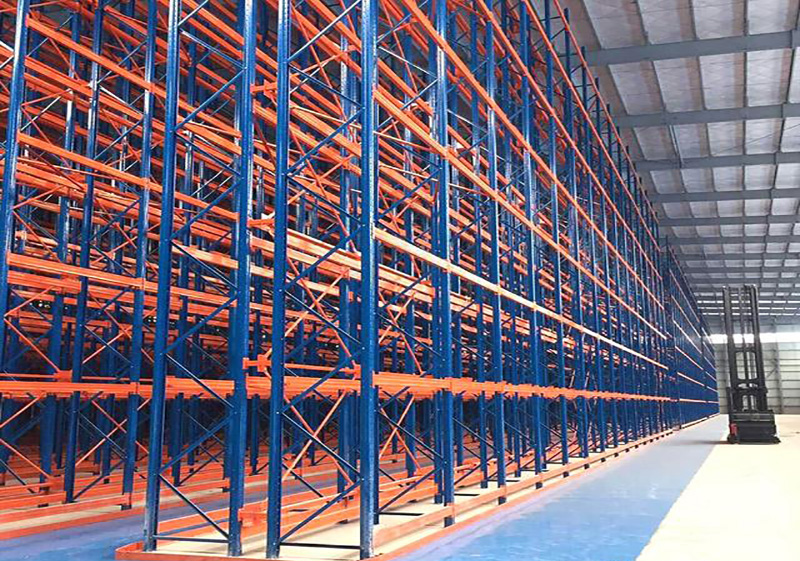
At its heart, french racking describes a storage method where forklifts drive directly into the rack structure to place or retrieve pallets.
It's a form of high-density storage system. Traditional selective racking dedicates an aisle for every row. French racking, or drive-in racking, shares a single aisle among multiple rows.
This design dramatically increases storage density. You can often store 60-75% more pallets in the same footprint compared to standard selective racks.
The trade-off? It typically operates on a Last-In, First-Out (LIFO) basis. The last pallet loaded is the first one you can access.
3 Key Types of High-Density "French Racking" Systems
Not all configurations are the same. The right choice depends on your product turnover, handling equipment, and inventory management.
1. Drive-In Racking (Classic French Racking)
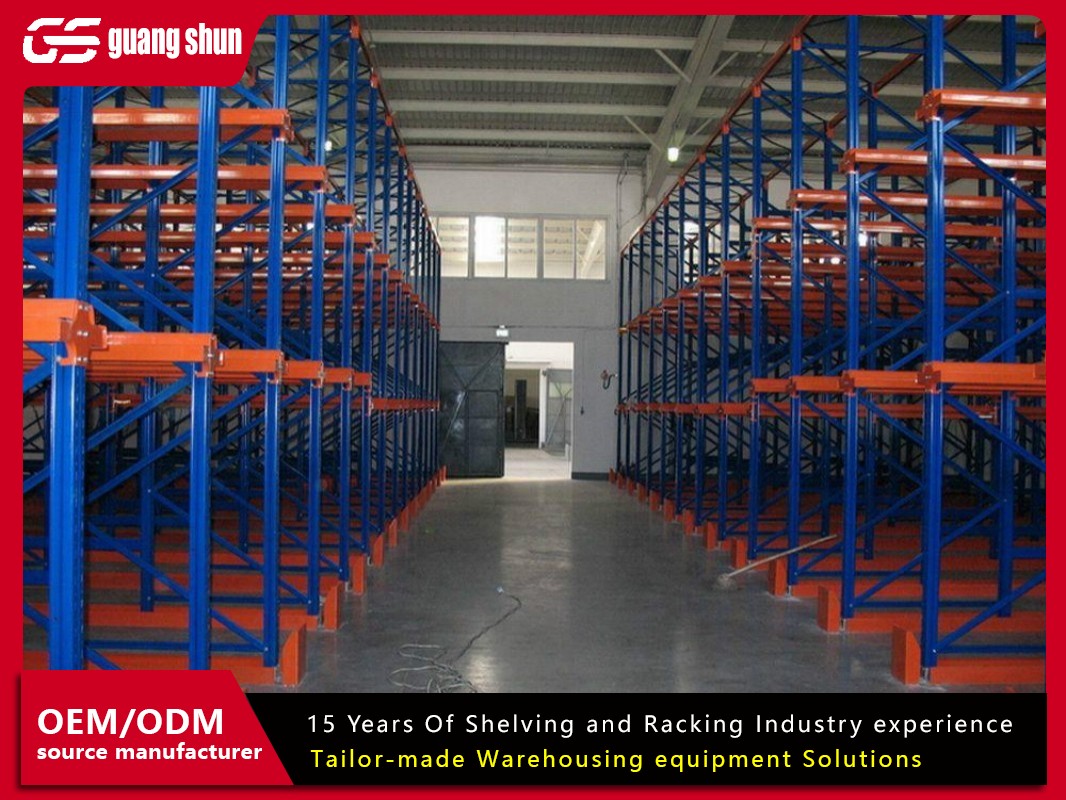
This is the most common system associated with the term. It consists of a continuous rack structure with guide rails on the floor.
Forklifts enter the tunnel-like bay to place pallets on the rails. Each bay is several pallets deep. The building's walls can even form one side of the racking.
It's perfect for bulk storage of homogeneous products with low SKU counts. Think seasonal items, raw materials, or finished goods with long shelf life. Drive-in racking is a cornerstone of pallet racking density.
2. Drive-Through Racking
A variation on the drive-in theme. Drive-through racking has access from both ends of the tunnel.
This allows for First-In, First-Out (FIFO) inventory management. You load from one side and retrieve from the other. It's ideal for products with expiration dates or batch codes that must rotate.
It requires more space than drive-in, as you need aisles at both ends. However, it maintains the high-density advantage over selective racking.
3. Push-Back Racking (A Modern Alternative)
While technically different, push-back racking is often discussed alongside traditional french racking. It offers high density with better selectivity.
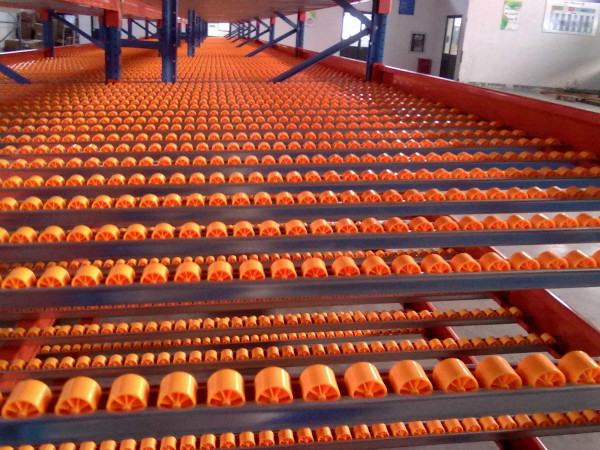
Pallets are stored on nested carts on a slight incline. When a forklift places a new pallet in the front position, it pushes the existing pallets back one spot. Retrieval works in reverse.
It operates on a LIFO basis but allows direct access to every pallet face in the lane. It's a excellent warehouse storage solution for faster-moving goods where density is still key.
Is French Racking the Right Choice for Your Warehouse?
This system isn't for everyone. Its efficiency comes with specific requirements.
The Ideal Product Profile:
Low number of SKUs (Stock Keeping Units).
High volume per SKU.
Non-perishable goods (for LIFO drive-in systems).
Uniform pallet sizes and weights.
Key Operational Considerations:
Forklift Operator Skill: Driving into narrow racking requires skilled, confident operators. Damage to uprights is a common risk.
Throughput Speed: Load/unload cycles are slower than in selective racking. It's designed for storage, not rapid order picking.
Inventory Control: Strict discipline is needed to track what pallet is where in a deep lane, especially in LIFO systems.
If your operation deals with many different products that move quickly, standard selective industrial racking might be more efficient.
Critical Installation and Safety Factors
Installing french racking is complex and not a DIY project. Professional installation is non-negotiable.
The structure must be perfectly aligned and securely anchored. Even a slight misalignment can make it impossible for a forklift to enter the bay smoothly. It also compromises safety.
Safety is paramount. These systems put equipment and operators in close quarters with the racking.
Protection: Heavy-duty column guards, aisle-end protectors, and guide rail reinforcements are essential.
Signage: Clear lane markers and load indicators must be installed.
Inspections: Regular, formal inspections for damage are more critical than ever. A single impacted upright can compromise an entire bay.
Never exceed the specified load capacity. The design calculations for this warehouse storage system are precise.
Cost Analysis: Investment vs. Space Savings
The cost of a french racking system is higher per bay than standard selective racking. The structure is more complex, using more steel and sophisticated components.
However, you are buying space. The correct comparison isn't cost per bay, but cost per pallet position.
When you factor in the dramatic increase in pallet positions per square foot of floor space, the economics become compelling. You are storing more in your existing building, deferring the massive cost of relocation or expansion.
Additional costs include specialized forklift attachments (like side-shifters) and enhanced safety features. Always get a detailed quote that includes professional installation and all necessary safety equipment.
Maintenance and Daily Operation Tips
Daily operation requires a clear protocol. Operators must be thoroughly trained on entering lanes, centering loads, and checking lane depth before entry.
Maintenance focuses on vigilance.
Check guide rails daily for deformation or debris.
Inspect uprights at the aisle entrance for any impact damage.
Ensure pallets are in good condition; a broken pallet can jam a lane.
Keep the system organized. Never mix SKUs in the same lane unless the system is specifically designed for it.
A well-run drive-in racking system is a powerful asset. A poorly run one becomes a bottleneck and a safety hazard.
Frequently Asked Questions About French Racking
Q1: What's the main difference between drive-in and drive-through racking?
A1: The key difference is inventory flow. Drive-in racking is accessed from only one end, forcing LIFO (Last-In, First-Out) management. Drive-through racking is accessible from both ends, allowing for FIFO (First-In, First-Out) flow, which is better for perishable goods.
Q2: How deep can a typical "french racking" lane be?
A2: Lane depth is limited by forklift maneuverability and structural considerations. Typically, lanes range from 3 to 8 pallets deep. Beyond this, retrieval times become too long, and the risk of product damage or racking damage increases. Specialized forklifts can sometimes handle deeper lanes.
Q3: Is this system suitable for cold storage or freezer warehouses?
A3: Yes, high-density french racking is often used in cold storage. Maximizing space in these expensive environments is crucial. However, special considerations are needed for the cold's effect on materials and forklift operation, and FIFO (drive-through) is usually preferred for food products.
Q4: Can I convert my existing selective racking to a drive-in system?
A4: Generally, no. The structural design and load calculations for drive-in racking are completely different. Selective racking uprights are not designed to withstand the lateral forces and potential impacts of forklifts driving into them. Conversion is not safe or recommended.
Q5: What kind of forklift is needed to operate this racking?
A5: You need a counterbalance forklift with the exact dimensions and mast height to operate within the confined racking structure. Critical features include a side-shifter for precise load placement and a rotating or non-marking fork guide. The forklift's overall width, mast width, and lowered height must be compatible with the racking's aisle and entry specifications.