Warehouse managers are constantly caught in a tug-of-war. On one side is the need for high-density storage to maximize every cubic foot of space. On the other is the demand for fast, selective access to keep order fulfillment moving quickly. If selective pallet racking feels too spacious and drive-in racking feels too restrictive, there’s a middle ground.
That middle ground is the push back racking system. It’s a popular choice for facilities that need a smart compromise between density and accessibility. This system offers a unique way to store multiple pallets deep without sacrificing direct access to every stored lane.
Understanding how push back racking systems function, and where they excel, is key to determining if they are the right fit for your warehouse operation.
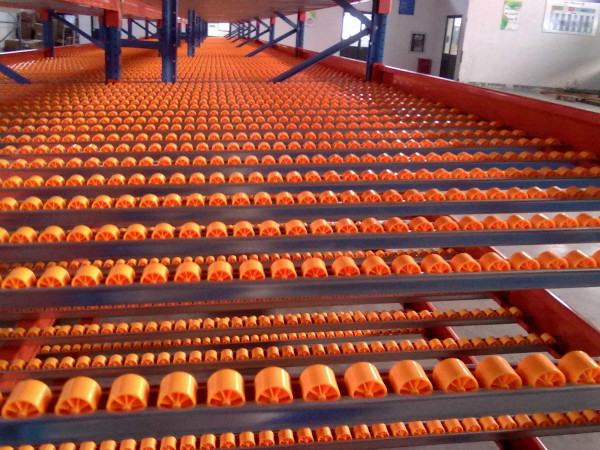
Let's start with a basic definition. A push back racking system is a pallet storage method where pallets are stored on inclined, nested carts that ride on rails within a rack structure. Each storage level forms its own independent lane, typically holding 2 to 6 pallets deep.
The core principle is Last-In, First-Out (LIFO) inventory flow. The most recently loaded pallet is always the first one retrieved. This is achieved through a simple yet clever use of gravity and mechanics.
Unlike static selective racking, push back rack designs are dynamic. The pallets are not sitting directly on beams; they are placed on mobile carriages. This design allows for deeper storage without the need for a forklift to enter the rack structure, as is required with drive-in systems.
The result is a high-density storage solution that maintains better selectivity than many other deep storage options. It’s a system built for efficiency in the right application.
How the Push Back System Operates: A Step-by-Step Look
The operation of a push back rack is intuitive for trained forklift operators. The process relies on the inclined plane and a series of rolling carts.
The Loading Process (Push Back):
- A forklift places the first pallet onto the cart at the front of the lane. This cart sits at the "pick face," the accessible front position.
- When loading a second pallet, the forklift gently pushes the first pallet (and its cart) backward along the rails.
- This action engages a mechanism, allowing the first cart to nest under the second cart. The new pallet now rests at the front position.
- This sequence repeats. Each new pallet pushes the existing stack back one position, with carts nesting together. The system uses the weight and force of the new load to create the storage depth.
The Unloading Process (Roll Forward):
- To retrieve a pallet, the forklift operator simply removes the front pallet from the lane.
- Once that pallet is lifted, the inclined rail system takes over. Gravity causes the next pallet in the lane (sitting on the cart behind) to roll smoothly down to the front pick-face position.
- This provides immediate access to the next pallet without any forklift maneuvering into the rack. The system automatically presents the next load for picking.
This push-and-roll mechanic is what gives push back racking systems their name and their operational efficiency. It minimizes forklift travel and maneuvering time for both put-away and retrieval.
Key Components and Structural Design
A reliable push back racking system is more than just beams and frames. Several specialized components work together.
The Structural Frame is similar to selective racking. It consists of heavy-duty upright frames and connecting beams. However, it is engineered to handle dynamic loads and the specific forces involved in the push-back action.
Rails and Inclined Tracks are the heart of the system. These are precision-installed steel rails set at a slight decline (usually around 2-3 degrees) from the back to the front. This grade is crucial for ensuring reliable rolling during retrieval.
Nesting Carts or Carriages are the moving platforms. Each cart has wheels that fit the rails. They are designed to nest or stack within each other as they are pushed toward the rear of the lane. Their robust construction is vital for bearing the pallet weight during dynamic movement.
Safety Stops and Wheel Design are critical. High-quality systems include positive safety stops at the front to prevent carts from rolling out accidentally. The wheels are also designed for smooth rolling under heavy load and to minimize wear on the rails.
The entire structure is a coordinated piece of warehouse storage equipment designed for repetitive motion and heavy weight.
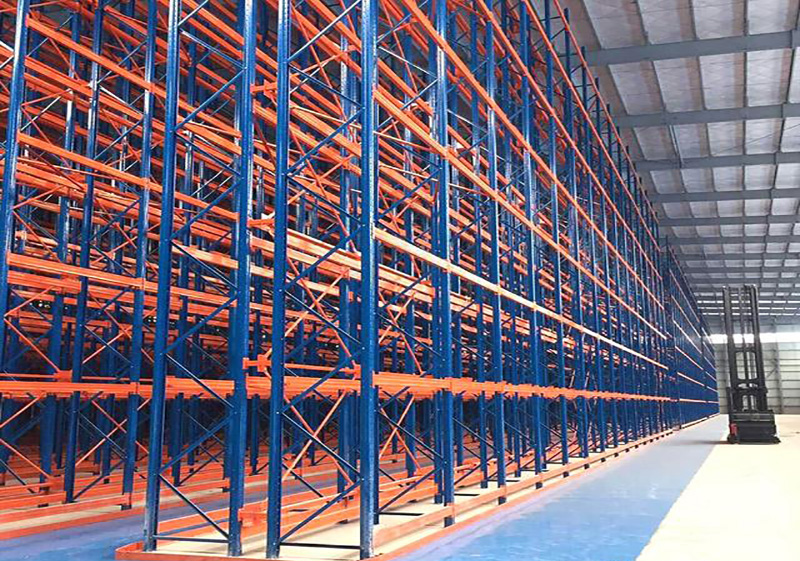
Advantages of Implementing Push Back Racking
Why do so many operations choose this system? The benefits address common warehouse pain points directly.
Improved Storage Density is the primary advantage. By storing pallets 3 to 5 deep, you significantly reduce the number of aisles compared to selective racking. This directly increases your storage capacity within the same warehouse footprint, making it a smart space optimization solution.
Good Selectivity and Accessibility. While it operates on LIFO, each lane remains fully independent. An operator can access any product lane immediately without having to move other pallets (unlike drive-in systems). This allows for multiple SKUs to be stored in the same bay, one SKU per lane.
Increased Productivity. The "roll-forward" feature during retrieval is a major time-saver. The next pallet is presented automatically. This reduces forklift cycle times for order picking, as the driver spends less time maneuvering to access deep-stored loads.
Better Pallet and Product Protection. The controlled rolling motion is gentle. There is no dragging of pallets over beams. Each pallet remains on its own cart, which reduces damage to both the pallet and the product it holds. This can lower product loss and pallet replacement costs.
Safer Operation for Deep Storage. Forklifts never need to enter the rack structure. Operators work from the safety of the main aisle. This eliminates the risks associated with navigating tight spaces within the racks and reduces the potential for costly impacts on the upright frames.
Limitations and Considerations
No storage system is perfect for every situation. It’s important to weigh the limitations of push back racking systems.
LIFO Inventory Restriction is the most significant constraint. The system is designed for Last-In, First-Out flow. If your business requires strict First-In, First-Out (FIFO) control for perishable or time-sensitive goods, push back rack is not suitable. Pallet flow racking would be the appropriate high-density alternative for FIFO.
Higher Initial Investment. The cost per pallet position is higher than for simple selective racking due to the added complexity of carts, rails, and reinforced structures. A thorough cost-benefit analysis comparing space savings to upfront cost is essential.
SKU Dedication per Lane. For optimal efficiency, each vertical lane should be dedicated to a single SKU. Mixing SKUs within a lane is possible but complicates inventory tracking and increases the risk of product confusion. It requires excellent warehouse management system (WMS) control.
Weight and Load Considerations. While they handle heavy loads well, the dynamic nature means weight limits per cart and per overall lane must be strictly adhered to. Overloading can cause system failure. The system also requires high-quality, consistent pallets to function smoothly.
Is Push Back Racking Right For Your Warehouse?
Choosing the right pallet racking system depends on your specific inventory profile and operational goals. Push back racking systems tend to be an excellent fit under certain conditions.
This system shines for fast-moving to medium-moving inventory that does not require FIFO management. Think of products with high turnover where you are constantly replenishing lanes and pulling from the front. Beverages, packaged goods, and non-perishable retail items are classic examples.
It is ideal when you need to increase capacity but have a limited expansion footprint. If you cannot expand your building outward, going deeper into your existing aisles with push back rack is a logical solution.
A successful implementation also depends on having a reliable WMS and disciplined operations. You need accurate inventory data to dedicate lanes properly and ensure stock rotation is managed correctly within the LIFO framework.
Finally, it pairs well with counterbalance or reach trucks. The system is designed for operation from a single aisle face, making it compatible with the most common types of warehouse forklifts.
Comparing to Other High-Density Options
It's helpful to see where push back racking sits among its peers.
vs. Selective Pallet Racking: Push back offers 3-5x the density by storing pallets deep. Selective racking offers 100% selectivity and direct FIFO/LIFO choice per pallet but uses much more aisle space.
vs. Drive-In/Drive-Through Racking: Drive-in systems offer even higher density but require forklifts to enter the rack, creating safety concerns and slower throughput. Selectivity is very poor, as you must access the entire lane in sequence. Push back racking provides a safer, faster alternative with better lane selectivity.
vs. Pallet Flow Racking: Pallet flow is the high-density champion for FIFO. It uses gravity rollers for automatic product rotation. However, it is often more expensive per pallet position than push back and has stricter requirements for pallet quality and weight uniformity.
Maintenance and Safety Best Practices
To ensure longevity and safety, a push back racking system requires specific care.
Regular inspections are non-negotiable. Check for worn wheels on the carts, debris on the rails, and any damage to the carts or rails from impacts. Ensure all safety stops are firmly in place and functional.
Train operators thoroughly. Drivers must understand how to load pallets squarely onto the carts and apply even pressure when pushing a lane back. They should never use excessive force or attempt to push a lane back from an angle.
Enforce load limits strictly. Do not exceed the manufacturer’s rated weight capacity for each carriage or the overall lane. Overloading is a primary cause of mechanical failure and safety hazards in dynamic storage systems.
Keep the system clean. Spills, debris, or damaged pallet wood on the rails can impede the smooth rolling of the carts, causing jams and operational delays.
Frequently Asked Questions (FAQs)
Q1: How many pallets deep can a typical push back racking system go?
A1: Most standard push back racking systems are designed for 2 to 6 pallets in depth. Three to five pallets deep is the most common configuration, as it provides an optimal balance of density and practicality. Systems deeper than six pallets are less common due to increased friction and the physical force required to push the lane back.
Q2: Can push back racking be converted to selective racking later if needed?
A2: In most cases, the structural upright frames can be reused. However, converting a push back system to selective racking would require removing all the carts, rails, and specialized beams, and then installing standard selective rack beams. It is a significant reconfiguration, not a simple switch. It's better to choose the system based on long-term needs.
Q3: What happens if a cart jams or fails in the middle of a lane?
A3: This is a critical maintenance issue. Accessing a jammed cart in the rear of a lane is difficult. Often, the lanes in front of and above the affected cart must be carefully unloaded to reach and repair it. This underscores the importance of preventive maintenance, using good pallets, and training operators to prevent jams.
Q4: Is push back racking suitable for cold storage or freezer environments?
A4: Yes, but with specific considerations. Push back racking systems are used in cold storage because they increase valuable space. Special lubricants for the wheels and rails must be used that perform at low temperatures. Stainless steel components or enhanced corrosion-resistant finishes are often recommended to withstand the humid, corrosive environment.
Q5: How does the cost per pallet position compare to selective racking?
A5: The upfront cost per pallet position in a push back racking system is typically 20% to 40% higher than traditional selective racking. This is due to the added cost of the carts, rails, and more robust structural components. The justification comes from the space savings—you are fitting more pallets in the same area, which can lower your overall cost per stored pallet when floor space is expensive.