If you're running a warehouse where space is at a premium and you're storing large quantities of a limited number of products, you know the struggle. Every square foot counts. Traditional selective pallet racking, while accessible, can feel like a luxury you can't afford with its wide aisles. This is where the drive through racking system comes into play. It’s a high-density storage solution designed to maximize your cube and streamline operations for specific inventory types.
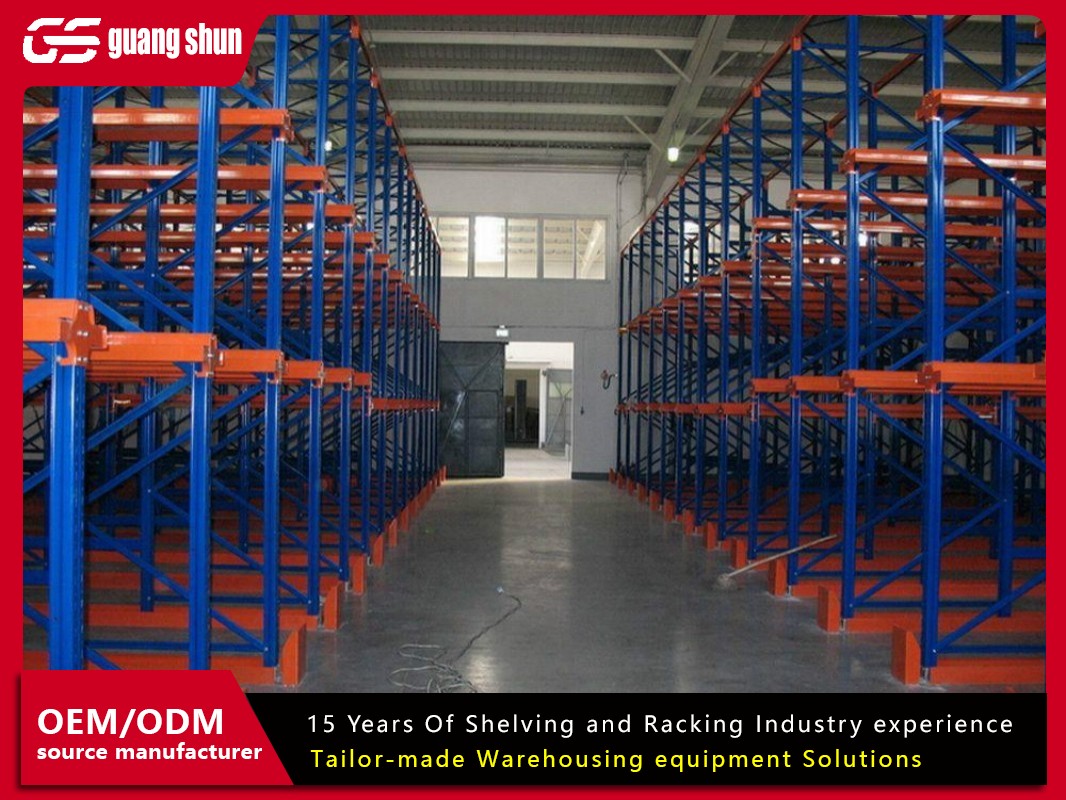
A drive through racking system is essentially a tunnel of storage. Instead of accessing pallets from the side aisles, forklifts drive directly into the rack structure to deposit or retrieve loads. This design eliminates multiple aisles, converting that space into additional storage lanes. It's a game-changer for operations with high-volume, low-SKU count inventory that follows a strict FIFO (First-In, First-Out) or LIFO (Last-In, First-Out) management system.
Let's break down how it works, where it excels, and the critical factors to consider before installation.
How a Drive Through Racking System Actually Works
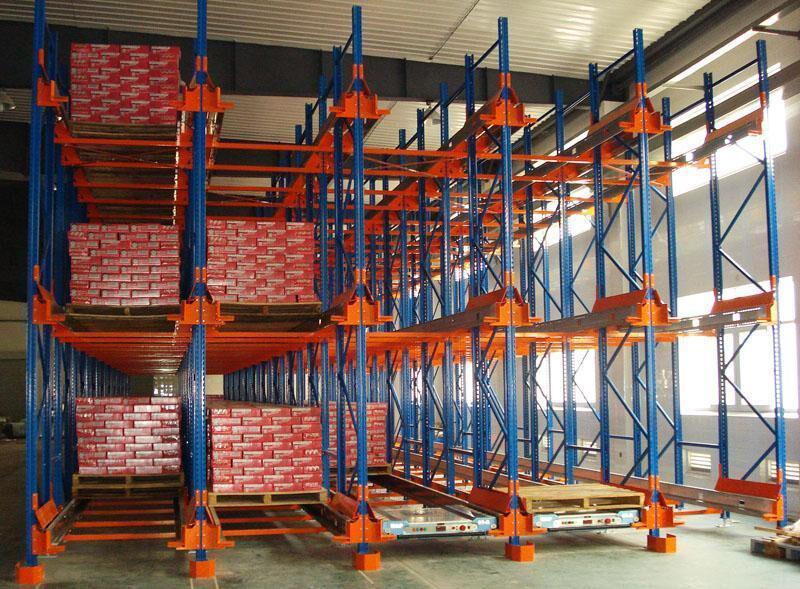
The core principle is direct access. Picture a series of pallet rails or channels that create a deep lane, often 5 to 15 pallets deep. The rack structure frames these lanes on both sides and above.
Forklifts enter the lane from one designated side (for LIFO) or from both alternating sides (for FIFO). The operator drives into the lane, places the pallet onto the rails, and reverses out. There are no aisles between the storage positions within the lane.
Retrieval works the same way in reverse. The forklift enters the lane, picks up the target pallet, and backs out. This method requires precise operation and a specific type of forklift, typically a counterbalance or a reach truck rated for narrow aisle operation.
The entire structure is designed to withstand the occasional contact from a forklift mast and the dynamic load of a vehicle moving inside it. This robustness is a key feature of any reliable drive through racking system.
Key Components and Structural Design
Understanding the parts helps in planning and maintenance. A typical system isn't just shelves; it's an engineered structure.
Upright Frames: These are heavier-duty than standard selective rack frames. They must support the load of multiple deep pallets and the lateral forces from forklift movement within the lane.
Guide Rails or Pallet Rails: These are the angled or horizontal tracks that run the length of the lane. They support the pallets and guide the forklift wheels, preventing damage to the uprights. Their design is critical for smooth load placement.
Entry/Exit Guides: Reinforced protectors at the lane openings. They take the brunt of any minor forklift misalignment during entry and exit, protecting the main structure.
Cross Beams and Ties: These components connect the left and right upright frames across the top, providing crucial stability and ensuring the lane width remains consistent.
Safety Systems: This includes column guards, end-of-lane barriers, and often enhanced signage. Given the confined space of a lane, these features are non-negotiable for protecting both the operator and the racking system.
The Major Advantages of Implementing This System
Why choose a drive through racking system? The benefits are substantial for the right operation.
Exceptional Space Utilization: This is the number one advantage. By eliminating numerous aisles, you can increase storage density by up to 75% compared to selective racking. You store more product in the same building footprint.
Improved Storage Density: It directly translates to a lower cost per pallet position. You're getting more value out of your existing or planned warehouse space, which is often the largest operational expense.
Ideal for FIFO or LIFO Inventory: The lane-based design naturally enforces these inventory management methods. For cold storage (food, pharmaceuticals) FIFO is critical. For industries like building materials, LIFO might be perfectly acceptable.
Reduced Aisle Clutter: With fewer overall aisles, traffic congestion can decrease. Forklift travel paths can become more predictable, potentially improving overall safety in the main thoroughfares.
Structural Durability: These systems are built tough. The components are designed to handle the operational realities of a vehicle driving within the storage structure, leading to a long service life with proper care.
Critical Considerations Before You Invest
A drive through racking system is not a universal solution. It comes with specific requirements and trade-offs.
Inventory Profile is King: This system is perfect for high-volume, low-SKU count storage. If you have 10,000 pallets of only 5 different products, it's ideal. If you have 10,000 pallets of 2,000 different SKUs, it's a terrible fit. Product uniformity is essential.
Forklift Requirements and Operator Skill: You need skilled operators. Driving into a confined lane requires precision and confidence. Forklifts must be in excellent condition, and operators require specific training for this environment. The forklift's mast and overall dimensions must be compatible with the lane clearances.
Reduced Selectivity: This is the main trade-off. You cannot directly access any pallet at any time. To reach pallet #5 in a 10-deep lane, you may need to move pallets #6 through #10 first (depending on FIFO/LIFO setup). This can increase handling time for specific SKUs.
Higher Initial Cost: The structural components and engineering involved in a drive through racking system often mean a higher upfront cost per foot compared to basic selective racking. However, the ROI comes from the massive increase in storage density.
Ventilation and Sprinkler Considerations: Deep lanes can affect air circulation and fire sprinkler coverage. In cold storage or facilities with specific fire codes, you must work with engineers to ensure compliance. This may require special sprinkler heads or airflow designs.
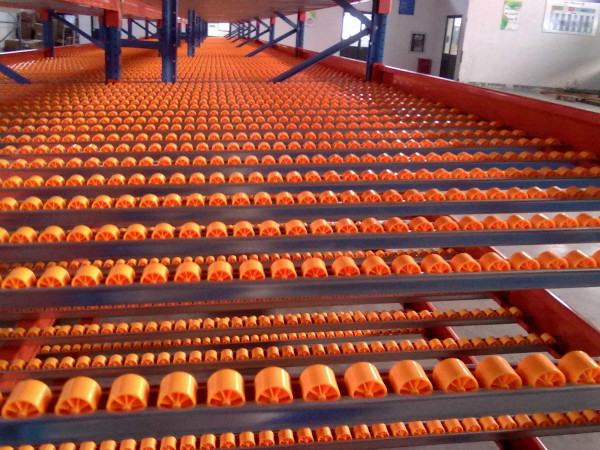
Drive-In vs. Drive-Through: Knowing the Difference
People often confuse these terms. They are similar but have one key operational difference.
A Drive-In Racking System has a dead-end lane. Access is only from one side. This enforces a strict LIFO (Last-In, First-Out) inventory flow. The last pallet loaded is the first one retrieved.
A Drive Through Racking System, as the name implies, allows access from both ends of the lane. This enables a true FIFO (First-In, First-Out) flow. Pallets are loaded in one end and retrieved from the opposite end.
Choosing between them depends entirely on your inventory management requirements. Perishable goods need FIFO, so a drive through racking system is necessary. Non-perishable bulk materials might be fine with the LIFO flow of a drive-in system.
Ideal Applications and Industries
So, who actually uses these systems every day? They are commonplace in several sectors.
Cold Storage and Food Distribution: This is a prime example. Massive quantities of frozen or refrigerated goods with limited SKUs (like french fries, ice cream, or meat) are perfect for FIFO-based drive through racking systems. The space savings in expensive refrigerated buildings are enormous.
Beverage Distribution: Large warehouses storing pallets of the same soft drink or beer SKU benefit tremendously from the high density.
Building Materials and Manufacturing: Storage of bulky, uniform products like bricks, bags of cement, rolls of paper, or specific component parts often works well with a LIFO or FIFO approach.
Third-Party Logistics (3PL) Providers: For dedicated customer accounts with high-volume, uniform product lines, a drive through racking system can be a competitive advantage, allowing them to store more for a client in a given footprint.
Implementing a drive through racking system is a significant logistical decision. It requires careful analysis of your inventory, processes, and team. But when the conditions are right, it transforms your warehouse from a space-limited facility into a model of high-density efficiency. The key is honest evaluation: if your product mix is deep but narrow, this system might be the storage powerhouse you've been looking for.
Frequently Asked Questions (FAQs)
Q1: What is the main disadvantage of a drive through racking system?
A1: The primary disadvantage is reduced selectivity and potential for lower throughput speed. Accessing a specific pallet deep in a lane can require moving other pallets first, which increases handling time. It is not suitable for operations requiring immediate, random access to a large number of SKUs.
Q2: How deep can the lanes typically be in this system?
A2: Lane depth is flexible but is typically between 5 and 15 pallets deep. The practical limit is determined by forklift operator efficiency, inventory turnover rate, and the building's length. Very deep lanes can become inefficient if pallet turnover is slow.
Q3: What type of forklift is needed?
A3: A standard counterbalance forklift is most common. The critical factors are the forklift's overall width, mast width, and lift height, which must be carefully matched to the clear lane dimensions designed into the drive through racking system. Reach trucks can also be used in some configurations.
Q4: Is this system safe for everyday use?
A4: Yes, when properly engineered, installed, and used with trained operators. Safety is paramount. Key elements include strict operator training, excellent warehouse lighting, clearly marked lanes, protective guards on the racking, and enforced speed limits. Regular inspections of both the rack and forklifts are essential.
Q5: Can I convert my existing selective racking into a drive through system?
A5: Generally, no. A drive through racking system is a fundamentally different structural design with heavier uprights, specific rails, and a focus on lateral stability. It requires a purpose-built design and installation. Attempting to modify standard selective racking for this purpose is unsafe and not recommended.