If you’re staring at your warehouse floor, seeing wasted air space, and feeling the pinch of rising storage costs, you’ve likely heard about high-density storage solutions. Among the most effective are the drive in drive through racking system options.
These systems are not for every warehouse. But when they fit your operation, they can dramatically increase your storage capacity without requiring a new building. The challenge is understanding which variant—drive-in or drive-through—aligns with your inventory flow.
This article breaks down the mechanics, pros, cons, and ideal applications of both to help you make a clear decision.
What Exactly is a Drive-In or Drive-Through Racking System?
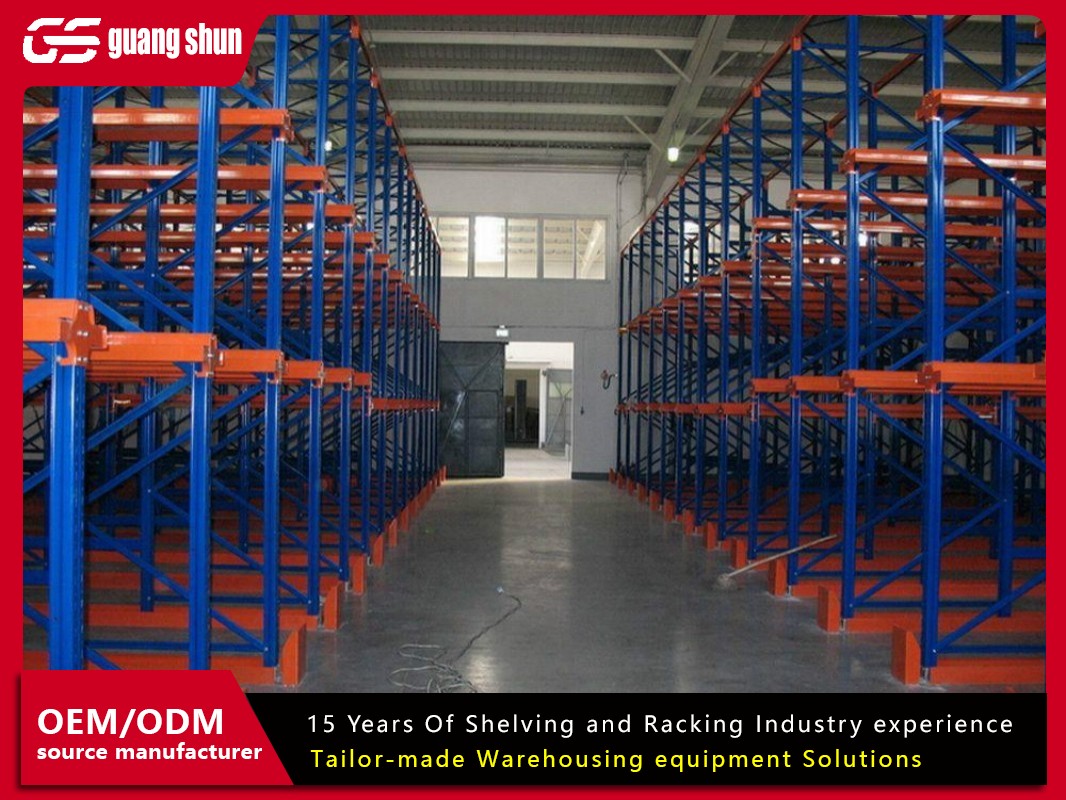
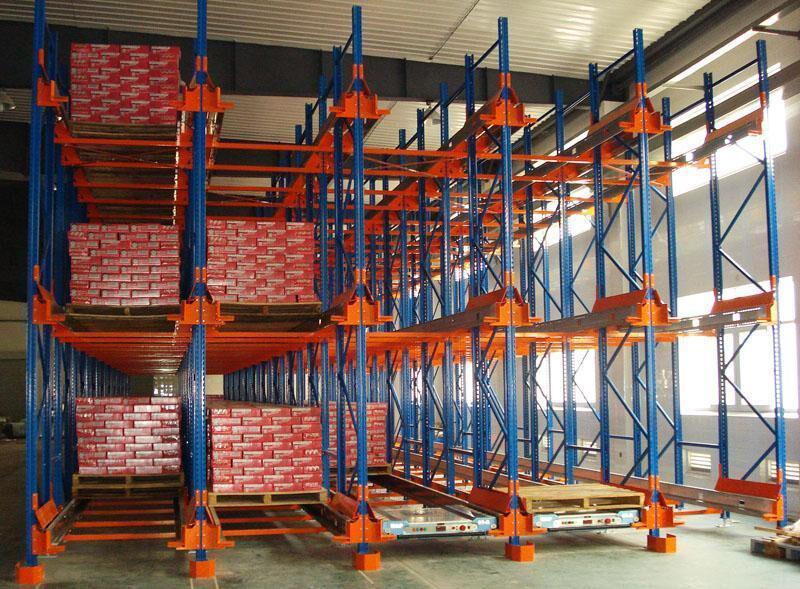
At its core, a drive in drive through racking system is a pallet storage method designed for high-density. Unlike selective racking where each pallet has its own dedicated space with an aisle, these systems use a series of deep storage lanes.
Forklifts literally drive into the rack structure to place or retrieve pallets. The system eliminates the need for multiple aisles between each row of racks, converting that aisle space into additional storage lanes.
The key difference lies in the entrance and exit points, which directly impact inventory management.
Drive-In Racking: The LIFO Workhorse
A drive-in racking system has a single entry/exit point per lane. Think of it like a one-way street that’s also a parking garage. The last pallet loaded is the first one out.
How it works: The forklift enters the lane, places the pallet on rails or load beams, and reverses out. To retrieve a pallet, the driver must enter the lane, pick up the target pallet (which is always the front one), and back out. Any pallet behind it must be moved first.
This creates a Last-In, First-Out (LIFO) inventory flow.
Drive-Through Racking: Enabling FIFO Flow
A drive-through racking system has an entrance on one side of the lane and an exit on the opposite side. It functions like a tunnel.
How it works: Pallets are loaded from one side of the warehouse and retrieved from the other. This allows for a First-In, First-Out (FIFO) inventory rotation. It’s crucial for products with expiration dates, lot numbers, or where strict rotation is necessary.
Head-to-Head Comparison: Key Differences
Choosing between the two often comes down to inventory flow and layout.
- Inventory Method: Drive-in uses LIFO storage. Drive-through enables FIFO storage.
- Warehouse Layout: Drive-in is typically configured against a wall, with access from one side only. Drive-through requires clear access on two opposite walls or aisles.
- Operating Speed: Drive-through can be slightly faster for full-lane turnover, as forklifts don't need to reverse long distances with a load. Drive-in operations involve more reversing maneuvers.
- Cost & Complexity: A basic drive-in racking system is often less expensive per pallet position as it uses slightly less structure. Drive-through may require more sophisticated guides and safety features at both ends.
The Core Advantages of Implementing This System
Why would a warehouse choose this over simpler selective racking? The benefits are significant.
The most compelling advantage is space utilization. By eliminating numerous aisles, you can achieve up to 75% more storage density in the same floor area. This is the primary reason companies invest in a drive in drive through racking system.
It also offers excellent storage for homogeneous products. If you have large quantities of the same SKU, these systems are perfect. They consolidate stock into deep lanes.
Furthermore, they provide direct access to every pallet (unlike some static compact systems). There’s no mechanical retrieval system to wait for; your standard forklift does the work.
The Real-World Drawbacks and Safety Considerations
These systems are not without their challenges. Understanding the downsides is critical for successful implementation.
The major trade-off is selectivity. You cannot directly access any specific pallet in the middle of a lane. Retrieving a single pallet from the back requires moving all pallets in front of it. This is called "lane digging" and kills efficiency.
They also require highly skilled and disciplined forklift operators. Driving into a narrow, confining rack structure demands precision. Damage to the upright frames is a significant risk, which can lead to costly repairs and even collapse.
Product homogeneity is a must. Mixing SKUs within a single lane leads to confusion, errors, and major retrieval headaches. A drive in racking system works best when each lane is dedicated to one product type.
Finally, throughput speed for individual SKUs can be slower than selective racking due to the lane access pattern.
Ideal Applications: Where These Systems Shine
These systems aren't a universal fix. They excel in specific scenarios.
Drive-In Racking is ideal for:
- High-volume storage of non-perishable goods.
- Bulk raw materials or finished goods with low SKU count.
- Cold storage facilities, where maximizing every cubic foot of expensive refrigerated space is paramount.
- Archival storage or seasonal products where new stock is placed in front of old.
Drive-Through Racking is perfect for:
- Food and beverage warehouses with strict expiry dates.
- Pharmaceutical or chemical storage requiring lot tracking and rotation.
- Production lines with a clear "goods-in" and "goods-out" side.
- Any operation where FIFO is a non-negotiable requirement.
A Step-by-Step Guide to Evaluating Your Needs
How do you know if your operation is a candidate? Walk through this checklist.
First, analyze your inventory. Do you have at least 5-10 pallets of the same SKU to justify dedicating a deep lane? Is your product mix relatively simple?
Second, define your inventory rotation policy. Is it LIFO or FIFO? Your answer immediately points you toward drive-in or drive-through.
Third, assess your equipment and personnel. Do you have, or are you willing to invest in, forklifts with the exact dimensions and maneuverability for narrow lanes? Are your operators trained for this precise work?
Fourth, calculate your floor space and ceiling height. A drive in drive through racking system can go very high, but your forklifts must safely reach those heights inside the confined lane.
Cost Factors and Return on Investment
The cost of a drive in racking system is typically higher per bay than selective racking but lower per stored pallet position. You're paying for more steel but storing more product.
Key cost drivers include:
- System Height and Depth: Taller and deeper lanes cost more.
- Required Load Capacity: Heavier pallets demand stronger, more expensive beams and uprights.
- Seismic and Safety Ratings: Local codes may require more robust engineering.
- Forklift Guidance Systems: Adding wire or rail guides for operators increases cost but significantly improves safety and speed.
The ROI comes from deferred expansion. If installing this system allows you to store 5 more years of growth in your existing building, the savings on construction or leasing a new facility are enormous.
Technical Deep Dive: Design and Installation Nuances
A properly engineered system is not just racks; it's an integrated storage machine.
The design starts with your pallet and forklift specs. The lane width is calculated to the inch, balancing space efficiency with necessary clearance for the forklift mast and load.
Critical components include structural upright frames, box beams with integral safety locks, and heavy-duty entrance/exit guides. For drive-through, the design must ensure perfect alignment from one end of the building to the other.
Professional installation is non-negotiable. The tolerance for error is minimal. A single misaligned upright can render an entire lane unusable or create a major safety hazard. Post-installation, a comprehensive inspection and operator training protocol are essential.
Finding a Qualified Supplier and Partner
Look for a supplier with a proven portfolio in high-density storage. They should ask detailed questions about your inventory flow, not just sell you racks.
A good partner will offer:
- A full site audit and capacity analysis.
- Detailed 3D layout drawings.
- Clear documentation on load capacities and safety protocols.
- Services for installation, inspection, and ongoing maintenance.
Request case studies from similar industries, such as food distribution or manufacturing, to see their experience with drive through racking system implementations.
Making the Final Decision
A drive in drive through racking system is a powerful tool for solving space constraints. It offers unmatched storage density for the right type of inventory.
The choice between drive-in and drive-through hinges entirely on your required inventory rotation method. If you can operate on LIFO, drive-in is often the simpler, more cost-effective choice. If FIFO is mandatory, drive-through is your only option within this racking family.
Before committing, ensure your product profile, operational discipline, and equipment are ready for the change. When aligned, this system transforms your warehouse’s storage potential.
Frequently Asked Questions (FAQ)
Q1: What is the main disadvantage of a drive-in racking system?
A1: The primary disadvantage is reduced selectivity and the LIFO (Last-In, First-Out) inventory method. To retrieve a specific pallet that isn't at the front of the lane, you must first remove all pallets in front of it, which is time-consuming and inefficient.
Q2: Can I use a standard counterbalance forklift in a drive-in/drive-through system?
A2: It is possible but not ideal. Standard forklifts require wider aisles for turning. A reach truck or a forklift with a pantograph mechanism is typically recommended, as they can operate in much narrower lanes and handle taller loads more safely within the confined space.
Q3: How many pallets deep can a typical lane be?
A3: Lane depth can vary widely, from 2-3 pallets deep up to 10 or more. The practical limit is often determined by forklift maneuverability, inventory turnover rate, and the efficiency loss associated with "lane digging." Common depths are between 5 and 7 pallets.
Q4: Is drive-through racking safer than drive-in?
A4: Both systems carry similar risks, primarily related to confined-space forklift operation and potential rack impact. Drive-through can offer a marginal safety benefit as the operator does not need to reverse long distances with a load, providing better visibility when exiting the lane.
Q5: Can these systems be used for mixed-SKU storage?
A5: It is strongly discouraged. A drive in drive through racking system is designed for high-density storage of identical SKUs per lane. Mixing SKUs in one lane leads to confusion, errors, inefficient space use, and major difficulties in retrieving specific products, negating the system's core advantages.