You’ve invested in a solid racking system. The upright frames are installed, the beams are locked in, and pallets are finally off the floor. But if you think your job is done, you might be missing a major opportunity.
The true potential of your storage layout is often unlocked not by the racks themselves, but by the add-ons. Warehouse racking accessories are the unsung heroes that transform a basic structure into a highly customized, efficient, and safe storage machine.
Ignoring these components can leave money on the table through wasted space, preventable product damage, and avoidable safety hazards. Let’s look at how the right add-ons can change your operation.
Why Accessories Are Not an Afterthought
Think of your basic rack structure as the skeleton. Racking accessories are the muscles, ligaments, and protective gear. They serve three critical functions: enhancing safety, optimizing storage capacity, and protecting your investment.
Without them, you’re often using a system in a way it wasn’t fully designed for, which introduces risk and inefficiency. The right pallet rack accessories address specific pain points in your daily workflow.
Essential Safety and Security Accessories
This is the most critical category. A single falling pallet or collapsed rack can be catastrophic.
Pallet Supports and Wire Decking: These are perhaps the most common and vital racking accessories. Not all products are on stable, uniform pallets. Cartons, drums, or small items can fall through standard beams. Wire mesh decking provides a secure surface, contains spills, and improves fire safety by allowing sprinkler water to pass through. Pallet supports (or beams) give extra front-to-back support for heavy or sagging pallets.
Column Guards and Upright Protectors: Your rack uprights are vulnerable. A glancing blow from a forklift can seem minor but can compromise the structural integrity. Bolt-on column guards made of heavy-gauge steel absorb this impact, protecting the critical upright frame. This is a low-cost accessory that prevents incredibly expensive repairs or replacements.
End-of-Aisle Barriers and Netting: Protecting pedestrians and equipment from entering aisle ways is crucial. Sturhy steel barriers at the end of racks prevent forklifts from accidentally driving into them. Safety netting installed along the back or sides of racks contains loose items or broken packages from falling into adjacent aisles.
Frame and Row Spacers: In multi-row installations, these connectors tie rows of racking together, increasing overall stability and resistance to seismic forces or accidental impacts.
Accessories for Storage Optimization and Organization
Once safety is addressed, the next goal is to store more, smarter.
Divider Bars and Partition Posts: These simple accessories allow you to create separate compartments on a single beam level. They prevent pallets or products from shifting into adjacent spaces, allowing for multiple SKUs to be stored safely on one level. This is a key tool for better racking system organization.
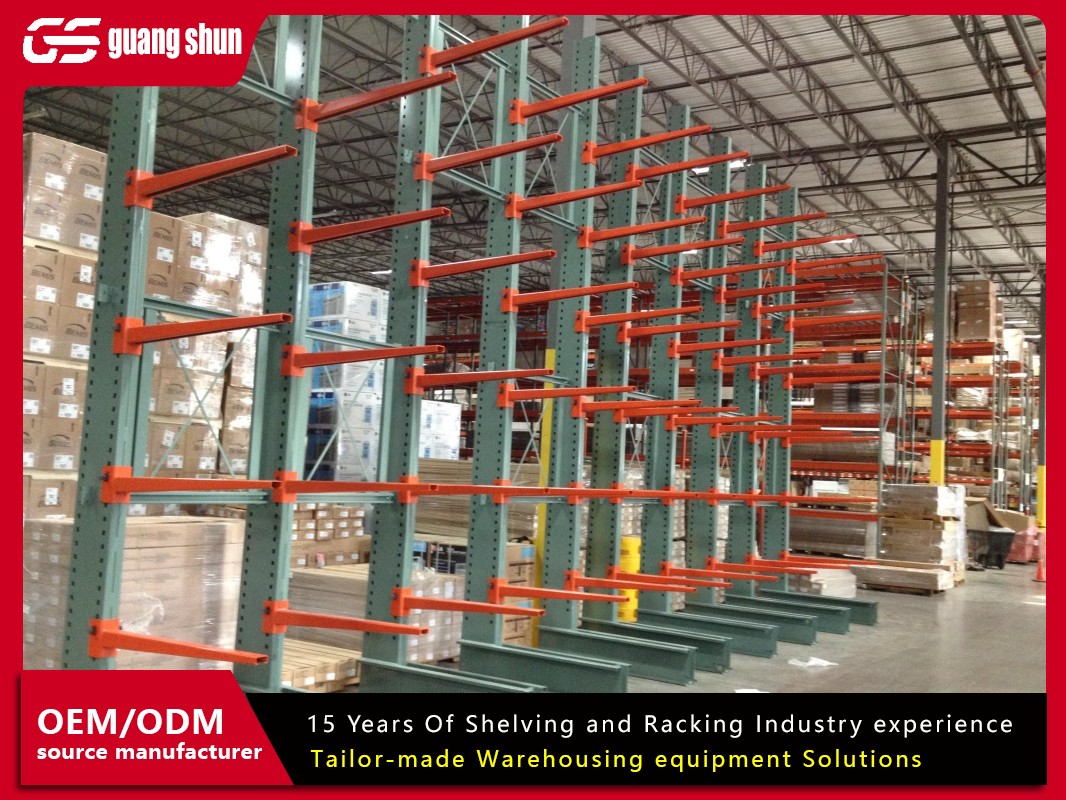
Cantilever Arms: While a system of its own, cantilever arms can be an accessory for selective racks. They bolt onto upright frames to create arms for storing long, awkward items like lumber, piping, or furniture, instantly converting standard pallet racking into a more versatile solution.
Mezzanine Gates and Stair Kits: If you’ve added a racking-supported mezzanine, proper access is a safety and efficiency must. Integrated safety gates and sturdy stair kits are essential accessories that turn an elevated platform into a usable workspace.
Product and Rack Protection Add-Ons
These accessories shield both your inventory and your racking investment from daily wear and tear.
Post Protectors (Wheel or Cushion): For racks in very high-traffic areas, a simple column guard might not be enough. Wheel guards or extra-thick polyurethane protectors wrap around the base of uprights and are designed to deflect forklift wheels, not just absorb a direct impact.
Load Backstops: These are metal bars or grids installed at the rear of a beam level. They prevent pallets from being pushed too far through the rack, which can damage the pallet, the product, or the rack itself. They are especially useful for double-deep or drive-in racking systems.
Guidance and Visibility Aids
Helping operators work faster and more accurately reduces damage and boosts throughput.
Aisle Guidance Mirrors: Placed at aisle intersections, these convex mirrors eliminate blind spots, preventing collisions between forklifts and pedestrians or other equipment.
Row and Level Markers: Clear, bold numbering or labeling systems for each rack row and beam level are fundamental. They are the “address” for your inventory, crucial for any organized warehouse management system (WMS) and efficient picking.
LED Strip Lighting: Installing energy-efficient LED lights directly onto the racking face illuminates dark storage bays, improving picking accuracy and speed while enhancing safety for workers searching for items.
How to Choose the Right Accessories for Your Operation
With so many options, where do you start? Follow this practical approach.
First, conduct a safety audit. Walk your warehouse with your maintenance lead. Look for scuff marks on uprights, note any instances of falling items, and identify high-traffic collision points. This will directly point you to needed guards, decking, or netting.
Next, analyze your inventory challenges. Are you storing an increasing number of non-palletized items? Do products get mixed up on shared shelves? Your answers will highlight needs for decking, dividers, or better labeling.
Then, review your workflow inefficiencies. Are pickers constantly using flashlights? Do forklifts often misalign with racks? This signals a need for lighting or guidance aids.
Finally, always, always consult your rack’s load capacity ratings and engineering drawings. Never install an accessory that could compromise the structural integrity or exceed the designed load limit of a beam or upright. Your rack supplier or a qualified engineer can confirm compatibility.
Cost Considerations and the ROI of Accessories
It’s easy to see warehouse racking accessories as an extra cost. The smarter view is to see them as an investment with a clear return.
A set of column guards costs a fraction of replacing a bent upright and the potential downtime from closing an aisle for repairs. Wire decking prevents the total loss of product from a collapsed carton falling 20 feet.
The ROI comes in several forms: reduced product damage, lower repair and maintenance costs for racks and forklifts, decreased risk of expensive accidents and injuries, and improved space utilization leading to deferred capital expansion.
In many cases, the accessories pay for themselves after preventing a single significant incident.
Sourcing and Compatibility: A Critical Note
Not all pallet rack accessories are universal. The most common pitfall is assuming compatibility.
Critical measurements include beam profile width and height, upright column hole spacing, and overall load capacity. An accessory designed for a different brand or profile may not fit securely, creating a major safety risk.
The safest route is to purchase accessories from your original rack manufacturer or a reputable supplier who explicitly guarantees compatibility with your specific rack model. Provide them with photos and exact measurements from your existing system.
Final Thoughts
Your racks are a platform. Warehouse racking accessories are the tools that tailor that platform to your exact needs. They are the difference between a system that simply holds pallets and one that actively promotes a safer, more organized, and more productive warehouse environment.
Start with the safety-critical items like decking and column guards. Then, layer in organizational and efficiency add-ons as your needs evolve. A strategic investment in these components amplifies the value of your entire storage operation.
Frequently Asked Questions (FAQ)
Q1: Can I install warehouse racking accessories myself, or do I need a professional?
A1: It depends on the accessory. Simple items like divider bars, mesh decking (that simply lays on beams), or level markers can often be installed by trained warehouse staff following manufacturer instructions. Structural or safety-critical accessories, like column guards that require drilling or row spacers that affect seismic stability, should be installed or inspected by a qualified professional to ensure they are correctly fitted and do not compromise the rack’s integrity.
Q2: Do wire mesh decks reduce the weight capacity of my rack beams?
A2: Yes, and this is a vital point. The wire decking itself, and any product stored on it, becomes part of the total load on the beam. You must add the weight of the decking to the weight of your stored products. Ensure this combined load does not exceed the beam’s Rated Load Capacity (RLC). Always use decking rated for your specific application.
Q3: Are plastic or steel column protectors better?
A3: Each has its purpose. Heavy-duty steel column guards are best for absorbing direct, high-impact hits from forklift masts or loads. High-density polyethylene (plastic) protectors are excellent for deflecting and resisting abrasion from glancing blows, such as from forklift wheels. For high-traffic areas with wheel traffic, a hybrid guard with a steel core and plastic outer shell is often ideal.
Q4: How often should I inspect my racking accessories?
A4: They should be included in your regular rack safety inspection schedule. Perform a visual check weekly or monthly for any obvious damage, loosening, or deformation. Include them in your annual formal inspection conducted by a qualified inspector. Pay special attention to accessories that have sustained an impact.
Q5: Can accessories make my existing racks compliant with current safety standards?
A5: They can significantly improve compliance, but they do not automatically make an old or damaged system fully compliant. Accessories like decking, backstops, and column guards directly address common safety hazards cited in standards. However, if the underlying rack structure is damaged, under-designed, or improperly installed, accessories alone cannot rectify that. Always have your core system evaluated first.