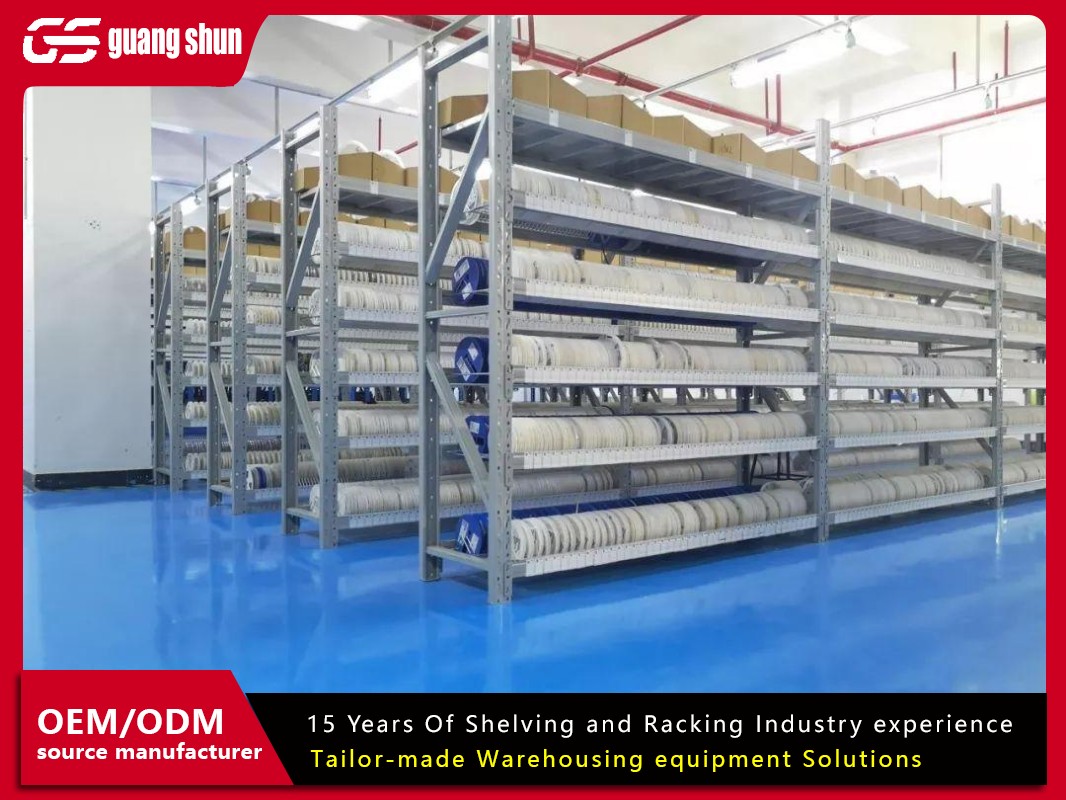
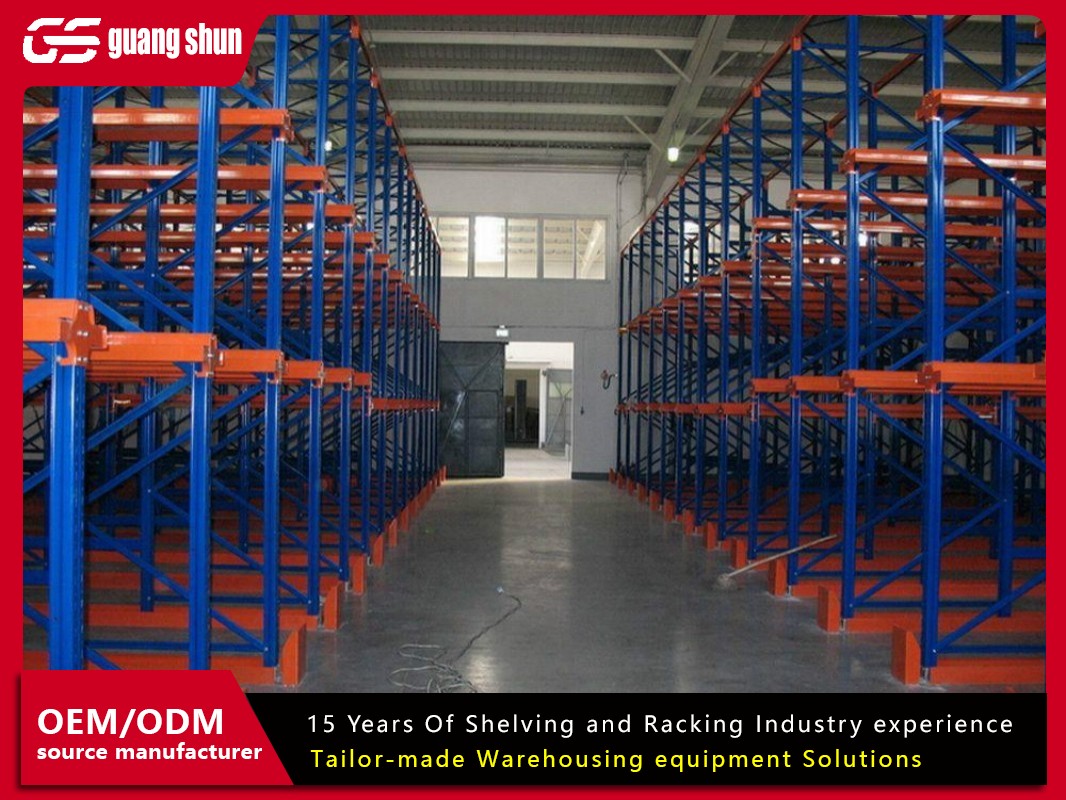
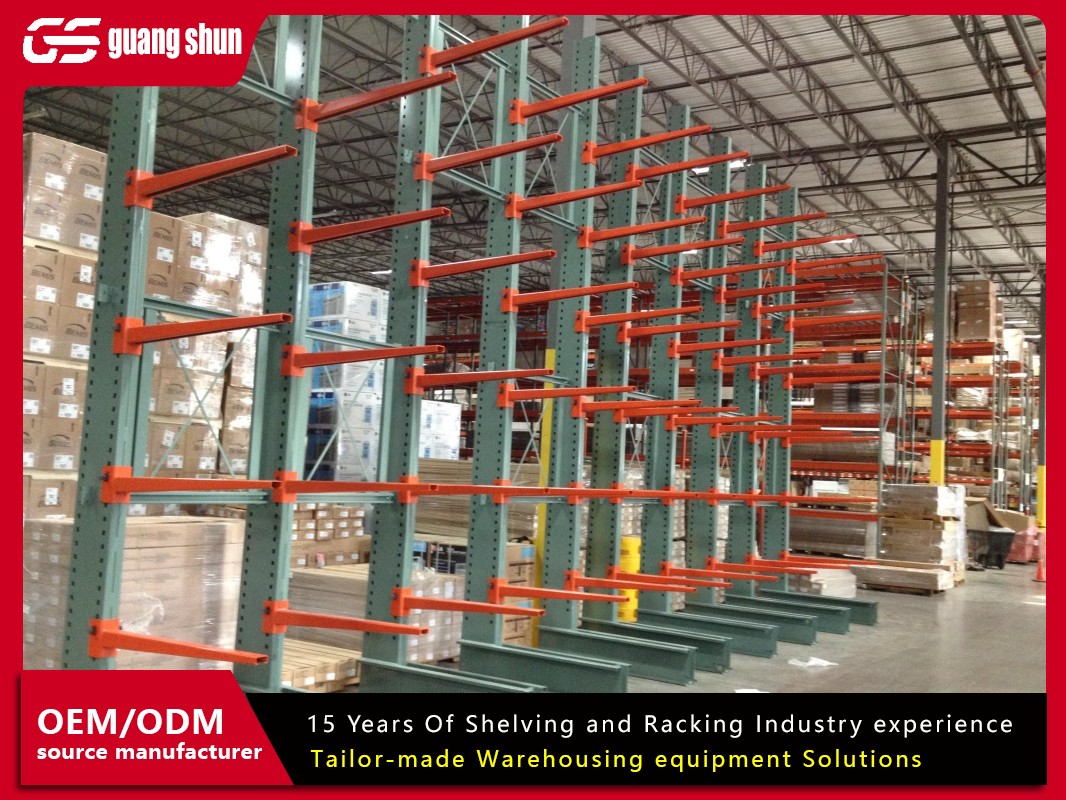
Adjustable Pallet Racking: 8 Engineering Parameters for Safe, Flexible Warehouse StorageFor warehouses handling diverse inventories, the ability to reconfigure storage quickly in response to changing SKU profiles is essential. Adjustable pallet racking remains the most widely adopted storage solution precisely because it combines structural rigidity with beam-level flexibility. Unlike fixed shelving or bulk storage, these systems allow operators to modify beam heights in centimetre increments, accommodating everything from low-profile cartons to tall palletized loads. However, achieving the full benefits of this adaptability requires a thorough understanding of load paths, component compatibility, and safety thresholds. This article examines the technical foundations, design considerations, and real-world applications of adjustable pallet racking, drawing on extensive engineering data and case studies from Guangshun.
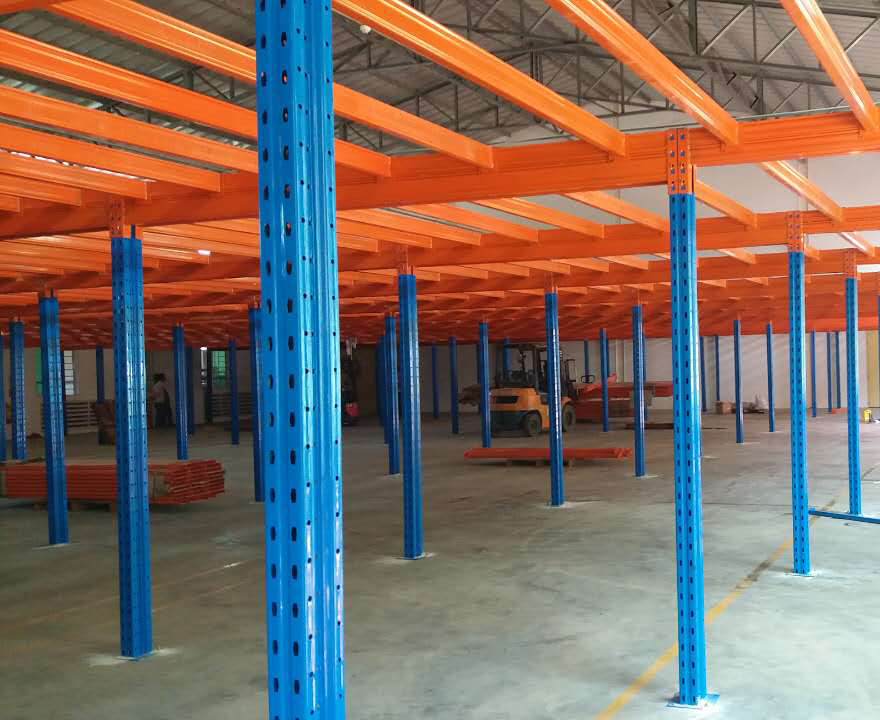
1. The Anatomy of an Adjustable Racking System
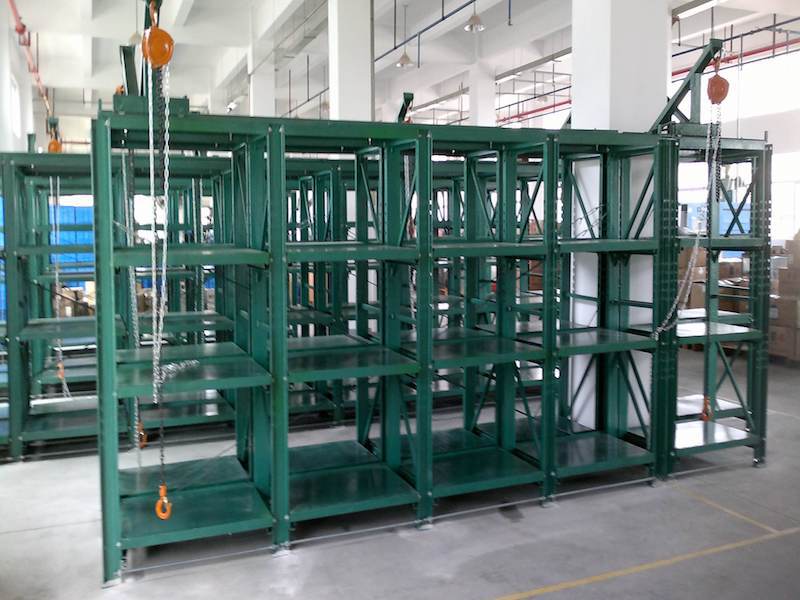
Every selective rack installation comprises two primary structural elements: upright frames and load beams. Upright frames are fabricated from continuous columns braced with horizontal and diagonal members (bolted or welded). The column face features a series of slots at regular intervals – typically 50 mm or 75 mm centres – into which beam connectors engage. Beams are cold-formed steel profiles (box, step, or C‑section) with integral end connectors that incorporate safety locks. The resulting structure is both strong and infinitely adjustable along the column height.
1.1 Component Compatibility and Tolerances
To ensure that adjustable pallet racking performs as designed, the interface between beam connector and column slot must meet strict dimensional tolerances – typically ±1.5 mm. Loose fits can cause the beam to dislodge under dynamic loads, while overly tight fits complicate installation. Reputable manufacturers, including Guangshun, use precision punch presses and verify connector profiles with go/no‑go gauges to guarantee consistent engagement.
2. Load Capacity: More Than Just a Number
The advertised capacity of a racking system is the result of multiple calculations: column strength (accounting for perforations), beam moment capacity, frame bracing stiffness, and baseplate anchoring. Crucially, capacity is not uniform across the structure – it varies with beam height, bay width, and load distribution. Engineers use finite element analysis (FEA) to model these variables, producing load charts that specify safe working loads for every configuration.
Beam load: Uniformly distributed load (UDL) per pair of beams, typically 2–5 tonnes per level.
Frame capacity: Total vertical load per upright frame, which may exceed 20 tonnes in high-bay warehouses.
Point loads: Concentrated forces where pallet feet or poor deck support create localised stress.
2.1 Deflection Limits and Beam Selection
RMI and FEM standards limit beam deflection under rated load to 1/180th of span to maintain pallet stability. For a 3.6 m bay, that means a maximum sag of 20 mm. Exceeding this deflection can cause pallets to bind against adjacent racks or interfere with sprinkler clearance. When selecting beams, warehouse managers must match both the load rating and the section modulus to the actual span – a beam rated for 3 tonnes at 2.7 m may only carry 2 tonnes at 3.6 m.
3. Design Flexibility for Evolving Inventories
The defining characteristic of selective racking is its adjustability. As product dimensions change – for instance, switching from shrink‑wrapped pallets to taller cages – beams can be relocated without special tools. This is achieved by releasing the safety lock, lifting the beam vertically to disengage the connector, and re‑engaging at the desired slot. Many facilities perform seasonal reconfigurations to accommodate promotional volumes or new SKUs. Guangshun offers a patented quick‑release connector that reduces changeover time by 40% compared to traditional bolt‑type locks.
3.2 Optimising Vertical Space
In distribution centres with ceiling heights above 10 m, adjustable racking can be extended upward by splicing additional column sections. However, taller racks require more substantial bracing and increased anchor bolt shear capacity. Seismic zones impose additional restrictions: the ratio of rack height to depth must remain within code limits (often 6:1 unsupported, 8:1 with ceiling bracing). Properly designed systems utilise every cubic metre while maintaining stability.
4. Accessories and Enhancements
While the basic frame-and-beam structure provides the backbone, a fully optimised installation incorporates a range of ancillary components:
Row spacers: Connect back-to-back rows, increasing lateral stiffness and preventing rack separation during seismic events.
Column guards: Heavy‑duty steel or polyurethane protectors shield uprights from forklift impact.
Decking options: Wire mesh decks, timber boards, or roll‑formed steel shelves allow storage of irregular items and improve load stability.
Pallet supports: Additional rails placed between beams to support pallets with damaged or missing bottom boards.
These accessories must be load‑tested in combination with the base rack, as they affect the overall stiffness and load distribution. Mixing components from different suppliers without engineering review can compromise safety.
5. Safety Inspections and Regulatory Compliance
Adjustable racking is subject to ongoing wear: forklift impacts, beam overloading, and loosening of connections all degrade capacity over time. Regulatory bodies (OSHA, HSE) and industry associations (RMI, FEM) mandate regular inspections. A typical inspection protocol includes:
Visual checks: Look for bent columns, deformed beams, or damaged weldments.
Connector verification: Ensure all safety locks are fully engaged and that no hooks are visibly lifted from slots.
Plumbness measurement: Uprights should be vertical within 1/500 of height; lean can indicate foundation settlement or overload.
Load audit: Confirm that actual stored weights do not exceed rated capacities – often a discrepancy due to product changes.
Guangshun provides inspection training and certification programs, helping warehouse teams identify early signs of distress before they escalate into failures.
6. Seismic Design Considerations
In active seismic regions, adjustable pallet racking must be engineered to withstand horizontal accelerations without collapse. Seismic design involves:
Ductile connections: Beam connectors that can deform plastically without fracturing, absorbing energy.
Baseplate anchorage: Expansion or epoxy anchors with verified pull‑out and shear capacities.
Frame bracing: Additional diagonal members to resist sway, often required at the rear of racks.
Longitudinal stability: Struts along the row to distribute seismic forces.
Racks in seismic zones must carry a label certifying compliance with the applicable building code (IBC, ASCE 7, etc.). Non‑compliant systems pose a life‑safety risk and may void insurance coverage.
7. Throughput and Accessibility
The primary operational advantage of selective racking is immediate access to every pallet – no lane digging or reshuffling required. This translates into higher pick rates, often exceeding 30 picks per hour in well‑designed layouts. Aisle width is a critical factor: very narrow aisle (VNA) configurations (1.8‑2.4 m) maximise density but require turret trucks or wire‑guided systems. Wider aisles (3‑3.5 m) allow standard counterbalanced forklifts but sacrifice floor space. The choice depends on throughput targets and equipment fleet.
7.2 Storage Density vs. Selectivity
While adjustable racking offers 100% selectivity, its density is lower than push‑back or drive‑in systems because each pallet position requires a dedicated floor space footprint. To improve density without sacrificing access, warehouses often implement:
Double‑deep racking: Two pallets deep, requiring reach trucks with extended mast travel.
Narrow aisles: Reduce aisle count, increasing storage positions by 15‑25%.
Mezzanine integration: Build raised storage areas above the first level, utilising vertical cubic volume.
8. Cold Storage and Special Environments
Low‑temperature warehouses impose unique demands on adjustable racking. Steel becomes more brittle below freezing, so specified grades must have adequate low‑temperature toughness (often requiring Charpy V‑notch testing). Condensation cycles can accelerate corrosion, leading many operators to specify hot‑dip galvanised finishes rather than paint. Furthermore, freezer racking must accommodate thicker floor insulation, which affects anchor depth and baseplate design. Guangshun has engineered systems for temperatures as low as –30°C, using special bolt steels and thermally broken connections to prevent ice buildup.
Frequently Asked Questions (FAQ)
Q1: What is the typical lifespan of adjustable pallet racking?
A1: With proper use and maintenance, a steel racking system can last 20–30 years. However, component replacement (beams, guards) may be needed sooner due to impact damage. Regular inspections and timely repairs extend service life significantly. Guangshun offers a 10‑year structural warranty on all new installations.
Q2: Can I mix beams and uprights from different manufacturers?
A2: This is strongly discouraged unless an engineer has verified compatibility of connector geometry, steel strength, and slot dimensions. Even minor mismatches can lead to improper load transfer and sudden failure. If you must expand an existing system, source replacement parts from the original manufacturer or a certified equivalent. Guangshun provides cross‑reference data to help identify compatible components.
Q3: How do I determine the correct beam height for my pallets?
A3: Measure the maximum pallet height (including load overhang) and add a minimum clearance of 100 mm (4 inches) above the pallet to allow for beam deflection and forklift entry. If sprinklers are present above the rack, additional clearance (typically 150 mm) is required by fire codes.
Q4: What are the seismic requirements for adjustable racking?
A4: In seismic zones (e.g., IBC seismic design categories C, D, E, F), racking must be engineered with special ductile connections, adequate anchorage, and often supplemental bracing. The manufacturer must provide seismic certification based on shake‑table testing or approved calculation methods. Always consult local building codes before installation.
Q5: Can adjustable racking be used in a fully automated warehouse?
A5: Yes, but the tolerances are tighter. Automated storage and retrieval systems (AS/RS) require rack structures with exceptionally precise column spacing (typically ±3 mm) and beam levelling to guide the machinery. Special “AS/RS‑ready” racking is available with continuous bolt‑free connectors and machined baseplates to achieve the necessary accuracy.
Q6: How often should racking be inspected?
A6: A formal inspection by a competent person should occur at least annually. However, many warehouses conduct monthly visual checks by trained staff. After any significant impact or seismic event, an immediate inspection is mandatory. RMI recommends a three‑tier approach: daily operator checks, quarterly supervisor reviews, and annual expert inspections.
Q7: What is the function of a row spacer?
A7: Row spacers connect adjacent rows of back‑to‑back racking. They prevent individual racks from swaying independently under seismic or wind loads, distributing lateral forces across multiple frames. They also maintain consistent flue spaces required for sprinkler effectiveness.
Q8: How do I calculate the total load on a rack structure?
A8: Sum the weight of all pallets stored on the rack, plus the weight of any decking or accessories. Compare this total to the manufacturer’s rated frame capacity. Also check that each beam pair is not loaded beyond its individual rating. It’s wise to include a safety factor (typically 1.15) for dynamic impacts.
From warehouse layout to seismic resilience, the engineering behind adjustable pallet racking determines both short‑term productivity and long‑term safety. By partnering with experienced suppliers like Guangshun and adhering to rigorous inspection routines, warehouse operators can build a storage foundation that adapts to business needs while protecting personnel and inventory.