In the world of logistics and supply chain management, space is money. How you utilize the cubic volume of your warehouse directly impacts your operational costs, picking speed, and inventory accuracy.
The backbone of any optimized storage facility is its storage warehouse racking.
Choosing the right storage warehouse racking system is not a one-size-fits-all decision. It is a strategic investment that should align with your inventory profile, handling equipment, and business goals.
This guide will walk you through five core types of storage warehouse racking and the key factors to consider for your operation.
1. Selective Pallet Racking: The Universal Standard
When most people picture storage warehouse racking, they think of selective pallet racking. It is the most common and versatile system found globally.
Its design is straightforward. Upright frames and horizontal load beams create accessible openings for each pallet. Each pallet is individually accessible from the aisle.
This provides 100% selectivity for your SKUs. It is ideal for warehouses with a high variety of products where every pallet may need direct access at any time.
Selective racking works with all kinds of forklifts. It is the perfect starting point for many businesses due to its flexibility and relatively low initial cost. Properly engineered storage warehouse racking of this type can support significant weights.
2. Drive-In/Drive-Thru Racking: Maximizing Density for Fewer SKUs
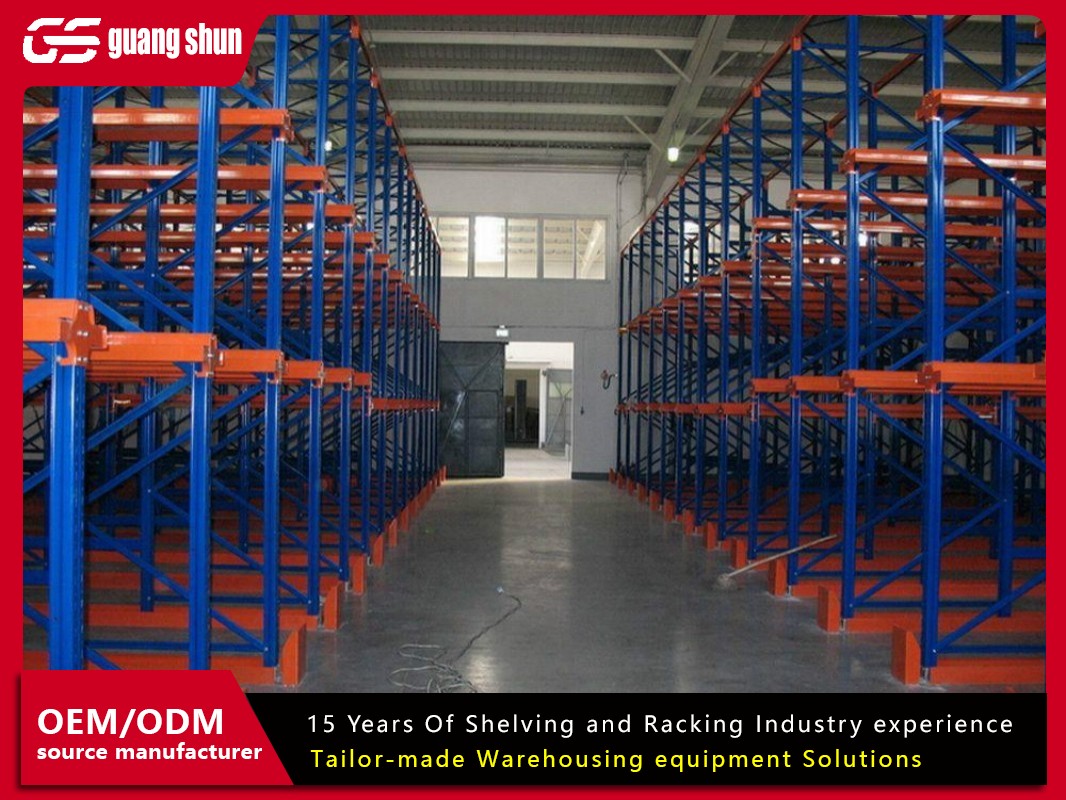
When storage density becomes a higher priority than individual pallet access, drive-in racking systems are the answer. This type of storage warehouse racking is designed for high-volume storage of a limited number of SKUs.
In a drive-in system, forklifts actually drive into the rack structure itself. Pallets are stored on rails or rails, with multiple pallets placed in depth per bay.
This design eliminates many aisles, dramatically increasing storage capacity in the same footprint. It operates on a Last-In, First-Out (LIFO) basis. Drive-thru racking allows access from both sides, enabling FIFO (First-In, First-Out) inventory management.
This storage warehouse racking is perfect for cold storage, beverage, or other industries with large quantities of similar products.
3. Push-Back Racking: A Dynamic Compromise
Push-back racking offers a clever middle ground between selectivity and density. It provides more depth than selective racking but better selectivity than drive-in systems.
Pallets are stored on nested carts that ride on inclined rails. When a forklift places a new pallet into the opening, it pushes the existing pallets back. Retrieval works in reverse; removing the front pallet allows the next one to roll gently to the front.
This system typically allows for 2 to 6 pallets deep per opening. It operates on a LIFO basis but offers direct access to each lane from the aisle. The storage warehouse racking structure here is more complex but offers excellent space utilization for medium-SKU-depth scenarios.
4. Pallet Flow Racking: Automated FIFO Inventory Control
For operations demanding strict First-In, First-Out inventory rotation, pallet flow racking is the engineered solution. This high-density storage warehouse racking system uses gravity to move pallets.
Each lane is a slightly inclined rail system with speed controllers. Pallets are loaded from the rear (higher end) and glide smoothly to the front (lower end) where they are picked.
This is ideal for perishable goods, products with expiration dates, or high-throughput items. It dramatically reduces travel time for order pickers, who only work at the face of the rack. While the initial investment is higher, the gains in accuracy and throughput are substantial.
5. Mezzanine Systems: Leveraging Vertical Air Space
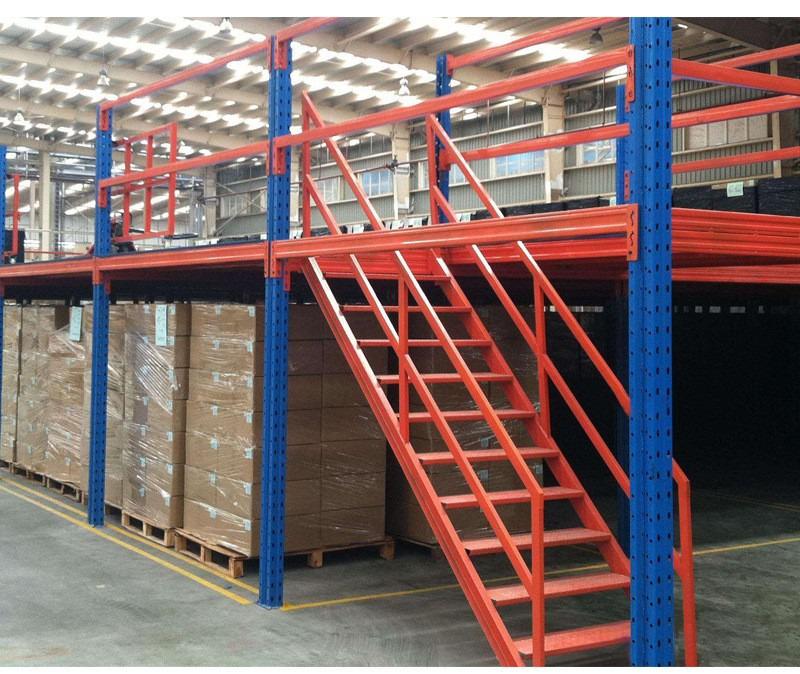
When floor space is exhausted, look up. A mezzanine is not racking in the traditional sense, but it is a critical storage warehouse racking and space optimization strategy.
A structural mezzanine creates a second or third level within your warehouse. You can then install any standard racking system (like selective racking) on the new levels. This effectively doubles or triples your usable storage area without expanding the building's footprint.
Mezzanines are perfect for storing slower-moving inventory, packaging materials, or even housing offices and workstations. Integrating a storage warehouse racking system with a mezzanine is the ultimate vertical space solution.
Key Factors in Choosing Your Racking System
Selecting the right storage warehouse racking requires careful analysis:
- Inventory Profile: How many SKUs? What are your pallet dimensions and weights? What is your required turnover rate (FIFO vs. LIFO)?
- Equipment: What forklifts or order pickers do you use? Their reach height, width, and turning radius dictate aisle widths and rack heights.
- Facility Details: Consider ceiling height, floor condition, column locations, and sprinkler system requirements.
- Budget & ROI: Balance the initial cost of the storage warehouse racking system against long-term gains in space, efficiency, and safety.
Proper design, professional installation, and regular safety inspections are non-negotiable for any racking system. A well-planned storage warehouse racking layout is the foundation of a productive and safe warehouse.
FAQ: Common Questions About Storage Warehouse Racking
Q1: What is the most cost-effective type of storage warehouse racking?
A1: Selective pallet racking is generally the most cost-effective initial investment. Its simple design, ease of installation, and flexibility make it a low-cost-per-position option for a wide range of businesses. However, the total cost-effectiveness depends on your space costs; a denser system like drive-in might be more cost-effective in the long run in high-rent areas.
Q2: How do I know what weight capacity my storage warehouse racking needs?
A2: You must know the maximum loaded pallet weight you will store. A professional racking designer or supplier will then use this data, along with pallet dimensions and required heights, to engineer a system with the correct upright and beam specifications. Never exceed the rated capacity of your storage warehouse racking.
Q3: Are there specific safety standards for storage warehouse racking?
A3: Yes. Reputable manufacturers design racking to meet stringent industry standards, such as those from the Rack Manufacturers Institute (RMI) in North America or FEM in Europe. OSHA also has general regulations regarding safe storage and load limits. Regular inspections for damage (like bent beams or column impacts) are crucial for safety.
Q4: Can I reconfigure or expand my racking system later?
A4: Selective racking systems are highly adaptable. You can often adjust beam heights, add new upright frames, and extend sections. Systems like push-back or flow racking are more fixed in their design. When planning your storage warehouse racking, always discuss future expansion needs with your supplier.
Q5: What is the difference between teardrop and structural racking?
A5: This refers to beam connection types. Teardrop racking has uprights with punched holes shaped like teardrops. Beams hook into these holes with tabs, allowing for easy, tool-less height adjustment. Structural racking uses beams that bolt directly to the upright frame, creating an extremely strong, welded-like connection often used for heavier loads or seismic zones.