In modern logistics and supply chain management, warehouse space optimization
is a primary driver of operational efficiency and cost control. As distribution
centers scale up to handle higher volumes of goods, vertical space utilization
becomes a key operational objective. Implementing a robust estantería
metálica system allows for the vertical expansion of available floor space,
transforming flat storage areas into highly organized, high-density storage
zones. Selecting, designing, and maintaining these industrial structures
requires a deep understanding of structural engineering, material properties,
and safety compliance.
1. Engineering Standards and Material Specifications in Steel Racking
The structural integrity of an industrial racking system depends directly on
the quality of steel used and the engineering standards applied during its
manufacturing. Industrial storage structures must withstand massive static and
dynamic loads, making material selection a fundamental step in the design
phase.
Cold-Rolled vs. Hot-Rolled Steel
Most industrial racking components are manufactured using cold-rolled steel.
This process involves shaping sheet metal at room temperature, which increases
the yield strength and tensile strength of the steel through work hardening.
Cold-rolled profiles allow for precise tolerances, uniform thickness, and
complex cross-sections that optimize the strength-to-weight ratio.
For heavy-duty environments or facilities subject to frequent mechanical
impacts, hot-rolled structural steel is often utilized. Hot-rolled components
have thicker profiles and are less susceptible to localized buckling, making
them highly resilient in heavy manufacturing or high-traffic distribution
hubs.
Load Capacities and Deflection Limits
The load-bearing capability of an industrial estantería
metálica relies heavily on the structural steel grade and the geometrical
design of the upright frames and beams. Calculations must adhere to recognized
international standards such as:
EN 15512: The European standard for steel static storage
systems, specifying structural design requirements for adjustable pallet
racking.
RMI (Rack Manufacturers Institute) Specifications: The
widely accepted standard in the Americas for industrial steel storage
racks.
FEM 10.2.02: European guidelines detailing the design rules
for safe storage rack configurations.
A crucial factor in racking design is the deflection limit of the horizontal
load beams. Under full load, the maximum allowable vertical deflection of a beam
is typically restricted to L/200 (where L is the length of the beam) to prevent
structural fatigue and ensure safe forklift operation. If a beam spans 2700 mm,
the maximum allowable deflection under load is 13.5 mm.
2. Types of Industrial Storage Systems and Applications
When planning a warehouse layout, selecting the correct configuration of estantería
metálica is a primary engineering decision. Different systems serve distinct
inventory rotation strategies, load profiles, and space constraints.
| Racking Type | Selectivity | Storage Density | Inventory Method (FIFO/LIFO) | Typical Application |
|---|
| Selective Pallet Racking | 100% (High) | Low to Medium | FIFO / LIFO | General warehousing, multi-SKU facilities |
| Drive-In / Drive-Through | Low | Very High | LIFO (Drive-In) / FIFO (Drive-Through) | Cold storage, bulk single-SKU goods |
| Push-Back Racking | Low to Medium | High | LIFO | High-density volume storage |
| Pallet Flow (Gravity) Racking | Low | High | FIFO | Perishable goods, fast-moving consumer goods
(FMCG) |
Selective Pallet Racking
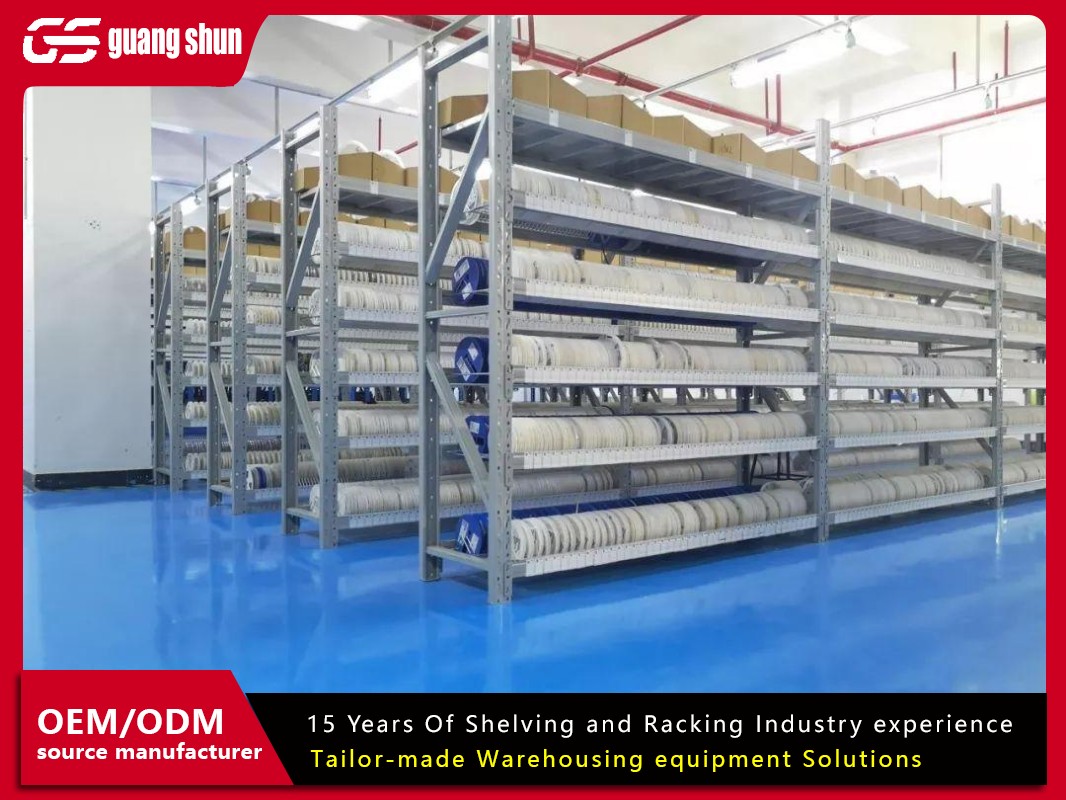
Selective pallet racking remains the most common industrial storage system.
It offers 100% selectivity, meaning every pallet is directly accessible by a
forklift without needing to move adjacent loads. This system is highly versatile
and accommodates variable pallet sizes and frequent inventory turns, though it
requires wider aisles, which reduces overall storage density.
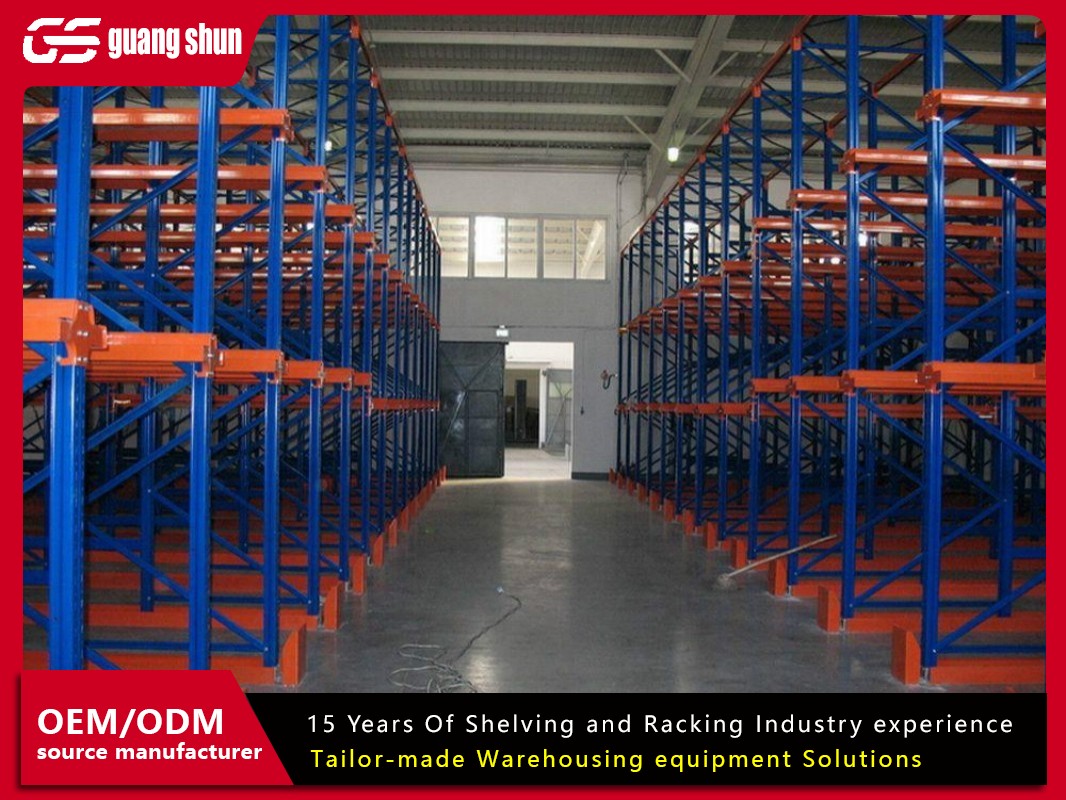
Drive-In and Drive-Through Racking
For facilities managing large volumes of identical SKUs with low rotation
rates, integrating high-density estantería
metálica solutions such as drive-in or push-back racking can increase
storage density by up to 75%. Drive-In systems allow forklifts to enter the
racking lanes to deposit or retrieve pallets directly from the structural rails.
This layout maximizes floor area utilization by eliminating dedicated aisles
between individual racks.
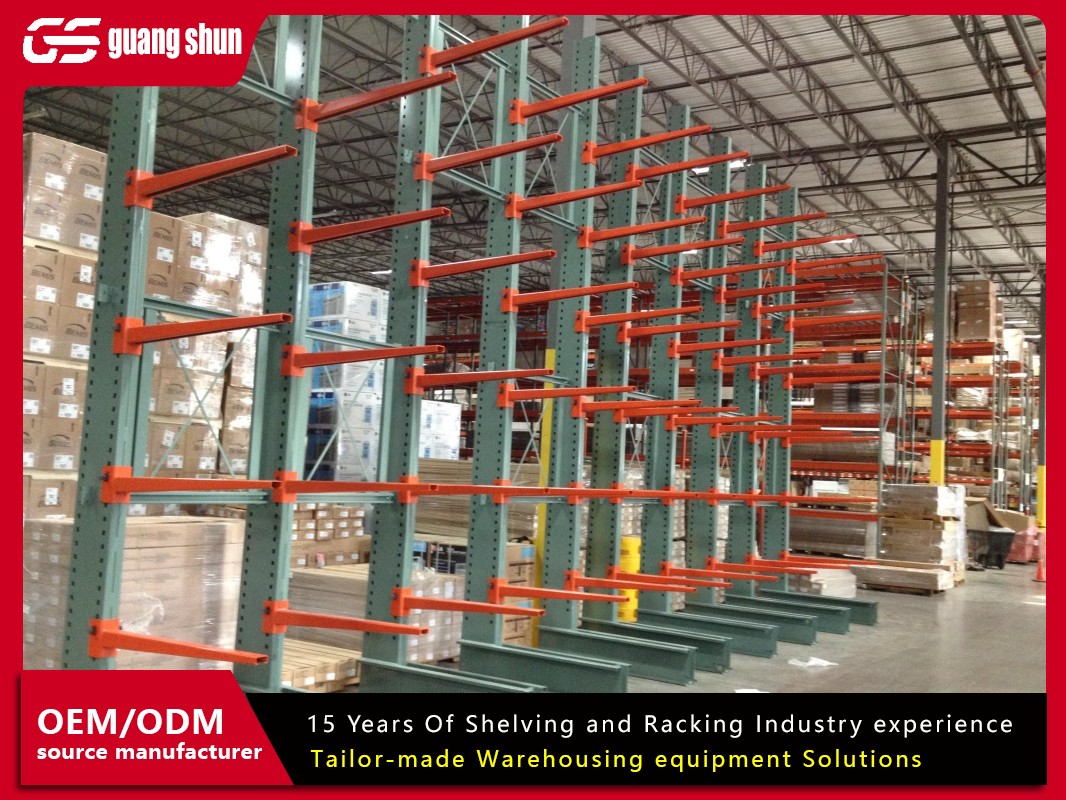
Cantilever Racking
Standard pallet racks are unsuitable for long, bulky, or irregularly shaped
items such as timber, steel pipes, plastic tubing, and sheet materials.
Cantilever racking features load-bearing arms anchored to heavy vertical
columns, leaving the front of the structure completely open. This design
simplifies mechanical loading and unloading while preventing material bowing or
damage.
3. Mitigating Operational Risks and Ensuring Safety Compliance
The physical environment of a warehouse involves constant movement of heavy
machinery, creating inherent risks for structural systems. Implementing
preventive design and safety measures is necessary to protect personnel,
inventory, and facility infrastructure.
Structural Damage Prevention
Forklift impacts are the leading cause of industrial racking deformation and
collapse. The bottom portions of aisle-facing upright columns are highly
vulnerable to corner collisions. To mitigate these risks, warehouses should
employ dedicated safety accessories:
Heavy-Duty Column Protectors: Floor-anchored steel or
polyurethane guards that shield the lower uprights from direct wheel
impacts.
End-of-Row Barriers: Robust steel rails anchored to the
floor at the ends of double-entry rack rows, protecting the vulnerable frame
sides from turning machinery.
Safety Mesh and Back Cladding: Vertical wire mesh panels
installed on the rear of racking rows adjacent to pedestrian walkways,
preventing loose cartons or damaged pallets from falling.
Seismic Engineering for Racking Systems
In regions prone to seismic activity, storage structures must be designed to
withstand horizontal inertial forces during an earthquake. This requires
structural engineers to calculate specific seismic load distributions, utilize
heavier steel profiles, implement larger baseplates, and install high-tensile
anchor bolts. Seismic-engineered racking ensures that the structure remains
stable under dynamic ground acceleration, preventing catastrophic collapses.
4. Customization and Manufacturing Excellence by Guangshun
Every distribution center presents unique geometric, environmental, and load
challenges. Off-the-shelf storage components rarely satisfy the rigorous demands
of specialized logistics facilities. As a global leader in warehousing
manufacturing, Guangshun provides
certified, high-grade storage systems designed to maximize space while ensuring
structural stability under demanding loads.
Engineering teams at Guangshun work closely
with logistics managers to calculate exact load tolerances, analyze floor slab
capacities, and design custom profiles tailored to specific operations. By
utilizing advanced cold-forming manufacturing lines, automated welding robots,
and high-durability epoxy powder-coating finishes, the resulting racking
components deliver long service lives even in challenging environments, such as
sub-zero cold storage facilities and high-humidity chemical storage centers.
Furthermore, the manufacturing process incorporates strict quality control
protocols that align with European and American safety directives. From raw
material inspection to the final packaging of structural beams and uprights,
every step is documented to provide trace-tested reliability for large-scale
enterprise projects globally.
5. Key Procurement Factors for Warehouse Managers
Procuring a high-quality estantería
metálica installation requires looking beyond the initial capital
expenditure. Total cost of ownership, compliance, and future scalability are
critical parameters for modern supply chains.
Surface Treatments: Powder Coated vs. Galvanized
The choice of surface finish directly impacts the life cycle of the storage
racks. Powder-coated finishes offer excellent resistance to scratches,
chemicals, and general wear in indoor, climate-controlled environments.
Conversely, hot-dip galvanized steel is highly recommended for outdoor storage,
unheated facilities, and cold rooms where moisture condensation can occur.
Galvanized coatings provide sacrificial cathodic protection, preventing
oxidation and rust propagation even if the surface is scratched.
System Scalability and Modular Design
Logistics requirements change as businesses scale. Selecting racking systems
with a modular design allows for future reconfigurations, aisle adjustments, and
vertical expansion. Standardized upright hole patterns (such as 50 mm or 75 mm
pitch steps) ensure that load beams can be easily raised or lowered to
accommodate changing pallet heights without replacing major structural elements.
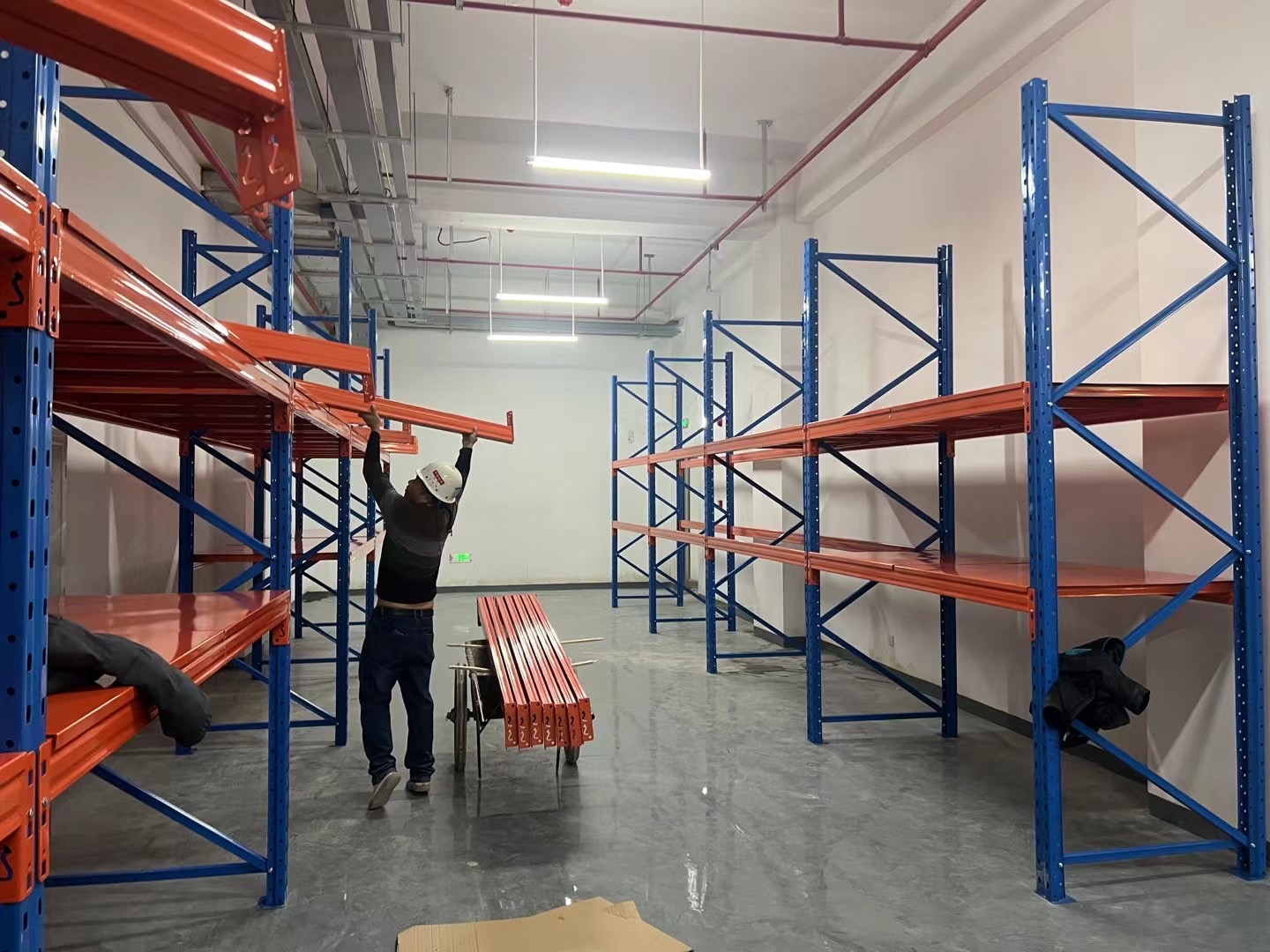
With extensive manufacturing experience, Guangshun designs
custom-engineered racking configurations that provide the versatility needed to
adapt to evolving market demands.
6. Structural Maintenance and Annual Inspections
To guarantee long-term operational safety, every installed racking system
should undergo annual structural inspections. Over time, normal daily operations
can cause minor damages that, if left unaddressed, could compromise the overall
load-bearing capacity of the system.
The damage classification system established by European standard EN 15635
categorizes rack damage into three color-coded risk levels:
Green (Excellent/Low Risk): Minor deformations within
acceptable limits. The rack is safe for continued operation, but the damage must
be monitored and recorded.
Amber (Moderate Risk): Deformation exceeds acceptable
structural tolerances but is not yet critical. Action is required to unload the
damaged section and replace the affected components within a specified timeframe
(typically 4 weeks).
Red (High Risk/Danger): Severe deformation or structural
buckling that presents an immediate safety risk. The affected bays must be
unloaded immediately, isolated from use, and repaired before any goods can be
stored again.
By conducting routine inspections and prioritizing preventative maintenance,
facility managers protect their workforce and extend the lifespan of their
physical capital investments.
7. Frequently Asked Questions
Q1: What is the maximum load capacity for a standard pallet racking
system?
A1: The load capacity varies significantly depending on the
design. Standard light-to-medium-duty beams typically carry between 500 kg to
1,500 kg per level, while heavy-duty industrial configurations can easily
support up to 4,000 kg per beam level. Frame load capacities can exceed 20,000
kg depending on upright steel thickness and vertical beam spacing.
Q2: How do I choose between powder-coated and galvanized finishes for
my racking?
A2: Powder-coated finishes are ideal for dry, indoor
warehouses with standard ambient temperatures. Galvanized racking is best suited
for high-humidity areas, outdoor environments, cold storage, or chemical
environments where there is a risk of corrosive exposure.
Q3: How often should our warehouse conduct professional racking
safety inspections?
A3: According to international standards like EN 15635,
warehouses must conduct routine visual inspections weekly or monthly, alongside
a comprehensive, documented inspection by an independent, qualified professional
at least once every 12 months.
Q4: Can we modify our existing warehouse racking layout on our
own?
A4: Any structural modifications, such as changing beam
heights or adding levels, alter the load distribution and structural load
capacity of the racking system. These adjustments should only be made in
consultation with the original manufacturer or a certified structural engineer
to prevent overloading and potential structural failure.
Q5: What are the consequences of ignoring deflection limits on load
beams?
A5: Exceeding deflection limits causes permanent plastic
deformation of the steel beams, making them unsafe for holding heavy loads. This
structural weakness significantly increases the risk of beam failure, pallet
slippage, and catastrophic collapse of the entire rack system.