Industrial warehousing operations face intense structural constraints: real
estate acquisition expenditures continue to surge, labor overhead remains high,
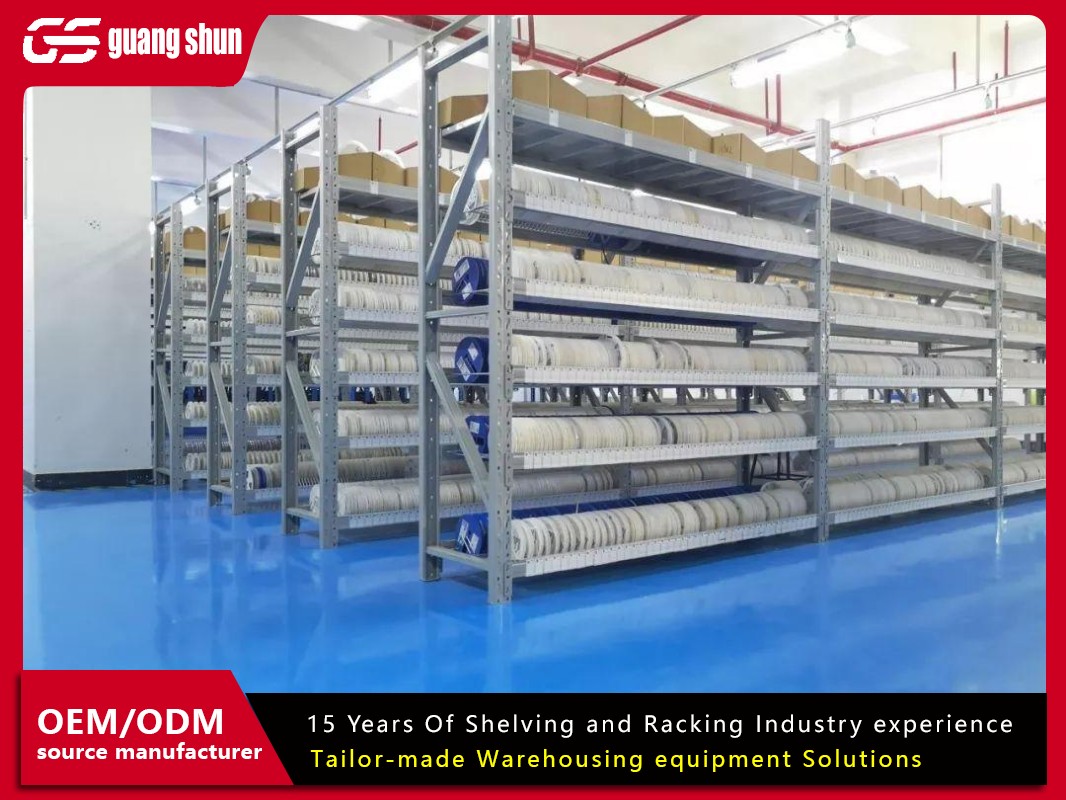
and inventory profiles exhibit rising SKU fragmentation. Standard selective rack
configurations, while providing immediate access to every pallet position,
consume as much as 60% of floor area solely for forklift transit aisles.
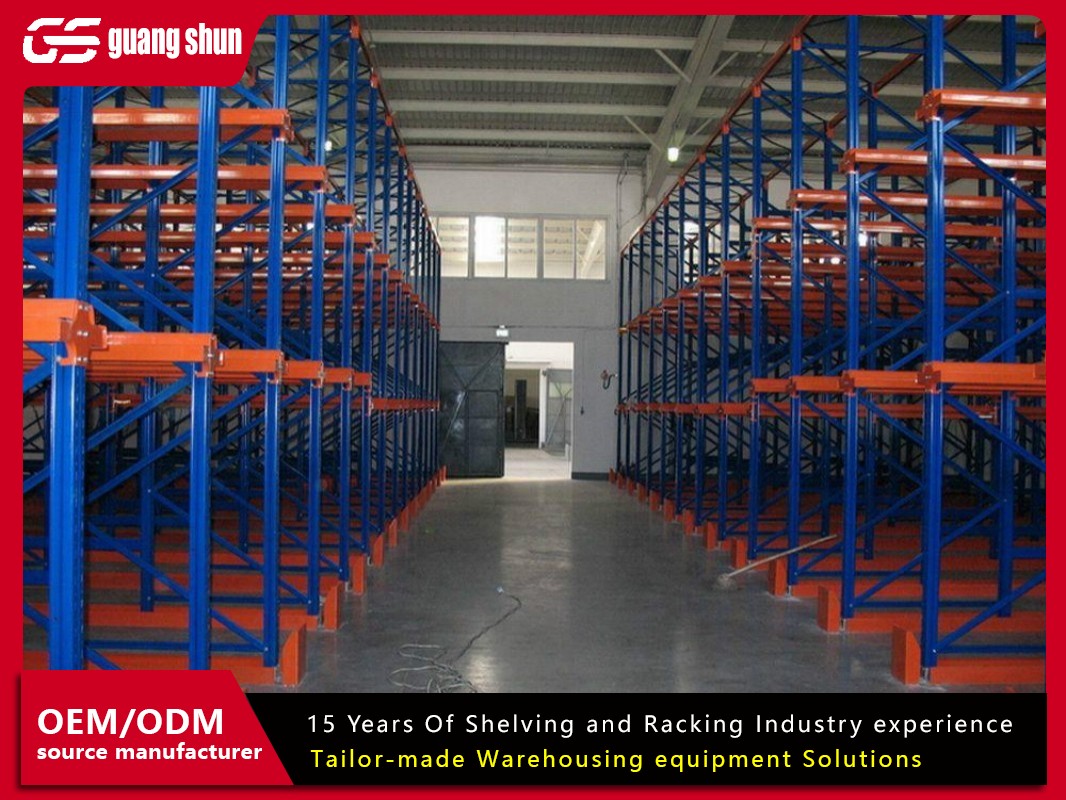
Conversely, deep-lane static systems such as drive-in racking improve bulk
volumetric capacity but induce severe pallet accessibility bottlenecks, high
honeycombing losses, and persistent upright frame damage from material handling
equipment.
To resolve this operational compromise, dynamic cart accumulation provides an
engineered alternative. Implementing pushback racking establishes a balance between high storage density and individual lane SKU
selectivity. By leveraging inclined structural tracks and nested telescoping
carriages, these systems allow material handling teams to consolidate inventory
footprints, shorten transport cycles, and protect warehouse infrastructure
against impact forces.
1. Mechanical Anatomy and Kinematics of Dynamic Cart-on-Rail Systems
At its core, a dynamic push-back structure operates on a Last-In, First-Out
(LIFO) inventory sequence powered purely by gravitational force and mechanical
counteraction. Understanding its functional dependability requires examining the
structural subcomponents that comprise each lane.
Nested Cart Architecture and Multi-Tier Travel
Unlike pallet flow systems that require rear-loading aisles and continuous
roller tracks, push-back mechanisms operate entirely from a single front-facing
access aisle. Pallets rest on a series of nested, rolling steel carriages that
slide on inclined structural steel channels:
Two-Deep Configurations: Utilize a single cart. The initial
pallet is set directly onto the cart. The second pallet contacts the front face
of the first pallet, pushing the cart rearward along the inclined rail to expose
stationary structural support beams at the lane front.
Three-Deep Configurations: Employ two nested carts (an
upper primary cart nested inside a lower secondary cart). The forklift operator
pushes the top cart back to reveal the lower carriage, finally pushing both back
to deposit the third unit load on the front stationary rails.
Four- to Six-Deep Configurations: Extend this engineering
method with up to five nesting carts manufactured with decreasing rail widths,
allowing all carriages to collapse smoothly within one another at the front
picking face.
Inclined Track Geometry and Gravity Gradients
The system relies on an inclined track profile, manufactured at a slope
between 1.5% and 3.0% (approximately 0.85° to 1.75° from horizontal). This slope
must be calibrated to achieve two distinct engineering objectives:
Controlled Gravitational Return: When an operator extracts
the front pallet, gravity causes trailing carriages to glide forward to the
aisle face at a controlled speed without excessive acceleration.
Safe Insertion Force: The slope must not be so steep that
standard counterbalance or reach trucks encounter excessive resistance or lose
traction when pushing pallet loads back into the lane.
Bearing Assembly and Wheel Metallurgy
Wheels represent the highest stress points within the mechanical assembly.
High-capacity carriages incorporate flanged structural steel or ductile iron
wheels fitted with double-shielded, precision-ground ball bearings. These
flanged wheels match the profile of structural steel angle tracks, preventing
lateral carriage derailment during off-center loading cycles. Bearing seals
protect internal races from airborne particulate contamination, abrasive dust,
and moisture.
2. Comparative Systems Analysis: Operational Metrics Across Storage
Solutions
Selecting the correct storage medium requires evaluating selectivity,
volumetric footprint, equipment compatibility, and rack structural durability.
When evaluating footprint utilization against throughput velocity, choosing pushback racking eliminates the operational bottlenecks common to drive-in bays.
| Specification Metric | Single-Deep Selective | Drive-In Rack | Dynamic Pushback System | Pallet Flow (FIFO) |
|---|
| Footprint Utilization | Low (40% - 45%) | Very High (70% - 80%) | High (65% - 75%) | Maximum (75% - 85%) |
| SKU Selectivity | 100% Instantaneous | Low (Lane Dedicated) | Moderate (Lane-by-Lane) | Moderate (Lane-by-Lane) |
| Pallet Cycle Time | Fastest (Direct pick) | Slowest (Tunnel transit) | Fast (Aisle-only work) | Fast (Decoupled aisles) |
| Aisle Demand | 1 Aisle per 2 Racks | 1 Access Aisle | 1 Access Aisle | 2 Aisles (Charge/Discharge) |
| Honeycombing Losses | Negligible (<5%) | Severe (Up to 40%) | Minimal (10% - 15%) | Low (10%) |
| Structural Collision Risk | Low | Extreme | Minimal | Low |
Selectivity and Honeycombing Mitigation
Drive-in systems require an entire multi-level bay to hold identical
inventory to prevent product entrapment. If an operator removes partial pallets,
the vacant space cannot be utilized until the remaining deep positions are fully
emptied, an inefficiency termed structural honeycombing. Dynamic push-back racks
isolate depth to single lanes; every lane level operates independently. A
four-high bay can hold four separate SKUs, providing a significant throughput
boost for distribution centers managing fast-moving consumer goods.
Cycle Time Economics and Equipment Longevity
In drive-in configurations, forklift operators must maneuver deep within
narrow rack channels, slowing travel speed to a crawl and elevating the risk of
frame impact. In dynamic cart setups, the mast never enters the rack frame. The
operator remains squarely in the operating aisle, reducing pallet entry and
extraction cycles by 30 to 45 seconds per pallet maneuver. This operational
decoupling limits collision incidents and preserves mast components.
3. Structural Engineering Calculations, Safety Codes, and Design
Tolerances
Dynamic storage systems are subject to both static structural dead loads and
complex dynamic live forces. As pallets travel backward and roll forward,
structural components undergo cyclical shock and variable torsion stresses.
Dynamic Load Coefficients and Mechanical Force Equations
Engineers calculate pushing force ($F_p$) required to insert subsequent
pallets using basic mechanical formulas modified by structural friction
variables:
$$F_p = W \cdot (\sin\theta + \mu \cdot \cos\theta)$$
Where:
$W$: Total gross weight of trailing unit loads and
carriages already loaded into the lane.
$\theta$: Inclination angle of the structural guide
tracks.
$\mu$: Coefficient of rolling friction across bearings,
wheel surfaces, and guide rails (typically 0.015 to 0.025 for steel wheels on
steel tracks).
Structural uprights must be calculated to support dynamic amplification
factors. International codes require upright frames and shelf beams to tolerate
standard pallet dead weights alongside a dynamic impact allowance of at least
25% on rail drop points. Structural racking manufacturers like Guangshun engineer these systems
using heavy-duty structural channel steel or high-tensile roll-formed columns to
maintain structural stiffness under heavy cyclical forklift loading.
Building Code Compliance and Seismic Performance
Installations must meet rigorous regional compliance directives:
United States: Rack Manufacturers Institute (RMI) MH16.1
Specification for the Design, Testing, and Utilization of Industrial Steel
Storage Racks, combined with regional IBC seismic zone parameters.
European Union: EN 15512 (Steel static storage systems –
Adjustable pallet racking systems – Principles for structural design) and EN
15635 for inspection and maintenance protocols.
Under seismic stimulation, high-density carts represent independent sliding
masses. If improperly engineered, synchronized movement can cause frame
resonance, leading to catastrophic joint shearing. Specialized dynamic
backstops, seismic safety catchers, and vertical rail interlocks are integral to
restraining carts to the structural guide beams during seismic events.
4. Industrial Operating Environments and Extreme Thermal Applications
Operating dynamic material handling equipment across varying thermal zones
requires custom material formulations and component tolerances.
For temperature-controlled operations where cubic meter refrigeration costs
remain punitive, pushback racking provides an optimal balance between density and SKU access. Cold storage
facilities (-20°C to -30°C) demand specialized structural details:
Freezer Storage Dynamics and Tribological Solutions
Sub-zero logistics facilities feature the highest cost per cubic foot of
usable industrial space. Standard mechanical grease thickens and solidifies in
extreme cold, causing rolling bearings to drag, seize, or skid across rails. To
prevent lane immobilization, engineering specialists such as Guangshun utilize low-temperature
lubricants, such as synthetic low-viscosity hydrocarbon or silicone grease,
rated down to -40°C. Furthermore, bearing tolerances must allow for differential
thermal shrinkage between carbon steel axles, bearing races, and outer cart
structures.
Condensation, Rust Mitigation, and Pallet Integrity
Facilities that transition materials between chilled docks and deep-freeze
bays encounter frequent condensation cycles. Standard industrial enamel paints
degrade under persistent moisture exposure, causing sheet corrosion that
disrupts wheel pathing. Advanced dynamic cart installations employ:
Hot-Dip Galvanizing (HDG): Providing a metallurgical
zinc-iron alloy coating resistant to humidity, scuffing, and persistent freezing
conditions.
Structural Drainage Apertures: Integrated into carriage
floor pans to prevent ice pooling and frozen debris accumulation.
Pallet Quality Control: Broken boards, protruding
fasteners, or cracked stringers pose severe operational hazards in dynamic
lanes. Split runners can catch on lower carriages, causing misaligned pallet
feed. Operations running cart-on-rail bays require strict inbound pallet quality
screening.
5. Lifecycle Economics, Capital Allocation, and Warehouse TCO
While dynamic cart-on-rail arrays command higher capital investment than
basic static selective racks, an examination of Total Cost of Ownership (TCO)
across a 5- to 10-year span confirms operational returns.
Footprint Consolidation and Real Estate Avoidance
By transitioning from wide-aisle selective configurations to 3-deep or 4-deep
push-back architectures, a warehouse can increase pallet capacity within the
existing footprint by 60% to 80%. This consolidation postpones or eliminates the
capital expenditures associated with land procurement, new building
construction, or third-party logistics leasing. Facility engineers seeking to
maximize storage volume while preserving individual lane access frequently
specify pushback
racking as the baseline design.
Labor and Fleet Expense Reductions
Labor constitutes up to 50% of direct warehouse operational costs. Because
forklifts operate exclusively in access aisles without navigating narrow static
channels, horizontal travel distances drop substantially. Case data from bulk
consumer goods distributors reveals:
Forklift Travel Time Reductions: A 25% to 35% decrease in
overall forklift travel distance per pallet transaction.
Fleet Downsizing: Fewer active forklifts needed to maintain
equivalent pallet movement thresholds, directly decreasing equipment lease costs
and battery/fuel consumption.
Upright Frame Maintenance Savings: Structural repair
expenses fall by up to 70% compared to drive-in bays, where forklift collisions
remain an ongoing operational liability.
6. Frequently Asked Questions (FAQ)
Q1: What are the practical lane depth configurations for pushback
racking?
A1: Standard lane configurations range from 2-deep to 6-deep
pallet designs. The 2-deep, 3-deep, and 4-deep designs represent the vast
majority of industrial deployments. While 5-deep and 6-deep lanes are viable,
they require higher push forces from the forklift, demand specialized mast
attachments, and require larger carriage nesting clearances. Configurations
beyond 4-deep require strict verification of forklift hydraulic pushing capacity
and rigorous pallet structural integrity checks.
Q2: Can dynamic nested cart systems handle inconsistent or non-standard
pallet styles?
A2: Push-back carts can accommodate standard GMA wooden
pallets, perimeter-base wooden pallets, plastic pallets, and steel skids,
provided the carriages are custom-engineered for those footprint interfaces.
Carts must incorporate fully welded intermediate support cross-members to
prevent load deflection when handling poor-quality or irregular pallets. When
sourcing systems, reputable manufacturers like Guangshun supply full compliance
documentation and structural mock-up testing tailored to custom pallet
styles.
Q3: What forklift models are compatible with cart-on-rail dynamic
systems?
A3: Most counterbalance forklift trucks and heavy-duty
pantograph or moving-mast reach trucks are suitable. The primary vehicle
requirements include sufficient forward tilt to assist in seating pallets flat
onto the cart surface, adequate hydraulic pushing force to compress the
multi-pallet nested cart stack, and an uncompromised driver view to align
pallets smoothly along the guide rails.
Q4: How does an operator control trailing pallet return velocity during
extraction?
A4: The operator uses the front pallet as an active brake.
When backing out of the bay with the picked pallet, the driver moves at a
steady, controlled rate (roughly 1 foot per second). The trailing carts roll
forward behind the retreating load. Once the next pallet reaches the front stop,
the operator lowers the extracted load completely and clears the lane. Operators
must be trained never to back out rapidly, as free-rolling uncontrolled carts
can damage the front structural stops.
Q5: Can an existing selective rack system be retrofitted into dynamic
pushback storage?
A5: Yes, retrofitting is achievable if existing uprights and
concrete slab foundations meet specific structural load capacities. Because
push-back systems convert open aisle space into concentrated, multi-pallet
storage, load loads on the floor slab increase significantly. An engineer must
recalculate baseplate sizing, concrete slab punch-shear capacity, and anchor
bolt shear resistance before retrofitting nested carts onto existing structural
uprights.
Q6: What daily and scheduled inspection protocols are necessary to ensure
system safety?
A6: Daily visual checks should verify that carriages rest
flush at the front stops and that tracks are clear of plastic wrap, broken wood
splinters, and packaging debris. Monthly protocols require checking
wheel-to-rail clearance, validating bearing spin freedom, and examining
structural stop welds. Annual audits must include checking beam deflection
ratings, upright plumbness, anchor bolt tightness, and torque specifications on
all carriage assemblies according to international storage codes.