In the relentless pursuit of warehouse optimization, the choice of storage system can make or break your operational efficiency. Among the various high-density solutions available, the shuttle pallet racking system has emerged as a frontrunner for businesses dealing with high-volume, homogeneous SKUs. But what exactly is this system, and is it the right fit for your facility? This article delves deep into seven critical aspects of the shuttle pallet racking system, providing a comprehensive overview to guide your decision-making process.
What is a Shuttle Pallet Racking System? Understanding the Core Concept
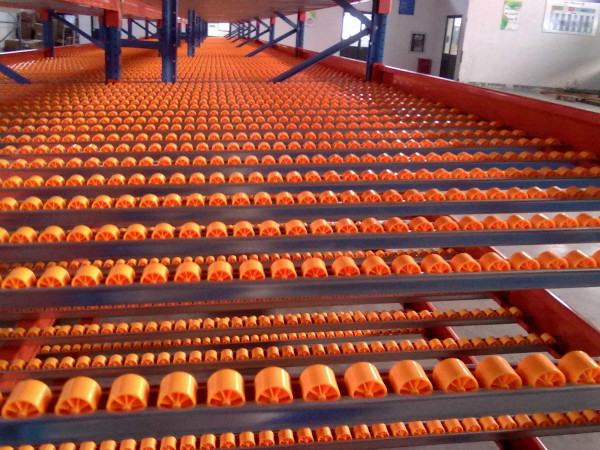
At its heart, a shuttle pallet racking system is a semi-automated, high-density storage solution. It consists of a series of compact storage lanes, typically multiple levels deep, and a battery-powered, remote-controlled shuttle vehicle that operates within these lanes. Unlike traditional systems where a forklift enters the racking, the forklift's role here is simplified: it places a load at the front of a lane, and the shuttle pallet racking system takes over. The operator uses a remote control to instruct the shuttle to transport, store, and retrieve pallets deep within the lane autonomously. This core separation of forklift and storage functions is the key to its efficiency and safety benefits. It effectively combines the high-density advantage of drive-in racking with the intelligence and speed of automation.
How Does It Work? The Step-by-Step Operational Workflow
Understanding the workflow of a shuttle pallet racking system clarifies its operational advantages. The process is methodical and repeatable:
Loading (Putaway): A forklift operator brings a pallet to the face of a predetermined storage lane. The operator places the pallet on the shuttle, which has been positioned at the lane entrance.
Command: Using a wireless remote control, the operator sends a command to the shuttle. This command can be as simple as "store the pallet in the first available location" or a specific instruction to place it in a designated lane position.
Execution: The shuttle travels into the lane, lifts the pallet, and carries it to the assigned location. It gently deposits the pallet on the storage rails and then returns to the front of the lane, ready for the next operation.
Retrieval: For retrieval, the process is reversed. The operator commands the shuttle to enter the lane and fetch a specific pallet. The shuttle locates the pallet, lifts it, and brings it to the lane face, where the forklift operator can pick it up.
This streamlined process significantly reduces forklift movement, operator labor, and the time required for each storage and retrieval cycle.
Key Advantages: Why Businesses are Switching to Shuttle Technology
The adoption of a shuttle pallet racking system is driven by a multitude of tangible benefits that directly impact the bottom line.
Dramatically Increased Storage Density: By eliminating the need for forklift access aisles within the racking, this system utilizes up to 80% more of your available cubic space compared to selective pallet racking. You can build higher and deeper, maximizing storage capacity within the same footprint.
Enhanced Operational Efficiency and Speed: The shuttle operates much faster within the confined lanes than a forklift could maneuver. It reduces average pallet movement times by over 50%, allowing for faster loading and unloading of trucks and improved overall throughput.
Superior Safety: This is a major advantage. Since the forklift no longer needs to enter the racking structure, the risk of collisions and damage to both the racking and the building is drastically reduced. It also minimizes operator exposure to hazardous, confined spaces.
Reduced Labor Costs and Human Error: The system requires less skilled forklift operation. One operator can manage multiple shuttles across different lanes. Furthermore, with integrated Warehouse Management System (WMS) compatibility, the system can automatically track inventory locations, virtually eliminating misplacements and improving inventory accuracy.
Excellent FIFO and LIFO Compatibility: A shuttle pallet racking system can be configured to perfectly support both First-In-First-Out (FIFO) and Last-In-First-Out (LIFO) inventory management methods, making it versatile for various product types, from perishable goods (FIFO) to seasonal items (LIFO).
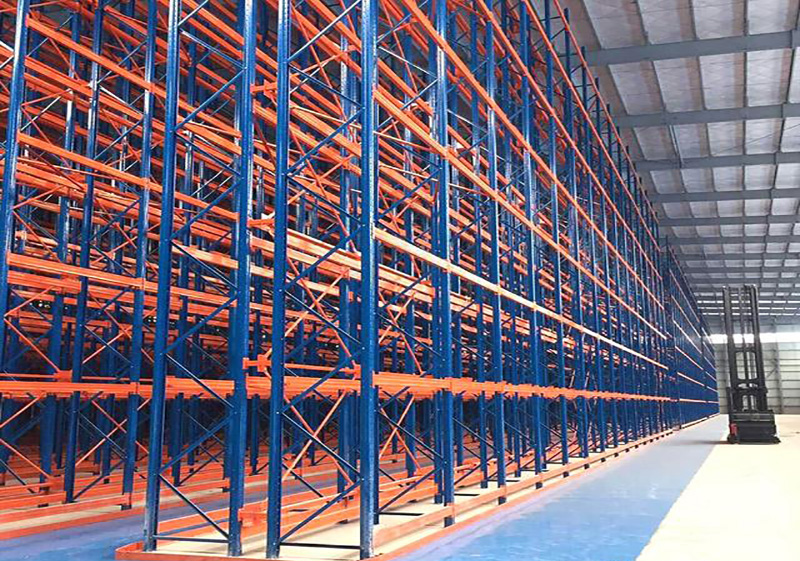
Ideal Applications and Industries: Where the Shuttle System Shines
While powerful, the shuttle pallet racking system is not a one-size-fits-all solution. It performs exceptionally well in specific scenarios:
Cold Storage Warehouses: The reduced need for forklift movement and the ability to operate in extremely low temperatures make it ideal for freezer and cooler applications, saving energy and protecting personnel.
Beverage and Food Industry: Perfect for storing large quantities of homogeneous products with high rotation, such as bottled drinks, canned goods, and packaged foods.
Pharmaceutical and Chemical Storage: For businesses that require high-density storage of raw materials or finished goods with strict batch tracking (FIFO).
Manufacturing and Bulk Storage: Ideal for storing raw materials or components that are used in large, predictable quantities.
The system is most effective when dealing with high volumes of a limited number of SKUs, typically with 10-15 different products.
Shuttle vs. Other High-Density Systems: A Comparative Analysis
How does the shuttle pallet racking system stack up against its main competitors?
vs. Drive-In Racking: Both offer high density, but the shuttle system is safer (no forklift inside the rack) and faster. It also places less physical and mental strain on forklift operators. The initial investment is higher, but the ROI in efficiency and safety is often superior.
vs. Push-Back Racking: Push-back offers good density and selectivity. However, a shuttle pallet racking system typically provides even greater depth and is more adaptable to different lane depths. The shuttle system also offers superior inventory control and is less reliant on precise forklift operation for the push/pull mechanism.
vs. Fully Automated AS/RS: A shuttle pallet racking system is considered a semi-automated solution. It offers a significant portion of the benefits of a fully automated storage and retrieval system (AS/RS) at a fraction of the cost, making it an excellent middle-ground for companies not ready for a full automation investment.
Critical Considerations Before Implementation
Before investing in a shuttle pallet racking system, several factors must be carefully evaluated:
SKU Profile: It is not suitable for a warehouse with a vast number of low-volume SKUs. Homogeneity and high throughput per SKU are key.
Initial Investment: The cost of the shuttles, specialized racking, and potential WMS integration is higher than traditional systems. A thorough cost-benefit analysis is essential.
Dependency on Technology: The system relies on functional shuttles. It is prudent to have a backup shuttle or a service agreement to mitigate downtime risks.
Floor Flatness: The system requires an exceptionally flat floor to ensure the shuttle operates correctly and without derailment.
The Future of Shuttle Pallet Racking: Trends and Innovations
The technology behind the shuttle pallet racking system is continuously evolving. Future trends point towards:
Increased Connectivity: Deeper integration with WMS and Enterprise Resource Planning (ERP) systems for real-time, fully autonomous inventory management.
Advanced Robotics: The development of shuttles that can change lanes autonomously, further reducing the need for human intervention and moving closer to full AS/RS capabilities.
Data Analytics: Shuttles will not just move goods but also collect valuable data on warehouse operations, enabling predictive maintenance and further process optimization.
Frequently Asked Questions (FAQs)
Q1: What is the main difference between a shuttle system and a traditional forklift?
A1: The main difference lies in their operational scope. A traditional forklift is used for all horizontal and vertical movement of pallets, including entering the racking aisles. In a shuttle pallet racking system, the forklift's role is limited to transporting pallets to and from the lane faces. The shuttle itself handles all the internal movement within the deep storage lanes, leading to greater speed, safety, and density.
Q2: Can a shuttle pallet racking system work with different pallet sizes?
A2: Yes, but it requires configuration. Shuttles are typically designed for specific pallet sizes and weights. If your operation uses multiple pallet types (e.g., Euro pallets and standard pallets), you would need either adjustable shuttles (which can be more complex) or dedicated lanes with shuttles configured for each pallet type.
Q3: How does the system handle a power failure or if the shuttle breaks down inside a lane?
A3: Shuttles are battery-operated and hold a charge for a full shift or more. In case of a breakdown, most systems have contingency protocols. This often involves a small, manual "rescue cart" that an operator can use to enter the lane and retrieve the stranded shuttle, minimizing disruption. Having a spare shuttle on hand is a common best practice.
Q4: Is the shuttle pallet racking system suitable for FIFO inventory management?
A4: Absolutely. In fact, it is exceptionally well-suited for FIFO. The system can be programmed so that the shuttle always retrieves the pallet that has been in the lane the longest. The layout naturally supports a flow-through design where loading happens on one side and retrieval on the other, ensuring perfect FIFO compliance.
Q5: What is the typical lifespan and maintenance requirement for a shuttle system?
A5: The structural racking has a very long lifespan, similar to any high-quality pallet racking. The shuttles themselves are robust machines but require regular maintenance, similar to a forklift fleet. This includes battery care, wheel inspection, and sensor cleaning. A typical shuttle can last 7-10 years or more with proper maintenance and software updates. A strong service agreement with the supplier is highly recommended.