We have all been there. You buy a cheap plastic rack from a local discount store, spend an hour putting it together, and load it with boxes. A week later, you walk into the room and see the shelves bowing in the middle. Or worse, the whole thing is leaning dangerously to the side.
Storage failures are frustrating and expensive. The solution is simple: you need to invest in a sturdy shelving unit. But with so many options online, how do you know which one will actually hold up?
A sturdy shelving unit is not just about thick metal. It is about design, engineering, and the quality of materials. Whether you are organizing a garage, a warehouse, or a pantry, getting the right equipment matters.
Below, we break down everything you need to know to find the perfect sturdy shelving unit that will last for decades.
1. Material Quality Is the Foundation
The primary difference between a flimsy rack and a sturdy shelving unit is the material. Most high-quality units are made from industrial-grade steel.
When shopping, look for steel. Plastic has its place for light items, but it effectively has an expiration date. Under constant load, plastic fatigues and warps. A sturdy shelving unit made of steel maintains its rigid shape.
You should also pay attention to the gauge of the steel. The lower the gauge number, the thicker the metal. A sturdy shelving unit used in industrial settings will often use 14-gauge or 16-gauge steel. This thickness ensures that the vertical posts do not buckle when you load the shelves to capacity.
2. Understanding Weight Capacity Claims
Every manufacturer claims their product is strong. However, a true sturdy shelving unit backs this up with specific weight ratings. You will often see numbers like "500 lbs per shelf" or "2,000 lbs total capacity."
It is vital to understand that these numbers usually refer to "uniformly distributed load." This means the sturdy shelving unit can hold that weight if it is spread out evenly.
If you place a 300-pound engine block right in the center of a shelf, even a sturdy shelving unit might struggle. When planning your storage, always overestimate the weight you plan to store. Buying a sturdy shelving unit rated for 1,000 pounds when you only need to store 500 pounds gives you a safety margin.
3. The Importance of Beam Design
The horizontal beams are what actually hold your items up. On a sturdy shelving unit, these beams are engineered to resist twisting.
Look for beams that have a specific profile, often a C-channel or a Z-beam design. These shapes provide significantly more structural integrity than a flat strip of metal. A sturdy shelving unit relies on the geometry of the beam to prevent sagging.
If the beams look thin or flat, walk away. A sturdy shelving unit will have beams that look substantial and lock firmly into the vertical posts. The connection point is critical; the tighter the fit, the less the unit will wobble.
4. Stability and the "Shake Test"
If you can walk up to a rack in a store and shake it with one hand, it is not a sturdy shelving unit. Rigidity is key.
A sturdy shelving unit should feel like part of the building once it is assembled. This rigidity often comes from the design of the rivets or locking mechanisms. As weight is applied to the shelves, a well-designed sturdy shelving unit actually becomes tighter and more stable.
This is often called a "gravity lock" system. The heavier the load, the harder the beams are pushed into the slots of the posts. This ensures that your sturdy shelving unit won't sway if you accidentally bump into it with a cart or a lawnmower.
5. Decking Options: Wire vs. Solid
A sturdy shelving unit typically comes with either wire decking or a solid board (particleboard or laminate). Both can be sturdy, but they serve different purposes.
Wire decking creates a tensioned surface. It is excellent for a sturdy shelving unit in a humid environment because it allows airflow. It also allows water from sprinklers to pass through, which is safer for fire codes.
Solid decking provides a flat surface for small items. However, on a cheaper unit, the board might be thin. A truly sturdy shelving unit will use high-density particleboard or even steel decking to ensure the surface doesn't break under a heavy point load.
6. Adjustability for Changing Needs
A static shelf is a limited shelf. A top-tier sturdy shelving unit allows you to move the shelves up and down. This flexibility is essential for maximizing space.
You might buy a sturdy shelving unit today for storage boxes, but next year you might want to store taller equipment. If the shelves are welded in place, you are stuck.
Look for a sturdy shelving unit that allows adjustments in 1-inch or 1.5-inch increments. This lets you configure the unit to fit your specific inventory perfectly, ensuring no vertical space is wasted.
7. Ease of Assembly (Boltless is Best)
Years ago, assembling a heavy rack meant using a bag of 100 bolts and nuts. Today, the best sturdy shelving unit designs are boltless.
These units use a rivet system. You simply use a rubber mallet to tap the pieces together. This does not mean they are weak. In fact, a boltless sturdy shelving unit is often stronger because there are no bolts to vibrate loose over time.
Assembly speed matters. If you are outfitting a whole warehouse, you want to be able to build a sturdy shelving unit in 15 minutes, not two hours.
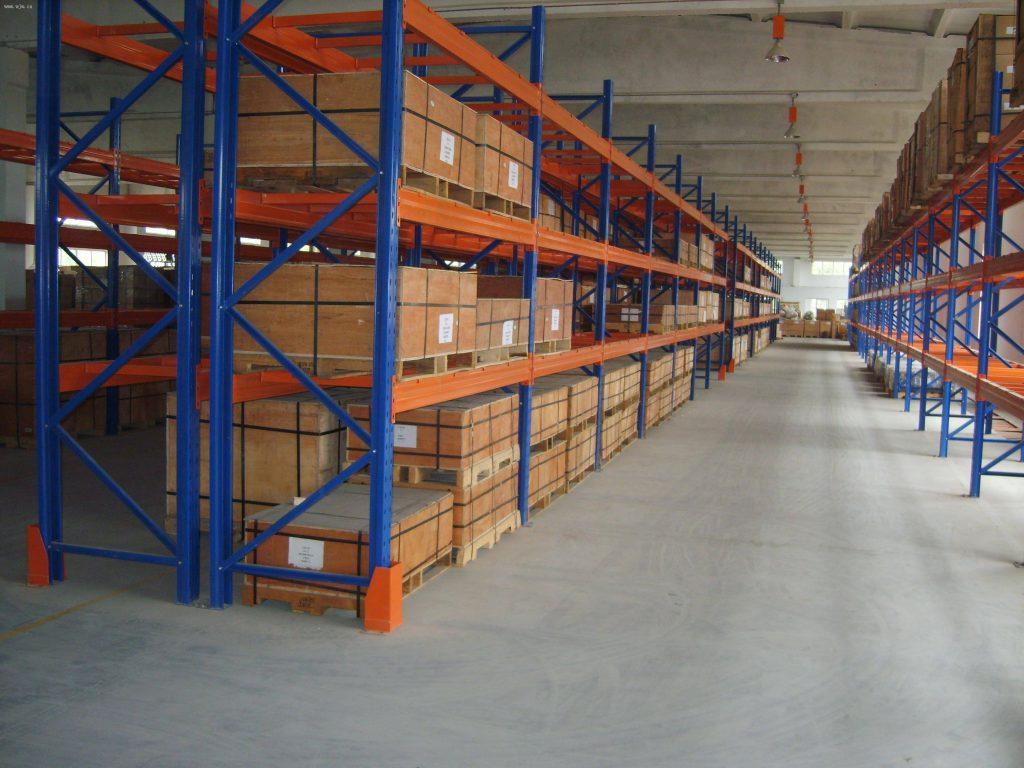
8. Rust and Corrosion Resistance
A sturdy shelving unit is only sturdy as long as the metal remains intact. Rust is the enemy of steel.
Check the finish of the unit. A high-quality sturdy shelving unit will usually have a powder-coated finish. This is a baked-on dry paint that is much harder and more durable than standard liquid paint.
If you plan to use the sturdy shelving unit in a garage, basement, or walk-in cooler, corrosion resistance is non-negotiable. Once rust eats into the rivet holes, the structural integrity of your sturdy shelving unit is compromised.
9. Safety Features and Anchoring
Gravity is not the only force at play. Tipping is a real danger. A responsible manufacturer of a sturdy shelving unit will recommend anchoring it.
Tall, narrow units are prone to tipping if you load the top shelf with heavy items. A proper sturdy shelving unit will have holes in the footplates or posts specifically for anchor bolts.
Securing your sturdy shelving unit to the wall or floor transforms it from a freestanding piece of furniture into a permanent fixture. This is the ultimate step in creating a safe storage environment.
10. The Garage: The Ultimate Test
The garage is usually where storage goes to die. It is hot, cold, damp, and dirty. This is the environment where a sturdy shelving unit shines.
Standard indoor furniture cannot handle garage life. A sturdy shelving unit designed for this space can hold winter tires, bags of concrete, and heavy power tools without flinching.
Organizing a garage with a sturdy shelving unit clears the floor. It allows you to park your car inside again. By going vertical with a sturdy shelving unit, you reclaim your square footage.
11. Heavy Duty vs. Standard Duty
Be careful with terminology. "Standard duty" might be fine for towels, but it is not a sturdy shelving unit in the industrial sense.
If you see a unit with thin wire posts, it is likely standard duty. A sturdy shelving unit often uses an L-shaped angle post or a box post. These shapes resist bending much better than a thin wire pole.
When in doubt, look at the weight of the shipping box. A sturdy shelving unit is heavy. If the box is light enough to lift with one hand, the shelves inside are likely not the heavy-duty grade you are looking for.
12. Organizing the Pantry
We often think of heavy racks for warehouses, but a kitchen pantry needs love too. Canned goods are surprisingly heavy. A standard wooden shelf often bows under the weight of a year's supply of soup.
Replacing wooden planks with a sturdy shelving unit (often chrome wire style) solves this. It is clean, it holds massive weight, and it keeps food visible. A chrome sturdy shelving unit also looks professional and is easy to clean if something spills.
13. Cost vs. Value Over Time
A sturdy shelving unit will cost more than a plastic one. That is a fact. But you have to look at the long-term value.
If you buy a cheap rack for $50 and it breaks in two years, you have to buy another one. Plus, you risk damaging the items that fell. A $150 sturdy shelving unit will last for 20 or 30 years.
When you break down the cost per year, the sturdy shelving unit is the cheaper option. It is a "buy it once" investment.
14. Modular capabilities
Another sign of a good system is modularity. A sturdy shelving unit often allows you to connect multiple units together.
You can buy an "add-on" kit that shares a set of posts with the first unit. This creates a long, continuous run of storage. This is cheaper than buying two separate standalone units. This modular approach is a hallmark of a professional sturdy shelving unit system.
Storage is about trust. You need to trust that your rack won't collapse on you or your family. That trust comes from buying a sturdy shelving unit.
By focusing on steel gauge, beam design, and weight capacity, you can filter out the junk. Do not settle for wobbly, flimsy racks. Your tools, your inventory, and your peace of mind deserve the support of a high-quality sturdy shelving unit.
Whether you are cleaning up a basement or fitting out a distribution center, the rules are the same. Quality materials equal safety. Make the switch to a sturdy shelving unit and stop worrying about your storage.
Frequently Asked Questions
Q1: What defines a "sturdy shelving unit" compared to a regular shelf?
A1: A sturdy shelving unit is typically defined by its materials and weight capacity. It is usually constructed from heavy-gauge steel rather than plastic or thin metal. It is engineered to hold significant weight (often 500+ lbs per shelf) without bending, bowing, or swaying, whereas a regular shelf is designed for light household items like books or decor.
Q2: Do I need tools to assemble a sturdy shelving unit?
A2: In most cases, no. Modern industrial-grade shelving usually features a boltless rivet design. You generally only need a rubber mallet to tap the beams into the post slots. This makes assembling a sturdy shelving unit fast and straightforward compared to furniture that requires screwdrivers and hex keys.
Q3: How can I make my shelving unit more stable?
A3: The best way to increase stability is to ensure the floor is level. If the floor is uneven, use shims. Furthermore, you should always load the heaviest items on the bottom shelf of your sturdy shelving unit to lower the center of gravity. Finally, anchoring the unit to a wall stud is the most effective way to prevent tipping and wobbling.
Q4: Is a wire deck or a solid deck better for a sturdy shelving unit?
A4: It depends on what you are storing. A wire deck is better for airflow, visibility, and preventing dust buildup. It is also stronger for outdoor or humid use. A solid deck is better if you are storing small loose items that might fall through wire gaps. Both can be part of a sturdy shelving unit, provided the underlying support beams are strong.
Q5: Can I use a sturdy shelving unit outdoors?
A5: You can, but you must choose the right finish. A standard sturdy shelving unit with a basic paint job will eventually rust if exposed to rain. You should look for a unit with a galvanized finish or a specialized epoxy coating intended for outdoor or wet environments to ensure it remains sturdy over time.